
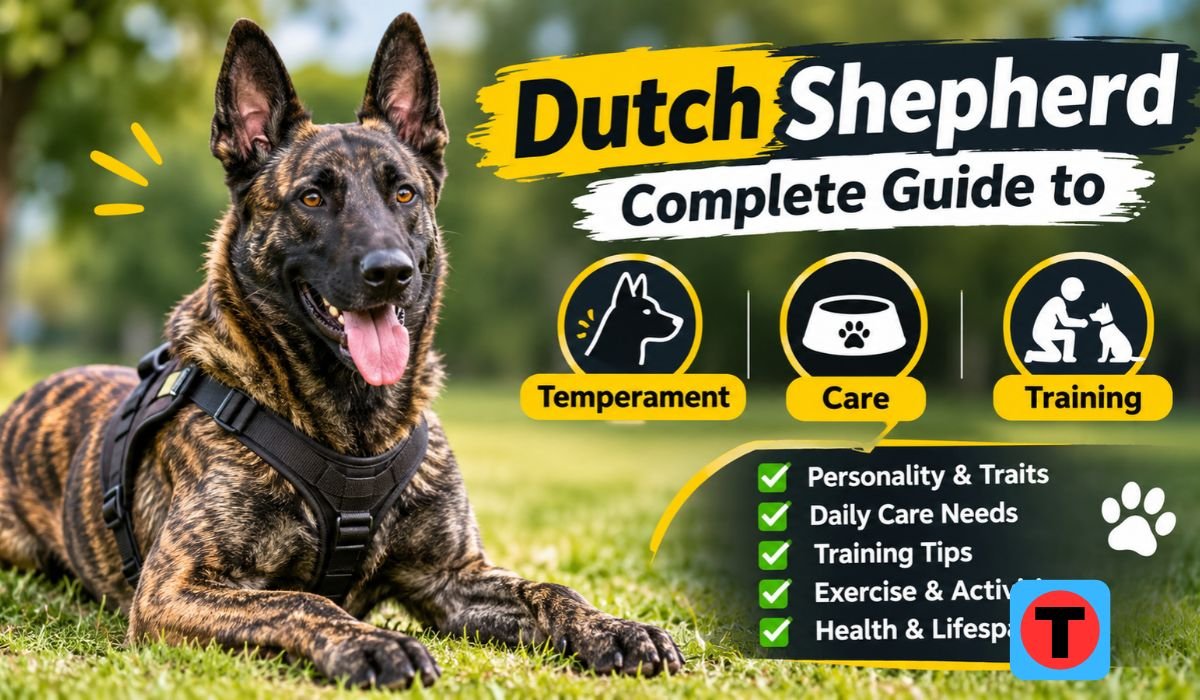
The Dutch Shepherd is an intelligent, loyal, and energetic dog breed known for its strong work ethic and beautiful brindle coat. Originally bred to help farmers in the Netherlands, this versatile dog has become a respected companion in family homes, dog sports, and professional working environments.
What makes the Dutch Shepherd special is its combination of intelligence, athletic ability, and devotion to its owner. However, this isn’t a breed that enjoys sitting around all day. Dutch Shepherds need regular exercise, consistent training, and meaningful activities to stay happy.
Whether you’re considering a Dutch Shepherd puppy or simply want to understand this remarkable breed, this guide explores its personality, history, grooming, health, training, and everyday care.
Dutch Shepherd Quick Bio Information
Breed Name
Dutch Shepherd
Other Names
Dutch Herder, Hollandse Herder
Origin
Netherlands
Breed Group
Herding / Working
Height
About 22–25 inches
Weight
Approximately 50–75 pounds
Lifespan
Often 11–14 years
Coat Types
Short, Long, Rough
Coat Color
Golden or Silver Brindle
Temperament
Loyal, Alert, Intelligent
Energy Level
Very High
Trainability
Highly Trainable
Shedding
Moderate to Heavy Seasonally
Grooming Needs
Varies by Coat Type
Exercise Needs
High
Family Compatibility
Best With Active Families
Original Purpose
Herding and Farm Work
Suitable Owners
Active, Committed Handlers
These figures are general breed estimates. Individual dogs may differ in size, longevity, and behavior.
History and Origin of the Dutch Shepherd
The Dutch Shepherd developed naturally in rural areas of the Netherlands, where farmers needed dependable dogs capable of handling several jobs. These dogs herded sheep, guarded crops, moved cattle, and alerted families when strangers approached.
The first official breed standard appeared in 1898. In 1914, breeders established brindle as the required coat pattern, helping distinguish Dutch Shepherds from German Shepherds and Belgian Shepherds.
As farming methods changed, demand for traditional herding dogs declined. World War II further reduced breeding populations, putting the breed’s survival at risk. Dedicated breeders eventually helped preserve its distinctive characteristics.
Today, Dutch Shepherds remain relatively uncommon compared with many popular family breeds. Their intelligence and versatility make them valuable in police work, search and rescue, and competitive dog sports.
Dutch Shepherd Appearance, Size, and Colors
The Dutch Shepherd has a muscular, athletic body built for endurance rather than excessive bulk. Its upright ears, alert eyes, and balanced proportions give it a confident appearance.
Adult males generally stand around 22.5–24.5 inches tall, while females are slightly smaller. Healthy weight depends on sex, body structure, and conditioning.
The breed comes in three coat varieties. Short-haired Dutch Shepherds have close-fitting coats with dense undercoats. Long-haired dogs have straight, longer fur that needs regular brushing. Rough-haired Dutch Shepherds have coarse, tousled coats with distinctive facial furnishings.
The most recognizable feature is the brindle pattern, consisting of darker stripes over a golden or silver background. Some dogs also have a dark facial mask.
Dutch Shepherd Temperament and Personality
Dutch Shepherds are intelligent, attentive dogs that often develop strong relationships with their families. They enjoy learning and usually respond enthusiastically when training provides clear expectations and meaningful rewards.
Their working background also makes them independent thinkers. A Dutch Shepherd may quickly notice movement, unusual sounds, or changes in its surroundings.
Although many are naturally watchful, protectiveness should never be confused with aggression. Proper socialization helps these dogs respond calmly to unfamiliar people and situations.
A well-adjusted Dutch Shepherd can be affectionate and playful at home, but individual temperament varies. Genetics, early experiences, training, and daily care all influence behavior.
Are Dutch Shepherds Good Family Dogs?
A Dutch Shepherd can make a wonderful family companion when its needs match the household’s lifestyle. These dogs generally do best with families who enjoy outdoor activities and can provide regular training.
With children, Dutch Shepherds may be affectionate and playful. However, their enthusiasm and herding instincts sometimes lead to chasing or attempting to control movement. Adults should supervise interactions and teach children respectful behavior around dogs.
Living with other pets is possible, especially when introductions are gradual and positive. Smaller animals may trigger chasing instincts in some individuals.
First-time owners may find this breed challenging because of its intelligence, strength, and energy. Experience with active working dogs is helpful, although dedicated beginners can succeed with professional guidance.
Dutch Shepherd Exercise and Daily Activities
Exercise is essential for a Dutch Shepherd’s physical and emotional well-being. These athletic dogs need more than a short walk around the neighborhood.
Healthy adults often benefit from substantial daily activity, including brisk walks, running, hiking, and interactive games. The appropriate amount depends on age, fitness, and individual needs.
Mental stimulation is equally important. Scent games, puzzle feeders, and obedience exercises help satisfy their natural desire to solve problems.
Dog sports such as agility, tracking, and herding provide excellent opportunities to use their abilities. Puppies need shorter, age-appropriate activities rather than demanding exercise that may strain developing joints.
How to Train a Dutch Shepherd Successfully
Training a Dutch Shepherd can be rewarding because the breed learns quickly and enjoys working with people. However, intelligence doesn’t automatically produce good behavior.
Begin with basic commands such as sit, stay, come, and leave it. Use positive reinforcement, rewarding successful behavior with treats, toys, or praise.
Keep sessions engaging and consistent. Short, focused lessons often work better than lengthy, repetitive exercises.
Early socialization is particularly important. Introduce your dog gradually to different people, sounds, surfaces, and environments while keeping experiences positive.
Avoid harsh punishment, which can increase fear and damage trust. A qualified reward-based trainer can help address chasing, excessive barking, or difficulty settling.
Dutch Shepherd Puppy Care and Development
Raising a Dutch Shepherd puppy requires patience, planning, and consistency. Establishing healthy habits early makes adulthood easier for both the dog and its owner.
Prepare a comfortable sleeping area, safe chew toys, suitable puppy food, and a predictable daily routine.
House training should begin immediately through frequent outdoor opportunities and rewards for successful toileting. Crate training can provide a safe resting space when introduced gradually.
Puppies also need positive social experiences, gentle handling, and sufficient sleep. Avoid overwhelming them with unfamiliar situations.
Veterinary visits are essential for vaccinations, parasite prevention, growth monitoring, and personalized feeding guidance.
Dutch Shepherd Diet and Nutrition
A Dutch Shepherd needs a complete, balanced diet appropriate for its age, size, and activity level. Working dogs may require different calorie amounts from less active household companions.
Choose food that meets recognized nutritional standards, such as AAFCO nutritional adequacy requirements. Growing puppies need diets designed to support healthy development.
Adult feeding portions should reflect body condition rather than relying only on package instructions. You should be able to feel the ribs without excessive pressure, while the dog maintains a visible waist.
Fresh water should always be available. Treats should remain a small part of daily calorie intake.
Avoid toxic foods such as chocolate, grapes, raisins, and products containing xylitol. Consult a veterinarian before making major dietary changes.
Dutch Shepherd Grooming and Shedding
Dutch Shepherd grooming requirements depend largely on coat type. Short-haired dogs generally need occasional brushing, although shedding increases seasonally.
Long-haired Dutch Shepherds benefit from regular brushing to prevent tangles, particularly around the legs, tail, and neck.
Rough-haired dogs require specialized coat maintenance. Their coarse coats may need professional hand-stripping approximately twice yearly.
All varieties benefit from routine nail trimming, dental care, and ear checks. Bathing should be based on coat condition rather than a rigid schedule.
Regular grooming also provides an opportunity to notice skin irritation, unusual lumps, parasites, or changes in coat condition.
Dutch Shepherd Health Problems
Dutch Shepherds are generally athletic dogs, but they can develop inherited or acquired health conditions.
Hip and elbow dysplasia can affect joint development and mobility. Responsible breeders use appropriate screening to reduce the likelihood of passing on these problems.
Certain eye conditions, including goniodysplasia, deserve attention, particularly in rough-haired dogs. The American Dutch Shepherd Association recommends health testing tailored to coat variety.
American Dutch Shepherd Association+1
Another important concern is inflammatory myopathy, an inherited muscle disorder. Affected puppies may develop stiffness, tremors, weakness, and muscle loss. Researchers at the University of Minnesota identified an associated genetic mutation and developed a DNA test.
College of Veterinary Medicine
Regular veterinary care, appropriate exercise, healthy weight management, and responsible breeding practices support long-term health.
Dutch Shepherd Lifespan and Senior Care
The Dutch Shepherd lifespan is commonly estimated at approximately 12–14 years, although individual dogs may live shorter or longer lives.
dog.eukanuba.eu
Genetics, nutrition, body condition, activity, and preventive healthcare all influence quality of life.
As Dutch Shepherds age, they may become less energetic or develop stiffness. Senior dogs often benefit from gentler exercise, comfortable bedding, and more frequent veterinary assessments.
Changes in appetite, mobility, thirst, or behavior should never be dismissed as normal aging without appropriate evaluation.
Dutch Shepherd vs. Belgian Malinois and German Shepherd
The Dutch Shepherd, Belgian Malinois, and German Shepherd share working-dog ancestry and several behavioral characteristics. All three breeds are intelligent, athletic, and capable of demanding tasks.
The Dutch Shepherd is especially recognizable for its brindle coat. Belgian Malinois typically have short fawn-to-mahogany coats with dark facial masks, while German Shepherds appear in several accepted colors.
Their exercise and training requirements can overlap considerably, especially among working lines.
However, breed labels alone cannot predict an individual dog’s behavior. Breeding background, temperament, socialization, and training are more useful when choosing a suitable companion.
Dutch Shepherd Working Abilities and Dog Sports
Dutch Shepherds have successfully moved from traditional farm work into many modern activities.
Their stamina, intelligence, and responsiveness make appropriately selected individuals suitable for police detection, tracking, search and rescue, and specialized working roles.
They also participate in obedience, agility, rally, scent work, and herding competitions.
Not every Dutch Shepherd is suited to police or protection training. These demanding roles require careful temperament assessment and professional handling.
For ordinary owners, recreational sports and enrichment activities offer safer, enjoyable ways to satisfy the breed’s working instincts.
Dutch Shepherd Price and Finding a Healthy Puppy
Dutch Shepherd puppy prices vary considerably depending on location, breeder reputation, pedigree, and health testing.
A responsible breeder should provide relevant health records, explain the parents’ temperaments, and answer questions about early socialization.
Ask about hip and elbow evaluations, applicable genetic testing, and the puppy’s living environment. Avoid breeders who promise perfect health or encourage purchases without proper screening.
Adoption is another option. Breed-specific rescue organizations occasionally help Dutch Shepherds find suitable homes.
Beyond the initial purchase or adoption fee, owners should budget for quality food, veterinary care, training, supplies, and unexpected medical expenses.
Is a Dutch Shepherd the Right Dog for You?
The Dutch Shepherd is best suited to people who enjoy active lifestyles and genuinely want to spend time training their dogs.
Its intelligence, loyalty, and versatility are attractive qualities, but they come with significant responsibilities.
A home with a large yard can be helpful, although outdoor space alone doesn’t replace exercise, enrichment, and human interaction.
Before choosing this breed, consider whether you can provide consistent guidance, sufficient activity, and lifelong care.
For the right household, a Dutch Shepherd can become an exceptionally rewarding companion.
FAQs About Dutch Shepherds
Are Dutch Shepherds Aggressive?
Dutch Shepherds are not inherently aggressive. They are naturally alert and may be protective, but responsible breeding, early socialization, and appropriate training help encourage stable behavior. Individual temperament varies.
Are Dutch Shepherds Good With Children?
Yes, many Dutch Shepherds can live happily with children. However, their energetic nature and herding instincts require supervision, appropriate training, and respectful interactions.
Do Dutch Shepherds Shed a Lot?
Dutch Shepherds shed throughout the year, with heavier seasonal shedding possible. Short-haired and long-haired varieties need regular brushing, while rough-haired dogs require different coat maintenance.
Are Dutch Shepherds Easy to Train?
Dutch Shepherds are highly trainable because they are intelligent and motivated to work. However, their independence and energy mean they need consistent, engaging, reward-based training.
Can Dutch Shepherds Live in Apartments?
Apartment living is possible for some Dutch Shepherds when owners provide sufficient daily exercise, enrichment, and training. Limited space becomes problematic when the dog’s physical and mental needs aren’t met.
How Long Do Dutch Shepherds Live?
Dutch Shepherds commonly live around 12–14 years. Genetics, preventive healthcare, nutrition, and overall lifestyle can influence longevity.
Are Dutch Shepherds Good Guard Dogs?
Dutch Shepherds are naturally watchful and can alert their owners to unusual activity. However, responsible ownership focuses on stable temperament and obedience rather than encouraging unnecessary aggression.
Can Dutch Shepherds Be Left Alone?
Dutch Shepherds can learn to spend reasonable periods alone when gradually trained. However, prolonged isolation without sufficient exercise or enrichment may contribute to boredom, anxiety, or destructive behavior.
Final Thoughts
The Dutch Shepherd is much more than an attractive brindle dog. Its intelligence, loyalty, athletic ability, and working heritage make it a remarkable companion for people prepared to meet its needs.
Successful ownership requires consistent training, meaningful exercise, proper nutrition, grooming, and preventive veterinary care. Just as importantly, these dogs need opportunities to think, learn, and connect with their families.
For active, committed owners, the Dutch Shepherd offers a rewarding combination of companionship, versatility, and enthusiasm that makes the breed truly special.
Learn more and explore exciting content on: Best Dog Training Collars: Safe and Effective Choices for Every Breed













Leave a Reply