
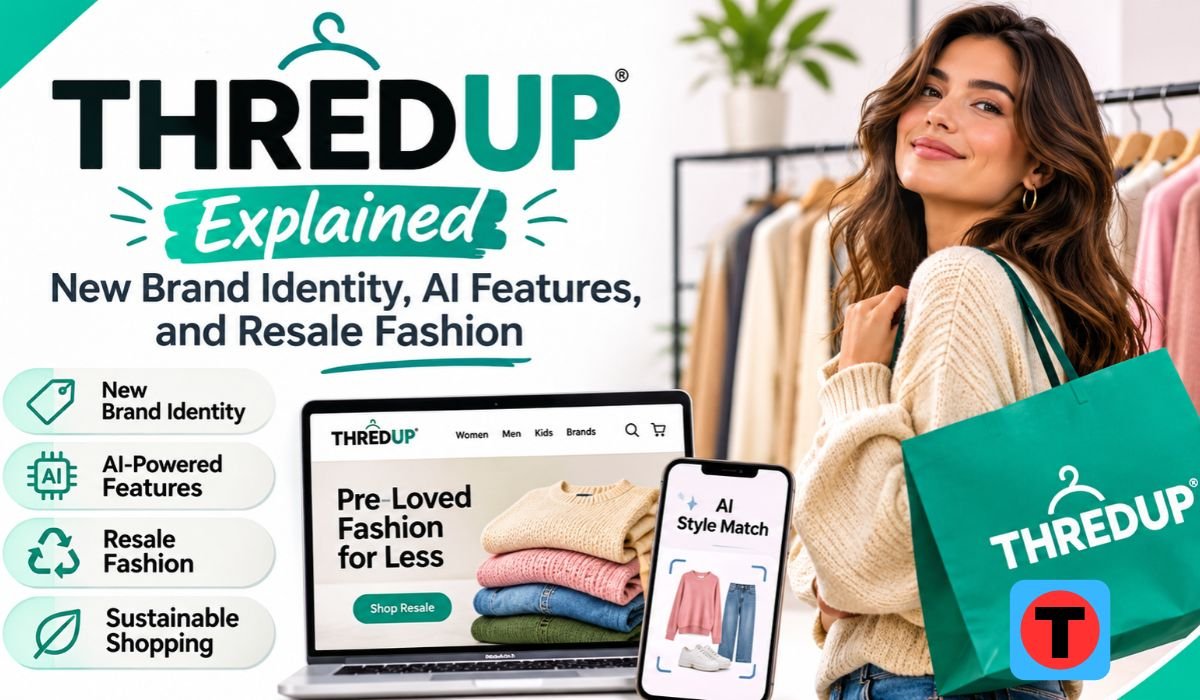
Secondhand fashion is no longer limited to thrift stores and bargain hunting. Today, millions of shoppers are exploring resale platforms to find affordable clothing, discover popular brands, and make more thoughtful shopping decisions. ThredUp has become an important name in this growing industry, offering an online marketplace where customers can buy and sell previously owned clothing, shoes, and accessories.
In 2026, ThredUp is entering a new chapter with a refreshed brand identity, artificial intelligence features, and improvements designed to make online resale easier. Its redesigned logo reflects circular fashion, while personalized shopping tools help customers discover products that match their interests.
The transformation highlights a larger change in consumer behavior. Secondhand shopping is becoming a familiar part of modern fashion, and ThredUp wants to make the experience more convenient, appealing, and accessible.
What Is ThredUp and How Does It Work?
ThredUp is an American online resale marketplace specializing in secondhand clothing, footwear, and accessories, particularly for women and children. Founded in 2009, the company helps shoppers find previously owned fashion items while providing sellers with a convenient way to clear unwanted clothing from their wardrobes.
Unlike traditional peer-to-peer marketplaces, where individuals usually photograph, list, and ship their own products, ThredUp operates a managed resale system. Customers submit eligible clothing, and the company handles important parts of the resale process, including reviewing items, preparing listings, and managing orders.
Shoppers can browse products from everyday labels, premium designers, and luxury brands. Since most secondhand pieces are individually sourced, available sizes, colors, and styles change frequently. This creates opportunities to discover unusual items, although finding a particular product may require patience.
Quick Bio Information About ThredUp
| Company Information | Details |
|---|---|
| Company Name | ThredUp Inc. |
| Brand Name | ThredUp |
| Founded | 2009 |
| Cofounder | James Reinhart |
| Chief Executive Officer | James Reinhart |
| Headquarters | Oakland, California, United States |
| Industry | Fashion Resale and E-Commerce |
| Business Type | Online Secondhand Marketplace |
| Primary Market | United States |
| Main Customers | Clothing Buyers and Sellers |
| Product Categories | Clothing, Shoes, and Accessories |
| Main Audience | Women and Children |
| NASDAQ Symbol | TDUP |
| LTSE Symbol | TDUP |
| Business Model | Managed Fashion Resale |
| Technology Focus | AI-Powered Shopping and Marketplace Operations |
| Items Processed | More Than 250 Million, According to the Company |
| Brands Represented | Approximately 60,000 |
| Product Categories Reported | Around 100 |
| Company Mission | Encourage Consumers to Think Secondhand First |
The History of ThredUp and Its Growth
ThredUp began in 2009 when online clothing resale was still developing into a mainstream shopping category. Cofounder James Reinhart helped establish the company around the idea that unwanted clothing could retain value when passed to another owner.
Over time, ThredUp expanded its operations and invested in technology, processing facilities, inventory management, and online shopping tools. These investments helped the company handle the complexity of selling large quantities of individually different secondhand products.
According to its corporate announcement, ThredUp has processed more than 250 million unique items from approximately 60,000 brands across 100 categories. These company-reported figures demonstrate the scale of its operations, although they do not represent current inventory.
Its development also reflects changing attitudes toward resale. Clothing once viewed primarily as used merchandise is increasingly marketed through convenience, affordability, personal style, and responsible consumption.
Why ThredUp Introduced a New Brand Identity
ThredUp’s rebranding reflects its ambition to become a more recognizable destination for modern fashion resale. The company believes that secondhand shopping has moved beyond a niche activity and now attracts consumers with different budgets, lifestyles, and fashion preferences.
In its announcement, ThredUp stated that three out of four consumers participate in secondhand shopping. That figure reflects the company’s cited market research and should not be interpreted as a verified measurement of every consumer worldwide.
The company has also increased its focus on the U.S. marketplace and invested in technology designed to improve customer experiences. Its leadership describes the rebrand as an effort to align its appearance with its evolving business.
Rather than presenting resale as an alternative shopping method, ThredUp wants secondhand fashion to feel like a natural first choice.
ThredUp’s New Logo and Visual Identity Explained
One of the most noticeable changes is ThredUp’s redesigned visual identity. The company has introduced a cleaner, more balanced appearance intended to create a modern and welcoming shopping experience.
Its new infinity-inspired emblem represents the circular nature of secondhand fashion. The design also forms a thread-like letter T, connecting the company name with the idea of clothing moving between owners.
The infinity symbol communicates an important message: clothing does not necessarily lose its usefulness when its first owner stops wearing it. Resale can extend the life of garments and create additional opportunities for people to enjoy them.
Kristen Brophy, ThredUp’s Senior Vice President of Marketing, has connected the new identity with thoughtful fashion choices, affordability, and making better use of existing wardrobes.
How ThredUp Uses AI for Smarter Shopping
Artificial intelligence is central to ThredUp’s updated shopping experience. Unlike conventional retailers that may stock many identical products, secondhand marketplaces often manage individual items with different sizes, conditions, colors, and availability.
This makes product discovery especially challenging.
ThredUp’s AI-powered search and recommendation features are designed to help customers explore relevant products without searching through extensive inventories manually. Dynamic shopping modules can present personalized selections and introduce shoppers to styles they might otherwise overlook.
For example, someone interested in casual clothing may benefit from recommendations that make related products easier to discover.
However, AI recommendations cannot guarantee accurate sizing or perfect matches. Customers should still examine product descriptions, measurements, and photographs before buying.
The Daily Edit and Personalized Fashion Discovery
The Daily Edit is one of ThredUp’s most distinctive newly announced features. It provides a personalized collection of 100 products that refreshes every 24 hours.
The purpose is to simplify shopping by presenting a manageable selection instead of requiring customers to explore thousands of available items.
This approach is particularly useful for resale fashion because inventory changes as individual products are purchased and new clothing becomes available.
Daily recommendations can also encourage shoppers to discover brands, colors, and styles outside their usual preferences.
The feature represents ThredUp’s broader effort to combine personalized technology with the excitement of finding unique secondhand clothing.
ThredUp Trend Report and Popular Fashion Styles
ThredUp’s Trend Report is another feature designed to make secondhand shopping more engaging. The weekly report highlights fast-growing fashion trends and connects them with products available to purchase.
Rather than simply describing popular clothing styles, the feature aims to help customers explore relevant items within the marketplace.
This may appeal to shoppers interested in seasonal fashion, changing aesthetics, or experimenting with different looks without always buying newly manufactured clothing.
The weekly Trend Report should not be confused with ThredUp’s broader resale industry research, which examines market developments and consumer behavior.
Both reflect the company’s interest in understanding fashion trends, but they serve different purposes.
Enhanced Product Listings and Better Shopping Confidence
Buying secondhand clothing online requires careful attention because previously owned garments can differ in condition, fit, and appearance.
ThredUp is addressing these concerns through improved product listings that include more photographs, additional viewing angles, zoom capabilities, and more accurate measurements.
These improvements may help customers understand how clothing looks before purchasing it.
Detailed measurements are particularly useful because sizing standards vary between brands and can change over time.
Even with improved listings, shoppers should review available condition information, compare measurements with clothing they already own, and understand applicable return policies.
Better product information can reduce uncertainty, but it cannot completely eliminate the limitations of shopping for clothing without trying it on.
How to Buy Clothes on ThredUp
Shopping on ThredUp begins with exploring its available secondhand inventory. Customers can search for clothing categories, brands, sizes, and styles, depending on the platform’s current browsing options.
After finding an interesting product, shoppers should examine its photographs, listed condition, measurements, and price.
ThredUp advertises discounts of up to 90% compared with estimated retail prices on certain products. However, savings vary, and estimated retail values should not automatically be treated as current store prices.
Before completing an order, customers should also review shipping costs, return eligibility, and the final purchase amount.
Because secondhand products are often available as individual pieces, a particular item may disappear from inventory once another customer purchases it.
How to Sell Clothes on ThredUp
ThredUp offers a managed selling process intended to reduce the work involved in reselling unwanted clothing.
Customers can submit eligible garments through the company’s Clean Out system. ThredUp then evaluates submitted products and determines which items qualify for resale.
Its announced improvements include free Clean Out Bags, shopping credit options, and doorstep pickup. Availability and conditions may vary, so sellers should check the latest service terms before participating.
The company has also introduced clearer tracking information and more detailed payout breakdowns.
Sellers can flag incorrectly labeled items and view photographs of rejected products, improving visibility into the processing experience.
Importantly, submitting clothing does not guarantee acceptance or payment. Earnings depend on applicable policies, item eligibility, and resale outcomes.
ThredUp and the Future of Circular Fashion
Circular fashion focuses on keeping clothing useful for longer rather than treating garments as disposable products.
ThredUp supports this approach by helping previously owned clothing reach new customers. Its marketplace provides an alternative to purchasing newly manufactured garments and offers consumers another way to manage unwanted wardrobes.
The company also operates Resale-as-a-Service, providing technology and resale infrastructure to participating fashion brands and retailers.
These partnerships allow businesses to introduce resale experiences without necessarily building every operational component themselves.
Although extending clothing use can offer environmental benefits, the actual impact depends on factors such as shipping, processing, replacement purchases, and how long garments remain in use.
Resale is therefore one useful part of responsible fashion consumption rather than a complete solution to the industry’s environmental challenges.
ThredUp’s Business Strategy and Resale Market Growth
ThredUp’s transformation comes as fashion resale becomes more established within the broader retail industry.
The company has emphasized investment in proprietary technology, improvements to its customer experience, and renewed attention to its core U.S. operations.
Its announcement also describes a significant return to growth, although it does not provide the financial figures needed to independently evaluate that statement.
ThredUp’s strategy reflects an important industry challenge: making secondhand shopping convenient enough to compete with traditional online retail.
The combination of personalized recommendations, better product listings, and simpler selling tools may help address that challenge.
Nevertheless, long-term success will depend on customer satisfaction, operating efficiency, competitive pricing, and the company’s ability to maintain a reliable resale experience.
Benefits, Limitations, and What Comes Next
ThredUp offers several potential advantages, including access to discounted clothing, a wide variety of brands, convenient resale services, and personalized shopping tools.
Its managed marketplace can also appeal to sellers who prefer not to create individual listings or communicate directly with buyers.
However, secondhand shopping has limitations. Product availability changes frequently, sizes may be inconsistent, and clothing conditions can vary. Sellers must also consider acceptance standards and payout policies.
ThredUp’s updated identity and AI features aim to make these experiences easier, but their effectiveness will ultimately depend on how well they work for customers.
The company’s next chapter illustrates how resale platforms are evolving from simple online thrift stores into technology-driven fashion marketplaces.
FAQs About ThredUp
What Is ThredUp?
ThredUp is an American online resale marketplace where customers can purchase secondhand clothing, shoes, and accessories. It also provides services that help people submit unwanted clothing for resale.
Why Did ThredUp Change Its Brand Identity?
ThredUp introduced a new identity to reflect the growing popularity of secondhand fashion, its investment in AI technology, and its ambition to create a more modern shopping experience.
What Does ThredUp’s New Logo Mean?
The infinity-inspired logo represents circular fashion and the continued reuse of clothing. Its thread-like T also connects the design with the company’s name and mission.
What Is the ThredUp Daily Edit?
The Daily Edit is a personalized shopping feature that presents 100 selected items and refreshes every 24 hours, helping customers discover relevant secondhand products.
Can You Sell Clothes on ThredUp?
Yes. Customers can submit eligible clothing through ThredUp’s Clean Out process. The company evaluates items for resale, while acceptance and potential earnings depend on its current policies.
Is ThredUp Cheaper Than Buying New Clothes?
ThredUp offers discounted secondhand clothing and advertises savings of up to 90% off estimated retail prices on certain products. Actual savings depend on the item, brand, condition, and price.
Does ThredUp Use Artificial Intelligence?
Yes. ThredUp uses AI-powered search, personalized recommendations, and dynamic shopping features to improve product discovery and make browsing its resale inventory more convenient.
Is ThredUp Environmentally Friendly?
ThredUp promotes clothing reuse and circular fashion, which can help extend garment lifespans. However, environmental benefits depend on purchasing habits, transportation, processing, and other factors.
Final Thoughts
ThredUp’s new brand identity represents an important stage in the evolution of online secondhand fashion. Its infinity-inspired logo, AI-powered discovery tools, Daily Edit, Trend Report, and improved selling features demonstrate how the company is working to modernize resale shopping.
For buyers, these developments promise easier product discovery and clearer information. For sellers, improved tracking and payout transparency may make the resale process more understandable.
More broadly, ThredUp reflects a changing fashion industry in which affordability, convenience, technology, and clothing reuse increasingly influence purchasing decisions.
As resale continues to evolve, ThredUp’s long-term importance will depend not simply on its redesigned appearance but on whether it can make secondhand shopping genuinely easier, more reliable, and more rewarding for everyday consumers.
Learn more and explore exciting content on: TXMyZone Explained: What It Is, Features, Benefits, and Key Facts










Leave a Reply