
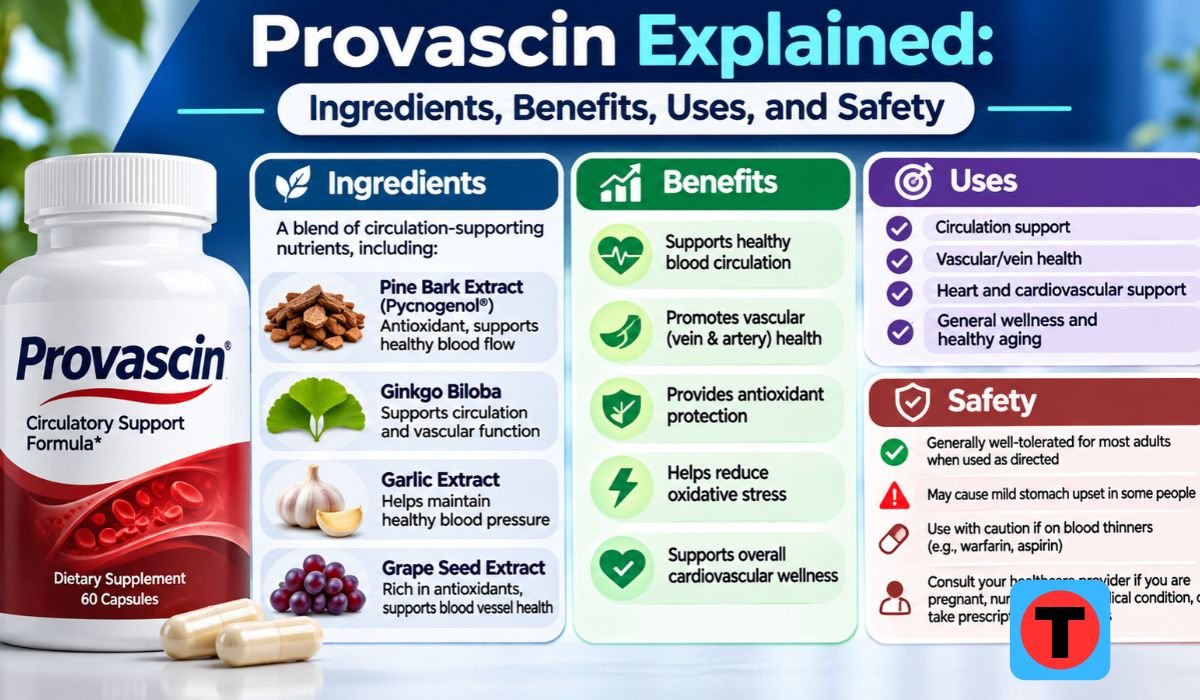
Taking care of your heart involves more than eating healthy meals or exercising regularly. Quality sleep, stress management, medical checkups, and proper nutrition all contribute to cardiovascular wellness. Some people also explore dietary supplements such as Provascin as part of their daily health routine.
Provascin has historically been marketed as a cardiovascular wellness supplement containing nutrients, antioxidants, and natural extracts. Its formulation includes ingredients involved in cellular energy production and other biological functions.
However, understanding what a supplement can realistically offer is just as important as knowing its ingredients. This comprehensive 2026 guide explores Provascin, its potential benefits, scientific evidence, uses, side effects, and important safety considerations.
What Is Provascin?
Provascin is a dietary supplement historically marketed under the Canadian PURICA brand. It was developed with cardiovascular wellness in mind and contains a combination of naturally occurring compounds, nutritional ingredients, and botanical extracts. Unlike prescription medicines, Provascin has not been established as a treatment for heart disease, hypertension, or circulation disorders. Its original formulation brings together ingredients that participate in energy metabolism and antioxidant activity. While historical product listings provide information about its composition, its current availability and formulation have not been independently confirmed. Anyone considering the supplement should verify the actual packaging rather than relying entirely on older online descriptions.
Provascin Quick Information
| Feature | Information |
|---|---|
| Product Name | Provascin |
| Historical Brand | PURICA |
| Product Type | Dietary Supplement |
| Product Form | Capsules |
| Main Purpose | Marketed Cardiovascular Wellness Support |
| Intended Users | Adults |
| L-Carnitine | 188 mg |
| Alpha-Ketoglutaric Acid | 125 mg |
| Chaga Mushroom | 125 mg |
| Coenzyme Q10 | 38 mg |
| Betaine Hydrochloride | 31 mg |
| Alpha-Lipoic Acid | 13 mg |
| Grape Seed Extract | 9 mg |
| Green Tea Extract | 9 mg |
| Prescription Medicine | No |
| Clinical Effectiveness | Not Established for the Complete Formula |
| Current Availability | Not Confirmed |
| Medical Consultation | Recommended |
The ingredient quantities above reflect a historical product listing per capsule, rather than a verified current formulation or recommended dosage.
Main Ingredients in Provascin
The original Provascin formula contained eight principal ingredients selected for their different nutritional and biological properties. These included L-Carnitine, Coenzyme Q10, Alpha-Ketoglutaric Acid, Chaga Mushroom, Betaine Hydrochloride, Alpha-Lipoic Acid, Grape Seed Extract, and Green Tea Extract. Although several of these substances occur naturally in foods or the human body, their presence in a supplement does not automatically establish a health benefit. Ingredient quality, concentration, absorption, and the way different compounds interact are all important. Understanding each ingredient separately helps consumers distinguish established biological functions from unproven product claims.
L-Carnitine and Cellular Energy
L-Carnitine performs an important role in the body’s natural energy production process. It helps transport fatty acids into mitochondria, which are small structures inside cells responsible for producing energy. The heart requires a continuous energy supply, making L-Carnitine particularly interesting to cardiovascular researchers. Healthy adults generally produce enough carnitine to meet their normal needs. Although supplementation has been investigated in several cardiovascular conditions, research findings have been mixed. There is insufficient evidence to conclude that taking Provascin improves heart function or provides additional energy in otherwise healthy individuals.
Coenzyme Q10 and Heart Wellness
Coenzyme Q10, commonly known as CoQ10, occurs naturally throughout the human body. It is involved in cellular energy production and also performs antioxidant functions. Researchers have examined CoQ10 supplements for various cardiovascular conditions, including heart failure. However, evidence remains limited or inconsistent for several proposed uses, particularly blood pressure management. CoQ10 may cause mild digestive discomfort or sleep difficulties in some individuals. It can also interact with medications such as warfarin. Its inclusion in Provascin helps explain the supplement’s original cardiovascular focus, but it does not establish the effectiveness of the complete formula.
Chaga Mushroom and Plant Extracts
Chaga Mushroom is a fungus that commonly grows on birch trees in colder regions. It has a history of traditional use, although strong human clinical evidence supporting its cardiovascular benefits remains limited. Grape Seed Extract contains polyphenols that have attracted scientific interest for their antioxidant properties and possible effects on blood vessel function. Green Tea Extract contains naturally occurring compounds called catechins and has been studied for cholesterol management. While some research suggests modest effects from individual extracts, concentrated preparations can also cause adverse reactions. Chaga, in particular, has been associated with kidney injury in reported cases involving substantial consumption.
Other Supporting Ingredients
Provascin also historically contained Alpha-Ketoglutaric Acid, Alpha-Lipoic Acid, and Betaine Hydrochloride. Alpha-Ketoglutaric Acid participates in the body’s natural metabolic processes, including reactions that contribute to energy production. Alpha-Lipoic Acid has antioxidant properties and has been studied for certain diabetes-related complications. Betaine Hydrochloride is an acidic form of betaine commonly found in some dietary supplements. These ingredients have different functions, and their inclusion creates a multi-ingredient formulation. Nevertheless, it would be inaccurate to assume that combining them produces stronger cardiovascular benefits without reliable clinical research examining the finished product.
How Does Provascin Work?
The proposed purpose of Provascin revolves around cellular energy metabolism and antioxidant activity. Its ingredients participate in different biological processes that are relevant to normal body functions. For example, L-Carnitine assists with fatty acid transport, while CoQ10 contributes to cellular energy production. Several botanical extracts contain compounds with antioxidant properties. However, these individual mechanisms should not be confused with confirmed therapeutic effects. A substance can perform an important function inside the body without providing measurable benefits when taken as a supplement. Direct clinical research is necessary to demonstrate whether a particular formulation improves meaningful health outcomes.
Potential Benefits of Provascin
Provascin has been marketed for general cardiovascular wellness, circulation support, and cellular energy. Its combination of nutritional ingredients may appeal to adults interested in learning about heart health supplements. However, potential Provascin benefits should be understood within the limitations of available evidence. There is no established proof that the complete formula prevents heart attacks, clears blocked arteries, improves circulation disorders, or significantly reduces cardiovascular disease risk. Individual experiences may also differ because of diet, existing medical conditions, medications, and lifestyle habits. Positive testimonials alone cannot confirm that a supplement provides genuine cardiovascular improvements.
Provascin Uses and Blood Pressure
People researching Provascin may be particularly interested in whether it helps manage high blood pressure. Hypertension is a serious medical condition that frequently develops without noticeable symptoms. Although some individual supplement ingredients have been investigated for possible effects on blood pressure, Provascin itself has not been established as an effective hypertension treatment. The American Heart Association emphasizes the importance of appropriate medical care, healthy lifestyle changes, and prescribed medication when necessary. Replacing blood pressure medicines with an unproven supplement can allow hypertension to remain uncontrolled and increase the risk of serious complications.
Scientific Evidence Behind Provascin
One of the biggest challenges when evaluating Provascin in 2026 is the shortage of reliable product-specific research. Scientific literature contains studies examining CoQ10, L-Carnitine, Green Tea Extract, and other ingredients individually. However, a published clinical trial demonstrating the safety and cardiovascular effectiveness of the complete Provascin formula could not be identified in the sources reviewed. This distinction matters because research may use different ingredient forms, concentrations, and treatment durations. Results obtained from a single isolated compound cannot automatically be applied to a supplement containing several ingredients. Consumers should therefore approach strong marketing promises with reasonable caution.
How to Take Provascin Safely
Anyone considering Provascin should first discuss its suitability with a qualified healthcare professional. Historical online dosage recommendations may not reflect a current formulation, and they should not be used as medical instructions. If a clinician determines that the product is appropriate, consumers should check the current label for ingredient amounts, warnings, serving instructions, and storage requirements. Combining multiple supplements containing similar ingredients can unintentionally increase overall intake. Products with damaged packaging, missing identification details, or expired dates should also be avoided. Taking larger amounts does not necessarily produce better results and may increase the risk of adverse effects.
Possible Side Effects
Provascin side effects have not been comprehensively established through published product-specific clinical trials. However, its individual ingredients may cause nausea, digestive discomfort, diarrhea, headaches, or sleep disturbances. concentrated Green Tea Extract has occasionally been associated with liver injury, while excessive Chaga consumption has been linked to kidney damage. Caffeine-related symptoms may also occur if the particular preparation contains caffeine. Anyone experiencing severe abdominal pain, dark urine, or yellowing of the skin should seek medical evaluation. Chest pain, severe breathing difficulties, fainting, or facial swelling require immediate medical attention rather than continued supplement use.
Medication Interactions and Precautions
Provascin safety deserves particular attention among people taking prescription medicines. CoQ10 may interact with warfarin and insulin, while Green Tea Extract can affect certain cardiovascular medications, including nadolol and atorvastatin. Preliminary research also raises concerns about possible interactions between Chaga and medicines affecting blood clotting or blood glucose. People with heart disease, diabetes, kidney disease, liver disorders, or bleeding conditions should obtain professional advice before using the supplement. Pregnant or breastfeeding women and individuals preparing for surgery should also exercise caution. A pharmacist can review the full ingredient label alongside existing medications.
Choosing a Reliable Provascin Product
Identifying an authentic supplement is particularly important when researching products with limited current manufacturer information. Consumers should examine the manufacturer’s name, complete ingredient panel, expiration date, batch number, and packaging condition. In Canada, licensed natural health products generally carry an eight-digit Natural Product Number that can be checked against Health Canada’s official database. In the United States, dietary supplements do not undergo the same premarket approval process as prescription medicines. Independent quality testing can provide additional information about product composition, but it does not establish clinical effectiveness or guarantee health benefits.
Provascin and Healthy Lifestyle Habits
Long-term cardiovascular wellness depends primarily on established health practices rather than supplements alone. A balanced diet containing vegetables, fruit, whole grains, legumes, nuts, and suitable protein sources provides important nutrients. Regular physical activity, sufficient sleep, avoiding tobacco, and managing stress also contribute to heart health. Monitoring blood pressure, cholesterol, and blood glucose can help identify health concerns before complications develop. These practices have substantially stronger scientific support than the claims surrounding Provascin. Any supplement that a healthcare professional considers appropriate should remain secondary to healthy habits and necessary medical treatment.
Final Thoughts
Provascin is a historically marketed cardiovascular wellness supplement containing several ingredients associated with cellular energy production and antioxidant activity. While its original formulation is interesting from a nutritional perspective, reliable evidence supporting the effectiveness of the complete product remains limited.
Understanding Provascin ingredients, potential benefits, medication interactions, and safety concerns allows consumers to make more informed decisions. Ultimately, maintaining heart health requires consistent healthy habits, appropriate medical care, and realistic expectations about dietary supplements.
FAQs About Provascin
What Is Provascin Used For?
Provascin has historically been marketed for cardiovascular wellness and nutritional support. It has not been established as a treatment for cardiovascular disease.
Does Provascin Lower Blood Pressure?
There is insufficient clinical evidence demonstrating that Provascin effectively lowers blood pressure. People with hypertension should continue their prescribed treatment.
Is Provascin Safe for Daily Use?
Its long-term safety has not been adequately established. Suitability depends on the product’s formulation, existing health conditions, and possible medication interactions.
How Long Does Provascin Take to Work?
No scientifically established timeframe exists for Provascin effectiveness because reliable clinical evidence examining the complete formulation is limited.
Is Provascin a Natural Supplement?
Its historical formula combines naturally occurring nutritional compounds and botanical ingredients. However, natural ingredients are not necessarily risk-free.
Can Provascin Replace Heart Medication?
No. Provascin should never replace prescribed cardiovascular medication, professional medical monitoring, or established treatments.
Is Provascin Scientifically Proven?
Although individual ingredients have been studied, reliable clinical evidence establishing the effectiveness of the complete Provascin formula has not been identified.
Learn more and explore exciting content on: Tracqueur Explained: Meaning, Types, Features, and How It Works












Leave a Reply