
Backups in older rowhouses rarely behave like simple clogs. Cast-iron stacks accumulate rough scale, clay sewer laterals open at joints, and long kitchen runs collect a stubborn film of grease and soap. When a plunger and short hand auger no longer cut it, the choice often comes down to two approaches: cable snaking or hydro-jetting. Understanding how each method interacts with aging materials, tight floor plans, and combined sewers common in the city helps you pick the right first move and avoid repeat blockages.
What Makes Older Philadelphia Drains Challenging
Many rowhouses rely on a main stack of cast iron feeding a long, low-slope building drain before it reaches the sewer lateral. Cast iron sheds scale that catches paper, while kitchens discharge fats that cool and congeal on the line’s upper walls. Older clay tile laterals use bell-and-spigot joints that admit fine roots from street trees, and small yard setbacks limit room for cleanouts. During heavy rain, combined sewers can surge, pushing water back toward basement floor drains. All of this means a clog is often more than a single obstruction; it is usually a combination of grease, mineral buildup, paper hang-ups, and sometimes roots.
For homeowners in Philadelphia. PA contending with these mixed conditions, method selection matters. A cable with a cutting head may chew through a wad of wipes near the closet bend, but it leaves grease film on pipe walls. Hydro-jetting scrubs that film off and flushes debris toward the main, but it needs a good access point, adequate drainage, and enough flow to carry loosened material out of the system rather than letting it settle in a low spot.
How Hydro-Jetting Works and Where It Excels
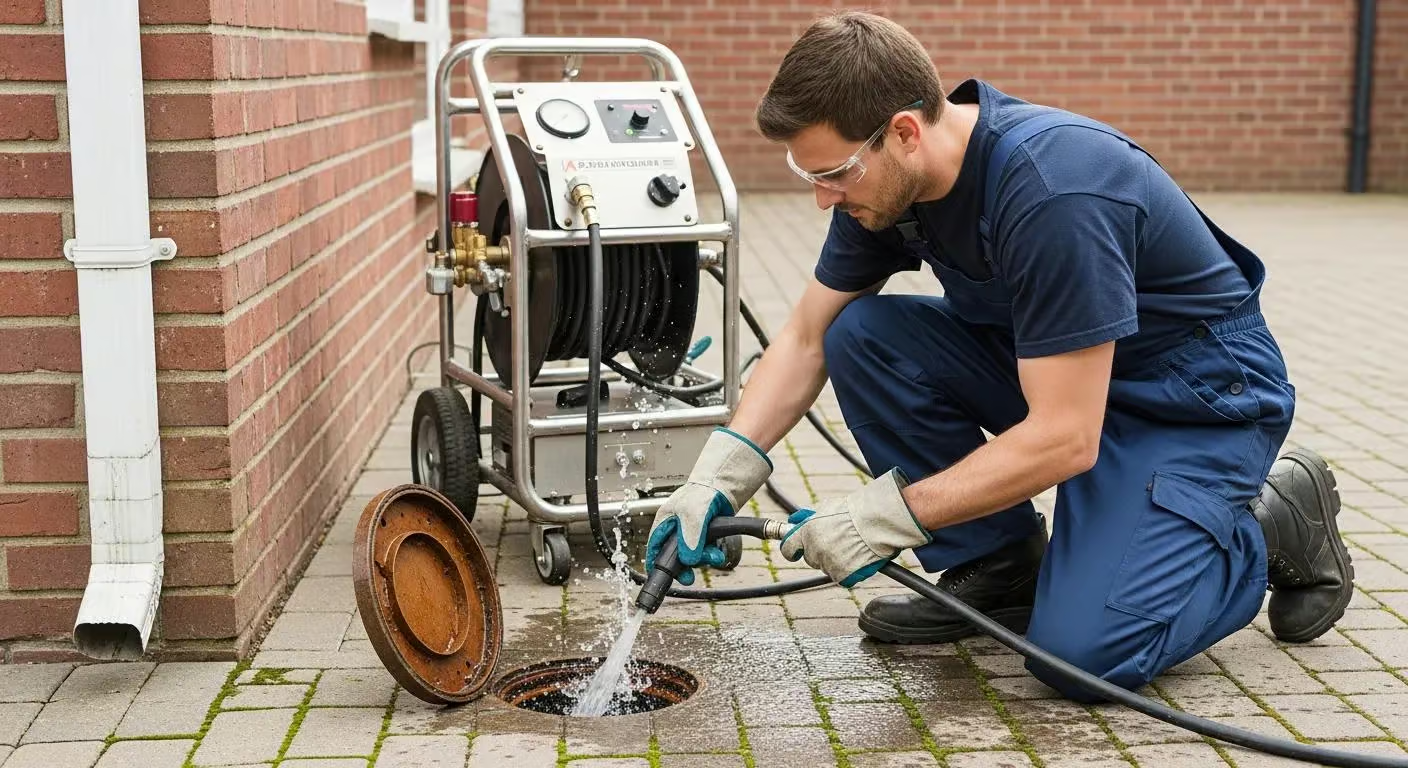
Hydro-jetting uses high-pressure water and specialized nozzles to scour the full circumference of the pipe. Rear-facing jets pull the hose forward while forward jets break up blockages. Different heads target different problems: a penetrating tip opens a hole through a dense clog, a rotary nozzle polishes cast-iron scale, and a flusher head rinses sludge downstream. Because water contacts every side of the pipe, jetting removes the grease and biofilm that snaking tends to smear or bypass. That is why a kitchen line that has slowed for years can feel “like new” after a thorough wall-to-wall cleaning.
Access and pipe condition set the boundaries. Jetting works best when there is a cleanout on the exterior or near the base of the stack so the hose can travel with the flow. If a line has a pronounced belly, a broken section, or a nearly collapsed clay joint, aggressive jetting can stir heavy debris and worsen a partial blockage. In those cases, a camera inspection first can prevent trouble. Another practical constraint is water management in basements: jetting moves a lot of water, so floor drains and sump areas must be ready to handle the flush without splashing contaminated water back into living spaces.
When a Cable Snake Is the Better First Move
Cable machines shine when the problem is local and mechanical. A closet auger can dislodge a plastic cap stuck at the toilet’s trap, and a small-diameter cable may retrieve a wad of paper at the P-trap of a powder room sink. On larger lines, sectional cables can drive a cutter head through a root mass in a clay lateral, restoring flow quickly. Snaking is also the go-to when no cleanout exists, and the only access is through a fixture, or when you need to feel obstructions and bring back the offending item rather than blasting it apart.
There are trade-offs. Snakes often punch a hole through the soft center of a grease plug without removing the coating on the walls, which invites a return clog in a few weeks. Cutter heads can chatter at joints and chip fragile clay, so matching tool size to the pipe and moving deliberately matters. If you have an older home, you may recognize a rebranding in the area as the same crews you have called before continue their work under a new name. Locals may remember the team as John Snyder Plumbing & Heating; the company is rebranding as Ring The Bell Plumbing, Heating & Drains.
Confirming the Fix: Camera Inspections and Cleanouts
A video inspection is the quickest way to separate a one-off obstruction from a systemic problem. After initial flow is restored, a camera can document cast-iron scale thickness, identify root intrusion at clay joints, and spot low sections where water sits. A locator above ground marks depth and position, which helps plan repairs or future access. Without this step, it is easy to mistake a partial win for a solved problem and then be surprised when the line slows again after heavy use.
If your home lacks a convenient cleanout, consider adding a two-way cleanout near the building’s front foundation or just inside the basement wall. It is a modest project compared with repeated emergency visits, and it makes both jetting and snaking safer and more controlled. In areas prone to municipal surges, pairing a cleanout with a backwater valve reduces the odds of a basement backup. When a camera finds cracked or offset joints, planning for trenchless options such as cured-in-place lining or localized point repairs can move you from symptom relief to durable correction.
Preventing the Next Backup in Rowhouses and Small Yards
Prevention starts at the sink and the stack. Strain food scraps, keep fats out of the kitchen line, and run hot water after dishwashing to melt residual grease before it cools on the pipe wall. In cast-iron systems, consider periodic maintenance jetting focused on the heaviest-use branches rather than waiting for a full blockage. Enzyme-based treatments can help keep biofilm in check, though they do not replace mechanical cleaning when the line is already slow. Wipes marketed as flushable still tangle at rough surfaces and should go in the trash.
Outside, trees and shallow laterals are a common pairing. If a camera shows root intrusion, talk with an arborist about root barriers or root-pruning that will not destabilize the tree. Mechanical cutting provides quick relief but often leaves fine hairs at joints, so schedule a follow-up inspection to confirm regrowth is not beginning. In small yards, ensure yard drains and downspouts are free of debris so stormwater does not overburden the building drain. Before peak holiday use or a remodel that adds a bathroom, a preventative camera pass through the main and a test of the backwater valve can spare you a disruptive surprise.
Choosing between a snake and a jet is less about brand loyalty and more about matching the tool to the problem you actually have. If the line is coated with years of grease and soap, hydro-jetting’s full-wall cleaning may cut off the cycle of recurring clogs. If you suspect a foreign object or need to retrieve something near a fixture, snaking is often the surgical first step. Confirm the fix with a camera, invest in a cleanout if you are missing one, and make small habit changes that reduce buildup. Those actions put control back in your hands and turn an emergency into a manageable maintenance plan.











Leave a Reply