
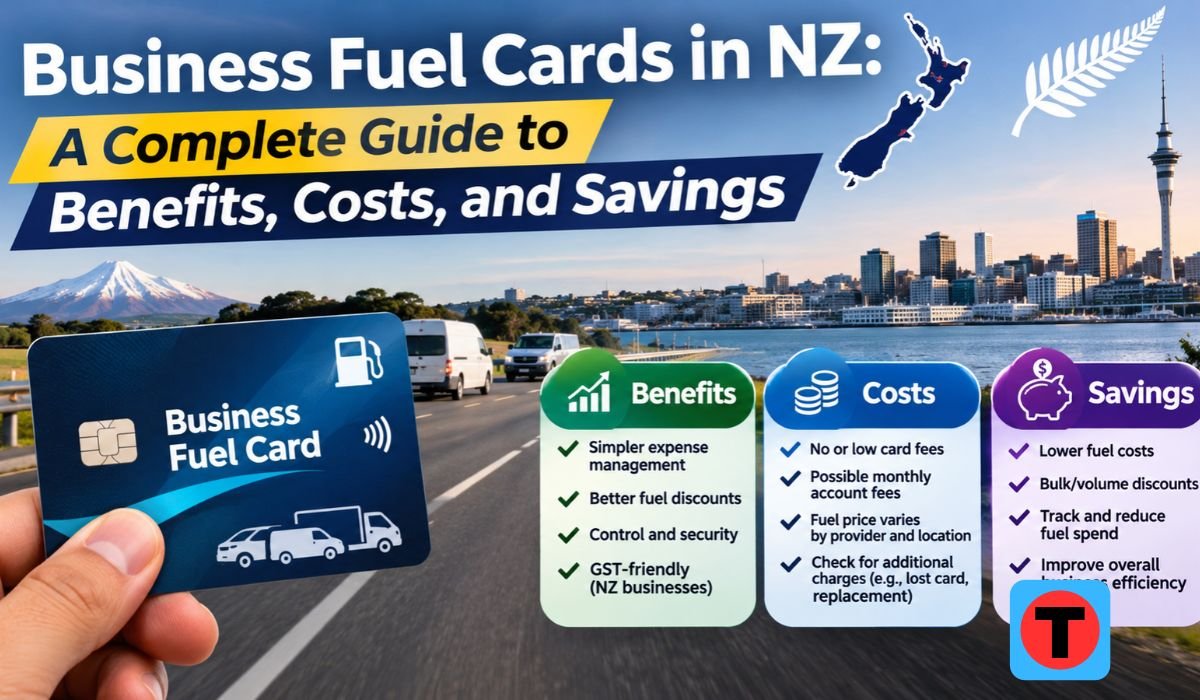
Managing fuel expenses can be challenging, especially when a business depends on several vehicles to complete its daily operations. Rising operating costs, missing receipts, employee reimbursements, and unexpected fuel purchases can make financial management unnecessarily complicated.
Business Fuel Cards in NZ offer a practical solution by combining fuel payments, spending controls, transaction monitoring, and expense reporting into a centralised system. Whether you’re a self-employed contractor, a small business owner, or a large fleet manager, these cards can help you understand where your money goes and identify opportunities to reduce costs.
In 2026, choosing the right fuel card requires looking beyond discounts and considering network coverage, account fees, payment flexibility, security, and tax reporting.
Quick Information About Business Fuel Cards in NZ
| Category | Information |
|---|---|
| Product Name | Business Fuel Cards |
| Country | New Zealand |
| Primary Purpose | Business Fuel Payments |
| Suitable For | Small Businesses and Commercial Fleets |
| Fuel Types | Petrol and Diesel |
| Card Types | Single-Brand and Multi-Brand |
| Payment Options | Account-Based and Provider-Specific Arrangements |
| Fuel Discounts | Vary by Provider |
| Account Fees | Depend on Card Agreement |
| Transaction Tracking | Available With Many Providers |
| Spending Controls | Customisable on Selected Cards |
| Standard GST Rate | 15% |
| Account Management | Online Portals and Mobile Applications |
| Billing Frequency | Weekly, Fortnightly, or Monthly, Depending on Provider |
| Security Features | PIN Protection and Purchase Restrictions |
| EV Charging | Supported by Selected Providers |
| Tax Record Retention | Generally Seven Years |
| Main Providers | CardSmart, Z Business, BP, Mobilcard, Waitomo, and Allied Petroleum |
What Are Business Fuel Cards in NZ?
Business Fuel Cards are specialised payment cards that allow companies to purchase fuel and other authorised vehicle-related products through a dedicated account. Unlike ordinary bank cards, commercial fuel cards are designed specifically to support fuel expense management. Businesses can assign cards to individual employees or vehicles, making it easier to monitor purchases and understand fuel consumption patterns. Depending on the provider, cards may also cover lubricants, vehicle servicing, car washes, and selected transport expenses. Instead of processing numerous individual receipts, business owners can receive consolidated statements containing detailed transaction information.
How Do Business Fuel Cards Work?
The process begins when a company opens an account with a fuel card provider. Once approved, the business receives cards that can be distributed to authorised employees. Drivers use these cards at participating petrol stations, and purchases are recorded against the business account. Transactions may include information such as fuel type, quantity, location, purchase value, and vehicle identification. Business owners can review this information through an online management portal. Depending on the agreement, outstanding balances are generally collected through scheduled payments, reducing the need for employees to pay personally and request reimbursement.
Different Types of Business Fuel Cards
New Zealand businesses can choose between several fuel card arrangements. Single-Brand Fuel Cards primarily operate within a particular fuel company’s network and participating partner locations. Multi-Brand Fuel Cards provide access to several fuel brands, offering greater flexibility for businesses that travel across different regions. Fleet Fuel Cards focus on managing multiple vehicles and drivers, while small business arrangements are designed for contractors and companies with simpler requirements. Some providers also offer combined fuel and electric vehicle charging solutions, making them relevant for businesses operating mixed fleets in 2026.
Key Features of Business Fuel Cards
Modern Commercial Fuel Cards offer more functionality than basic payment processing. Depending on the provider, businesses can establish purchase restrictions, monitor fuel consumption, assign individual PINs, download transaction reports, and manage cards through online dashboards. Some systems support programmable alerts that help managers identify unusual purchases. Vehicle-level reporting can also reveal differences in fuel efficiency and operating costs. CardSmart, for example, provides purchasing controls and fleet reporting tools designed to improve visibility over business expenses. These features are particularly valuable when multiple employees have access to company funds.
CardSmart+1
Benefits of Business Fuel Cards in NZ
One of the biggest benefits of Business Fuel Cards in NZ is the ability to manage expenses without relying entirely on manual paperwork. Consolidated billing reduces administrative work, while detailed transaction records improve accountability. Fuel discounts may lower operating costs, and scheduled payment arrangements can support cash flow management. Businesses can also identify vehicles consuming more fuel than expected and investigate whether maintenance, driving habits, or inefficient routes are responsible. For smaller companies, the time saved on bookkeeping can be just as valuable as the financial savings generated through discounted fuel.
How Much Do Business Fuel Cards Cost?
Fuel card costs vary considerably between providers and account types. Some companies charge establishment fees, monthly card fees, replacement charges, or fees for selected purchases. Others advertise arrangements without standard card or transaction fees. Z Business, for example, promotes a fuel card without standard account, card, or transaction charges, while Kiwi Fuelcards publishes joining and card issuance fees for business customers. When comparing options, businesses should examine the complete fee schedule, including payment conditions and promotional expiry dates. A larger fuel discount does not necessarily make a card cheaper overall.
Z Energy+1
How Fuel Cards Help Businesses Save Money
Business Fuel Discounts can produce meaningful savings when a company purchases fuel regularly. Imagine a delivery business consuming 2,000 litres of fuel each month with an illustrative discount of 10 cents per litre. Its gross monthly saving would be NZ$200. If combined card fees total NZ$20 per month, the direct net saving would be NZ$180, or NZ$2,160 annually, assuming consumption and pricing remain unchanged. However, businesses should compare discounted prices with alternative local pump prices. Additional savings may come from reduced administrative work, better route planning, and improved vehicle efficiency.
Payment Flexibility and Spending Controls
Effective spending controls help companies reduce unauthorised purchases and manage budgets more confidently. Depending on the fuel card provider, managers may restrict purchases to petrol, diesel, and approved vehicle products, establish transaction limits, or control spending for particular vehicles. Individual driver identification strengthens accountability, while transaction monitoring helps highlight unexpected activity. Flexible billing arrangements can also be useful for businesses managing seasonal workloads or changing delivery schedules. The key is to establish practical restrictions that protect company funds without preventing employees from completing their legitimate business journeys.
Fuel Station Network Coverage in NZ
Network coverage is an important consideration, particularly for companies travelling between cities or operating in rural areas. A fuel card with an attractive discount may provide limited value if drivers must travel significantly out of their way to find participating stations. CardSmart reports acceptance at more than 90% of New Zealand fuel sites, while Z Business advertises coverage across more than 550 participating locations. Businesses should examine actual station maps, operating hours, available fuel types, and accessibility for larger commercial vehicles before selecting a card.
CardSmart+1
Popular Business Fuel Card Providers in NZ
Several established providers serve New Zealand businesses. CardSmart focuses on multi-network accessibility and expense management. Z Business offers access to its participating fuel network and consolidated invoicing. BP Fuelcard and Mobilcard provide commercial payment solutions through their respective networks and selected partners. Waitomo offers commercial pricing arrangements, digital payments, and account reporting, while Allied Petroleum supports businesses through dedicated fuel stops and Mobilcard options. Each provider has different pricing structures, network arrangements, and account conditions, so the most suitable choice depends on actual business requirements rather than brand recognition alone.
CardSmart+4
GST and Business Fuel Tax Reporting
New Zealand’s standard Goods and Services Tax (GST) rate is 15%. Detailed fuel card statements can help GST-registered businesses maintain accurate expense records and support eligible claims. Since April 2023, Inland Revenue’s recordkeeping rules have used the concept of Taxable Supply Information rather than requiring traditional tax invoices in every situation. Businesses must retain sufficient supporting records and correctly account for business and private expenditure. Inland Revenue generally requires purchase and sales records to be retained for seven years. A fuel card simplifies recordkeeping, but it does not automatically make every purchase tax-deductible.
ird.govt.nz+2
Fuel Cards and Fringe Benefit Tax
Fringe Benefit Tax (FBT) may apply when employers provide vehicles or other benefits for employees’ private use. Inland Revenue generally considers whether a company vehicle is available for private use, rather than simply whether the employee actually uses it. The standard motor vehicle benefit valuation already accounts for running costs, including fuel. However, employer-funded fuel for an employee’s personal vehicle can involve different tax considerations. Keeping accurate records and clearly separating business and private expenses helps prevent reporting mistakes. Businesses should consult a qualified New Zealand accountant about their specific obligations.
ird.govt.nz+2
Business Fuel Cards vs Credit Cards
Business Credit Cards provide flexibility across many types of expenses, whereas Business Fuel Cards focus on fuel purchases and vehicle-related spending. General credit cards may offer rewards or broader merchant acceptance, but dedicated fuel cards often provide more specialised transaction reporting and purchase controls. For fleet operators, detailed information about individual vehicles and drivers can be particularly useful. Businesses with limited fuel consumption may find an existing credit card sufficient, while those purchasing substantial quantities of fuel could benefit from commercial pricing arrangements and more comprehensive fleet reporting.
Choosing and Applying for the Right Fuel Card
Choosing the Best Business Fuel Card in NZ starts with understanding your monthly fuel consumption, regular travel routes, and vehicle requirements. Compare effective fuel prices, overall fees, billing schedules, reporting capabilities, and participating locations. Once a suitable provider has been selected, the application process typically involves supplying business identification, contact information, payment details, and any required financial information. Some credit-based accounts may require a credit assessment. After approval, businesses can activate their cards, assign authorised users, configure available spending controls, and explain appropriate card usage to employees.
Are Business Fuel Cards Worth It in 2026?
Business Fuel Cards can offer considerable value when their benefits match a company’s operational needs. However, restricted network coverage, account charges, and unsuitable pricing arrangements can reduce potential savings. Businesses should regularly review transaction reports, compare effective fuel prices, cancel unused cards, and maintain clear purchasing policies. Companies transitioning towards electric vehicles should also investigate combined fuel and charging cards. For businesses with consistent vehicle usage, the greatest long-term value often comes from combining competitive fuel pricing with stronger financial controls, improved accounting practices, and efficient fleet management.
Final Thoughts
Business Fuel Cards in NZ offer more than a convenient way to purchase petrol or diesel. They can help businesses manage operating expenses, improve employee accountability, simplify GST reporting, and identify opportunities for financial savings.
The right fuel card should complement your business operations rather than create additional complications. By comparing provider fees, network coverage, fuel discounts, payment terms, and reporting features, companies can make more informed decisions.
Whether you operate one work vehicle or manage a nationwide commercial fleet, a suitable fuel card can make everyday expense management simpler and more transparent.
FAQs About Business Fuel Cards in NZ
What Is a Business Fuel Card?
A Business Fuel Card is a dedicated payment card that allows authorised employees to purchase fuel and selected vehicle-related products through a company’s account. It helps businesses monitor transactions, manage expenses, and simplify payment administration.
Which Business Fuel Card Is Best in NZ?
There is no single best option for every business. CardSmart, Z Business, BP Fuelcard, Mobilcard, Waitomo, and Allied Petroleum offer different benefits. The best choice depends on fuel consumption, network coverage, pricing, fees, and spending controls.
Can Small Businesses Get Fuel Cards?
Yes. Many providers offer fuel card accounts suitable for small businesses, sole traders, and independent contractors. Eligibility requirements and payment arrangements vary, and credit-based accounts may require financial approval.
Are Business Fuel Cards Free?
Some providers offer cards without standard monthly or transaction fees. However, others charge account establishment, card issuance, or additional service fees. Businesses should review the complete terms before applying.
Can Businesses Claim GST on Fuel Purchases?
GST-registered businesses may generally claim eligible GST on fuel expenses connected to their taxable business activities, subject to Inland Revenue requirements. Appropriate records must be maintained, and private use must be accounted for correctly.
Can Fuel Cards Be Used at Every Petrol Station?
No. Fuel cards operate within participating networks. Multi-Brand Fuel Cards generally provide broader coverage, but businesses should verify individual station acceptance before travelling.
Can Fuel Cards Help Reduce Fleet Costs?
Yes. Fuel discounts, purchase restrictions, detailed reporting, and reduced administrative work can help lower fleet operating costs. Actual savings depend on consumption levels, account fees, fuel prices, and how effectively the business manages its cards.
Can Business Fuel Cards Pay for EV Charging?
Selected providers now offer combined fuel and electric vehicle charging solutions. These arrangements can simplify expense management for businesses operating petrol, diesel, and electric vehicles within the same fleet.
Learn more and explore exciting content on: Shell Fuel Card Explained: Benefits, Features, Costs, and Network Coverage









Leave a Reply