
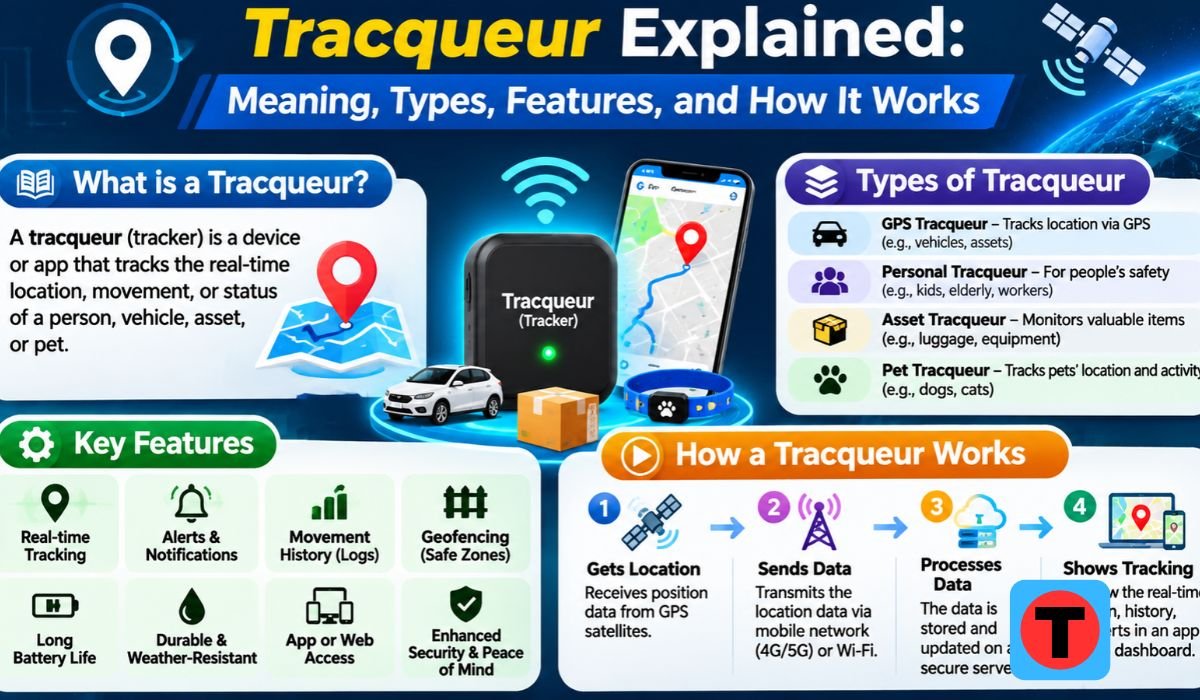
Imagine losing your car keys just before leaving for work or discovering that your luggage hasn’t arrived at the airport. Situations like these can be frustrating, but modern tracking technology offers a practical solution. A Tracqueur can help you locate misplaced belongings, monitor authorized vehicles, and keep track of valuable assets using different wireless technologies.
In 2026, tracking devices are available for everything from everyday belongings to commercial equipment. However, not every tracker works in the same way. Understanding its technology, accuracy, connectivity, and limitations can help you make a smarter decision while protecting your privacy.
Quick Information About Tracqueur
| Category | Details |
|---|---|
| Name | Tracqueur |
| Meaning | Tracker or location-tracking device |
| Standard French Term | Traceur |
| Technology | GPS, Bluetooth, RFID, and Wi-Fi |
| Main Purpose | Location and asset tracking |
| Common Uses | Vehicles, luggage, pets, and belongings |
| Device Types | Portable, wearable, and installed trackers |
| Connectivity | Bluetooth, Cellular, or Wi-Fi |
| GPS Support | Depends on the device |
| Mobile Application | Available with compatible models |
| Battery Type | Rechargeable, replaceable, or wired |
| Subscription | Required by some services |
| Location Accuracy | Varies by technology and environment |
| Geofencing | Available on supported devices |
| Location History | Available on supported devices |
| Business Applications | Fleet and asset management |
| Main Limitations | Coverage, battery life, and accuracy |
| Privacy Requirements | Responsible and authorized usage |
What Is a Tracqueur?
Tracqueur is an informal spelling associated with tracking devices and location-monitoring technology. It doesn’t describe a specific company, product, or standardized technical system. Instead, it can refer to several devices designed to help users determine the location of their belongings or authorized assets. Interestingly, the standard French term for a tracking device is traceur, while traqueur traditionally describes someone who pursues or hunts. This distinction is recognized by the Office Québécois de la Langue Française. Understanding the correct Tracqueur Meaning helps readers avoid confusion and focus on the technology that best matches their needs.
GDT
How Does a Tracqueur Work?
A Tracqueur generally collects information about the position, movement, or proximity of an object. A GPS receiver calculates its geographical position using satellite signals, while Bluetooth devices communicate with compatible nearby equipment. Connected trackers may transmit information to a digital platform through cellular networks or another communication system. Users can then access available location information through a smartphone application or computer dashboard. Depending on the device, the application may display movement history, battery information, location updates, and notifications. Some passive tracking devices work differently by recording information locally for later review instead of transmitting it immediately.
Main Types of Tracqueur Technology
Modern Tracking Technology includes several systems designed for different purposes. GPS Trackers are useful for geographical positioning across wide areas, while Bluetooth Trackers are commonly used for small personal belongings. RFID, or Radio-Frequency Identification, helps businesses identify and manage tagged inventory using compatible readers. Wi-Fi Positioning can support location services in suitable indoor environments, while Cellular Trackers can transmit information through mobile networks. Hybrid Tracking Devices combine multiple technologies to address different operating conditions. Some advanced systems also support Ultra-Wideband technology, which can improve nearby distance and direction measurements when compatible hardware is available.
GPS Tracqueur vs. Bluetooth Tracqueur
A GPS Tracqueur and a Bluetooth Tracqueur solve different tracking problems. GPS devices are suitable for determining geographical positions when satellite signals are available. Connected models can transmit those positions remotely through cellular or other communication services. Bluetooth devices are generally designed for nearby item finding, although supported finding networks can extend their usefulness through other participating devices. Bluetooth tags often consume less power because they don’t need to calculate and transmit GPS coordinates independently. Someone who frequently misplaces their keys may benefit from a Bluetooth tag, while a delivery business may require connected GPS tracking for its vehicles.
Common Uses of Tracqueur in Everyday Life
Tracking devices have become useful for many ordinary activities. Car owners can check the location of authorized vehicles, travelers can monitor luggage, and pet owners can use suitable collar-mounted trackers to help locate missing animals. Bluetooth tags are particularly convenient for backpacks, wallets, and keys. Equipment owners may also use tracking systems to keep track of valuable tools. However, choosing the correct device matters. A Bluetooth Luggage Tracker doesn’t necessarily provide continuous location updates, while a dedicated Pet GPS Tracker may require mobile coverage, regular charging, and a subscription. Each application has different technical requirements.
Tracqueur for Business and Fleet Management
Businesses can use Asset Tracking Technology to improve their understanding of where vehicles, equipment, and inventory are located. Delivery companies may use Fleet Tracking Systems to coordinate transportation and review journey information. Warehouses can use RFID technology to identify tagged products, while construction businesses may benefit from systems that monitor expensive equipment. These solutions can reduce time spent searching for assets and support better operational planning. Nevertheless, successful implementation requires more than installing tracking devices. Businesses also need reliable records, secure software, clear monitoring policies, and appropriate safeguards for employee privacy.
Key Features of a Tracqueur
Useful Tracqueur Features include location updates, battery notifications, movement alerts, and location history. Geofencing allows users to establish a virtual boundary around a particular geographical area. Compatible devices may send notifications when an authorized asset enters or leaves that boundary. Water resistance is important for trackers used outdoors, while application compatibility determines whether the device works with your smartphone. Battery performance and customizable update intervals also deserve attention. A device with constant location reporting may consume more power than one that updates periodically. Secure account access is equally important because tracking information can reveal sensitive details.
How Accurate Is a Tracqueur?
Location Tracking Accuracy depends on receiver quality, positioning technology, signal availability, and environmental conditions. According to GPS.gov, GPS positioning generally becomes less accurate near bridges, buildings, and trees. Indoor spaces, underground parking areas, and tunnels can also interfere with satellite reception. Bluetooth trackers face different challenges because their effectiveness depends on wireless range and compatible finding networks. Another important consideration is the timestamp displayed in the tracking application. A marker on a map may represent the last recorded position rather than the object’s current location. Always check when the position was updated before relying on it.
GPS.gov
Benefits and Limitations of Tracqueur Devices
The biggest Tracqueur Benefits include everyday convenience, improved asset visibility, and support for recovering misplaced belongings. Tracking technology can help businesses manage equipment and reduce unnecessary searches. However, every device has limitations. Batteries eventually run out, network connections may become unavailable, and location information can be delayed. Some users may also face recurring service charges. Tracking devices cannot guarantee property recovery or completely prevent theft. They work best alongside practical security measures such as reliable locks, alarms, insurance, and safe storage. Understanding these limitations can help users develop realistic expectations before purchasing a device.
Does a Tracqueur Need Internet or a SIM Card?
Not every Tracqueur requires an internet connection or SIM card. GPS receivers obtain positioning information directly from satellite signals without needing mobile internet. However, transmitting that information to a remote smartphone usually requires a suitable communication method. Many connected GPS Trackers use cellular services, including physical SIM cards or embedded connectivity. Bluetooth tags typically operate through nearby compatible devices instead of an independent mobile data subscription. Some GPS data loggers record movements internally for later access. Therefore, anyone searching for a GPS Tracker Without a SIM Card should understand whether they need live remote updates or simply recorded location history.
How Much Does a Tracqueur Cost?
The cost of a Tracqueur varies considerably according to its technology, construction, features, and connectivity requirements. Basic Bluetooth tags generally involve fewer operating expenses than advanced vehicle tracking systems with connected services. GPS trackers may require monthly or annual subscriptions to cover mobile communication and software access. Installation, charging equipment, and replacement batteries can also contribute to ownership costs. Businesses may face additional software and fleet management expenses. Instead of comparing purchase prices alone, consider the complete cost of operating the device over its expected service life. A cheaper tracker isn’t necessarily more economical if it requires expensive recurring services.
How to Choose the Right Tracqueur
Choosing the right Tracqueur begins with understanding what you want to locate. For everyday belongings, a compact Bluetooth tag may be sufficient. Vehicles and mobile equipment may require a connected GPS device, while indoor inventory management could benefit from RFID systems. Consider battery life, operating conditions, network availability, physical size, and application compatibility. If the device will operate outdoors, examine its water resistance and temperature specifications. Review subscription requirements and privacy policies before purchasing. The most suitable tracker isn’t necessarily the one with the most features, but the one that reliably meets your specific requirements.
Common Tracqueur Problems and Solutions
Like other electronic devices, trackers can occasionally experience technical problems. If a location isn’t updating, check the device’s battery level, network connectivity, and application status. GPS reception may improve when the device has an unobstructed view of the sky. Bluetooth connection issues can sometimes be resolved by checking smartphone permissions and supported device settings. Frequent location updates may reduce battery life, so reviewing update intervals can help balance performance with power consumption. Keep compatible applications and device software updated, and consult the manufacturer’s instructions when troubleshooting. Regular maintenance helps ensure that your tracking device remains dependable.
Tracqueur Privacy, Security, and Responsible Use
Location information is sensitive because it can reveal personal routines, workplaces, and travel patterns. Tracking devices should always be used for legitimate purposes and with appropriate permission or authority. Apple and Google have collaborated on protections that allow compatible unwanted Bluetooth trackers to be detected across supported mobile platforms. These features help address the misuse of item-finding technology, although they cannot eliminate every risk. Users should protect tracking accounts with strong passwords and available additional authentication. Businesses should restrict access to location records and establish clear data-handling policies. Applicable privacy and tracking laws vary by jurisdiction.
Apple Support (UK)
The Future of Tracqueur Technology
The future of Tracqueur Technology is likely to involve more sophisticated combinations of satellite positioning, Bluetooth, wireless sensors, and connected software. Bluetooth direction-finding and ranging technologies already demonstrate how compatible devices can improve nearby location measurements. Future improvements could include greater energy efficiency, better indoor positioning, and more useful asset management tools. Advanced software may also help businesses recognize movement patterns and identify operational problems. However, stronger privacy protections will remain essential as tracking devices become more capable. The industry’s long-term challenge is to deliver reliable location information without compromising personal security or responsible data management.
Bluetooth® Technology Website+1
Final Thoughts
A Tracqueur can be a valuable tool for managing personal belongings, vehicles, pets, and business assets. Its effectiveness depends on selecting suitable technology and understanding its capabilities. GPS, Bluetooth, and other tracking systems serve different purposes, and no single device is ideal for every situation.
By considering accuracy, connectivity, battery performance, ownership costs, and privacy, users can make more informed decisions. Ultimately, the real value of modern tracking technology lies in its practical and responsible use.
FAQs About Tracqueur
What Is a Tracqueur?
A Tracqueur refers to a tracking device or location-monitoring solution. It may use GPS, Bluetooth, RFID, or other technologies to help locate belongings and authorized assets.
Is Tracqueur the Correct French Word?
The established French term for a technological tracking device is traceur. Tracqueur is a nonstandard spelling associated with tracking-related searches.
Can a Tracqueur Work Without Internet?
Yes. GPS receivers can calculate their position without internet access. However, transmitting location updates remotely generally requires an appropriate communication network.
How Long Does a Tracqueur Battery Last?
Battery life can range from days to months or longer, depending on the device, battery capacity, communication technology, and frequency of location updates.
Can a Tracqueur Work Indoors?
Some Bluetooth, RFID, and Wi-Fi tracking systems can operate effectively indoors. GPS reception may become unreliable when buildings obstruct satellite signals.
Are Tracqueurs Available Without Subscriptions?
Yes. Many Bluetooth item trackers and offline GPS loggers operate without monthly service fees. Connected GPS tracking services may require recurring payments.
Can a Tracqueur Help Recover Stolen Property?
Tracking information may support property recovery, but success isn’t guaranteed. If theft is suspected, share relevant information with the appropriate authorities rather than attempting a risky recovery yourself.
Is Using a Tracqueur Legal?
Legality depends on the circumstances and applicable local laws. Users should respect ownership rights, personal privacy, consent requirements, and relevant data-protection rules.
Learn more and explore exciting content on: Çbiri Explained: Meaning, Possible Origins, and Everything You Should Know











Leave a Reply