
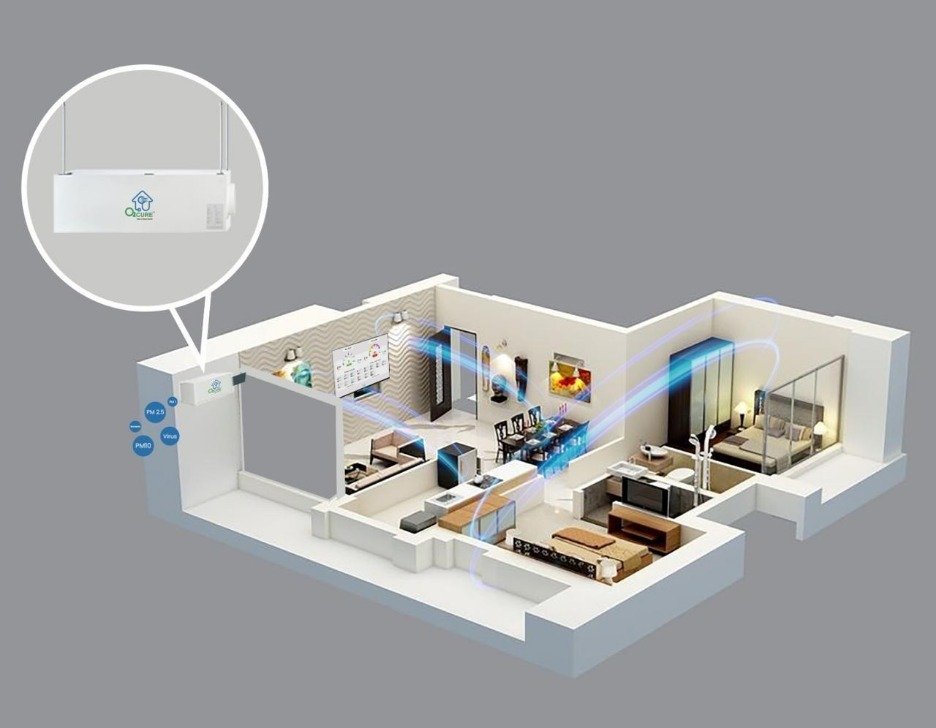
Indoor spaces can contain a mix of airborne particles, biological contaminants, gases, and odors. Dust, pollen, smoke, and fine particulate matter may enter from outdoors or arise from everyday activities. Volatile organic compounds, often called VOCs, can also come from materials and products used indoors. Because these pollutants are not always visible, a room can feel ordinary while its air still needs attention.
Choosing an air purifier for room use can help address specific airborne contaminants and support a cleaner indoor environment when the equipment is suitable for the space.
Why Indoor Pollutants Need Different Approaches
Indoor air pollution is not a single problem, so one method does not address every pollutant in the same way. Particulate matter includes small particles such as PM2.5 and PM10, as well as dust and pollen. Microbial contaminants include bacteria, viruses, molds, and fungi. Gases and odors form another category, including VOCs, smoke-related compounds, and chemical smells. Effective air cleaning depends on matching the purification technology to the contaminants present.
How Purification Technology Works
Air purification systems draw or move indoor air through technologies designed to capture or treat certain contaminants. Filtration can remove airborne particles, while other approaches are designed to address microbial contaminants or gases and odors. An integrated three-layer approach can address particulate matter, microbial pathogens, and gases and odors within one system.
Commercial solutions also include electronic air cleaning for compatible air handling and fan coil units. The technologies used, and their performance, depend on the selected product and its specifications.
Reducing Particles Such as Dust and Pollen
Fine particles can come from outdoor pollution, dust, and pollen carried inside. Some particles remain suspended in the air, while others settle on surfaces and may become airborne again when disturbed. Air cleaning systems with appropriate particle filtration can capture a portion of these airborne materials as air passes through the system.
This can be useful in rooms where dust or seasonal pollen is a concern. Product selection should consider the room’s dimensions, airflow needs, and the manufacturer’s stated performance.
Addressing Microbial Contaminants
Indoor air may contain biological particles, including bacteria, viruses, mould, and fungi. Their presence and movement depend on conditions in the environment, and air purification should be considered as one part of broader indoor air management. Some systems use filtration, while others include additional technologies designed to treat airborne microbial contaminants.
The capabilities of a particular system should be checked against its technical documentation. Air purifiers should not be described as a guarantee against infection or as a replacement for appropriate ventilation, cleaning, or professional healthcare advice.
Managing Gases and Unwanted Odors
Not all indoor pollutants are particles. VOCs and other gases can be released by some building materials, furnishings, cleaning products, and other sources. Smoke and chemical odors can also affect how an indoor space feels. Particle filters alone are not designed to remove every gas, so gas-control technology may be needed for particular concerns. TriCure™ includes gas and odor control through adsorption media.
The right solution depends on the pollutants involved and the product’s design. Where possible, identifying and reducing the source of an unwanted emission remains important alongside air cleaning.
Choosing Equipment for the Room
Room size and airflow are practical considerations when comparing purification systems. A unit should be suitable for the space where it will operate, and its published capacity and performance details should be reviewed before purchase. Reviewing these details also helps set realistic expectations, because results depend on the device, its placement, operating conditions, and the particular pollutants present in the indoor environment in everyday use.
Consider the pollutants that matter most, the placement of the unit, operating requirements, and the maintenance specified by the manufacturer. A home purifier should be selected for the actual room and its needs, not simply because a model is popular or described as powerful.
Residential and Shared Indoor Spaces
Bedrooms, living rooms, and other household areas can have different air quality concerns depending on their use and surroundings. A bedroom may need attention to dust or pollen, while a living area may be affected by cooking odors or particles brought in from outside.
For larger buildings, a commercial air purifier or an HVAC-integrated system may be more suitable than a small standalone unit. The key is to assess the area, occupancy, airflow, and pollution concerns before deciding on an approach.
Maintenance and Consistent Use
Air purification performance depends not only on the technology but also on appropriate use and maintenance. Follow the product instructions for cleaning, servicing, and replacing any components that require replacement. Some electronic air cleaners use washable collector components, while other systems have different maintenance requirements.
Do not assume every unit has the same service interval or running cost. Keep air inlets and outlets unobstructed, use the system as directed, and arrange professional support when the product or installation calls for it. Regular attention helps keep the equipment operating according to its design.
Air Quality Assessment and Informed Decisions
When indoor air concerns affect a larger space or are difficult to identify, an assessment can help clarify the problem. Consider the floor area, occupancy, and existing ventilation or air conditioning arrangement. Specialist providers offer environment-focused consultations and solutions for residential, commercial, industrial, healthcare, educational, and data center settings.
For systems connected to central air handling equipment, compatibility and installation requirements should be reviewed by qualified specialists. A recommendation based on the environment is more useful than assuming one product suits every room or building.
Conclusion
An air purifier for room use can help reduce selected airborne contaminants when chosen according to the space and its specific air quality needs. Understanding the pollutants, selecting suitable purification technology, and following maintenance instructions are essential for effective operation. Combined with proper ventilation and regular cleaning, the right air purification system can support a cleaner, more comfortable indoor environment for everyday living.
Designed to address diverse indoor pollution challenges, O₂Cure offers air purification solutions for homes, workplaces, and specialized environments. Its offerings include residential purifiers, TriCure™ technology, electronic air cleaners for compatible HVAC systems, and solutions for commercial, industrial, healthcare, education, and data center settings. The team provides environment-focused consultations to help assess space, occupancy, and air quality concerns before recommending suitable purification options and installation or maintenance support.












Leave a Reply