
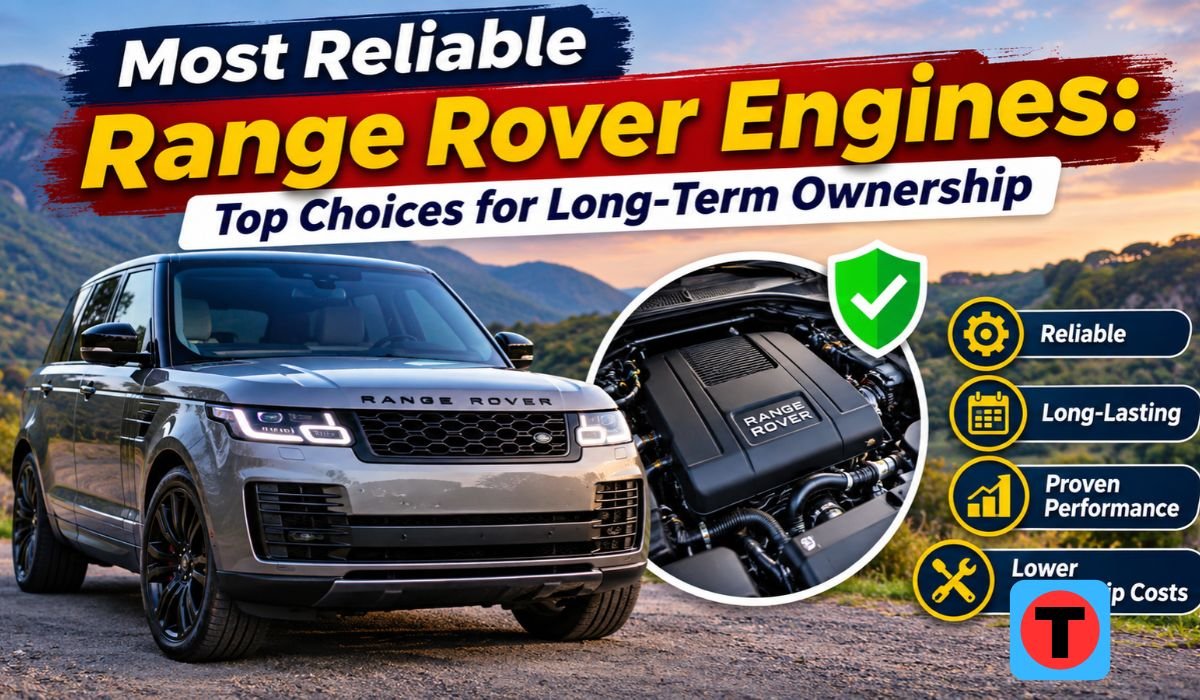
Range Rover has built its reputation on luxury, powerful engines, and impressive off-road performance. However, anyone considering a used model knows that reliability matters just as much as comfort. Choosing the right engine can mean years of enjoyable driving instead of unexpected repair bills.
The Most Reliable Range Rover Engines aren’t necessarily the newest or most powerful. Some older diesel engines have earned loyal followings because of their strong construction, while certain petrol V8 engines offer excellent performance when properly maintained.
The BMW-derived 3.0 TD6, 4.4 TDV8, 3.0 SDV6, and 5.0 AJ133 V8 are among the engines worth examining. Each has different strengths, maintenance requirements, and potential problems.
This guide explores Range Rover engine reliability, common faults, expected lifespan, and ownership costs. Whether you’re buying your first Range Rover or planning to keep your current vehicle for another decade, understanding these differences can help you make a smarter decision.
Quick Information About Range Rover Engines
| Engine Information | Details |
|---|---|
| Vehicle Manufacturer | Land Rover |
| Luxury Vehicle Range | Range Rover |
| Main Engine Types | Petrol, Diesel, and Hybrid |
| Notable Older Diesel | BMW 3.0 TD6 |
| TD6 Engine Family | BMW M57 |
| TD6 Configuration | Inline-Six Diesel |
| TD6 Engine Block | Cast Iron |
| TDV8 Engine Sizes | 3.6L and 4.4L |
| TDV8 Configuration | V8 Diesel |
| SDV6 Engine Size | 3.0L |
| SDV6 Configuration | V6 Diesel |
| AJ133 Engine Size | 5.0L |
| AJ133 Fuel Type | Petrol |
| AJ133 Variants | Naturally Aspirated and Supercharged |
| Early L322 Engine Options | BMW TD6 and BMW M62 V8 |
| Later L322 Engine Options | Including 3.6L and 4.4L TDV8 |
| Important Reliability Factors | Oil, Cooling, Servicing, and Engine Condition |
| Main Buying Consideration | Documented Maintenance History |
What Makes a Range Rover Engine Reliable?
A reliable engine should deliver consistent performance without frequent major mechanical repairs. Strong internal components, effective lubrication, and a well-designed cooling system all contribute to durability.
However, engine construction is only part of the story. Regular oil changes, correct coolant, and timely repairs can make a considerable difference to long-term reliability. An engine with a strong reputation may still fail early if previous owners neglected basic maintenance.
Driving conditions matter too. Frequent short journeys can create problems for modern diesel engines fitted with diesel particulate filters, while heavy towing places additional demands on cooling and lubrication systems.
Repairability is another important consideration. An engine with accessible parts and experienced independent specialists may be more affordable to maintain than a technically advanced unit requiring expensive repairs.
BMW 3.0 TD6: A Strong Choice for Long-Term Durability
The BMW-derived 3.0 TD6 is often mentioned when enthusiasts discuss the most dependable older Range Rover engines. Found in early L322 models, this six-cylinder diesel uses a robust cast-iron block and proven BMW M57 engineering.
Its greatest strength is its relatively straightforward mechanical design compared with newer diesel engines. Well-maintained examples can achieve high mileage, although there is no guaranteed lifespan.
Common concerns include turbocharger wear, fuel injection problems, cooling-system deterioration, and age-related oil leaks. Buyers should also inspect the automatic transmission, which can be a significant ownership expense even when the engine remains healthy.
The TD6 is particularly attractive to drivers who value durability over outright speed. Its performance feels modest compared with modern Range Rovers, but its smooth torque delivery suits relaxed driving.
For long-term ownership, the biggest challenge is finding a vehicle that has received consistent maintenance throughout its life.
Range Rover 4.4 TDV8: Strong Performance and Refinement
The 4.4-litre TDV8 arrived in later L322 Range Rover models and offered an appealing combination of diesel efficiency, smooth acceleration, and substantial torque.
Compared with the earlier 3.6 TDV8, the 4.4 delivers a more refined driving experience. Its eight-speed automatic transmission also contributes to relaxed motorway cruising.
The engine is well suited to long journeys and towing, but its mechanical complexity means repairs can become expensive. Turbocharger components, cooling-system parts, oil leaks, and related systems require careful inspection.
Although the 4.4 TDV8 has a favourable reputation among some owners, that reputation should not replace a thorough mechanical assessment.
A well-serviced example can be a rewarding choice for drivers seeking a powerful diesel Range Rover without moving to a newer generation.
Range Rover 3.6 TDV8: Capable but Maintenance-Intensive
The 3.6 TDV8 brought V8 diesel performance to the L322 generation. Its strong low-speed torque made it particularly appealing to drivers who regularly travelled long distances or carried heavy loads.
However, the engine has several maintenance considerations. Turbocharger failures, oil leaks, cooling-system faults, and restricted access to certain components can make repairs expensive.
Because the engine uses a complex twin-turbo arrangement, diagnosing faults correctly is important. Reduced performance or unusual exhaust smoke does not automatically mean the entire engine requires replacement.
Buyers should look for detailed service records and evidence that previous mechanical problems were repaired properly.
The 3.6 TDV8 remains capable, but it makes the most sense for owners who understand the potential costs of maintaining an ageing luxury diesel SUV.
Range Rover 3.0 SDV6: Good Economy With Important Risks
The 3.0 SDV6 became popular because it combined strong diesel torque with reasonable fuel consumption. Used in several Range Rover applications, including the L405, it provides comfortable motorway performance without the fuel demands of a large petrol V8.
Nevertheless, buyers should understand its most serious weakness: crankshaft and bearing failure. Land Rover’s own technical communication, SSM 72578, identifies bearing-shell rotation and associated crankshaft damage in 3.0-litre V6 diesel applications.
NHTSA
Warning signs may include deep knocking noises, low oil pressure, or sudden engine failure. Unfortunately, some failures occur with little advance warning.
Turbocharger faults, emissions-system problems, and timing-related maintenance also deserve attention. Unlike the 2.0 Ingenium diesel, the older 3.0 SDV6 uses a timing-belt arrangement for its main camshaft drive, with additional timing components depending on the version.
The SDV6 can be enjoyable to own, but its potential repair costs make documented servicing and a specialist inspection particularly important.
Range Rover 5.0 V8: Luxury Performance With Proper Care
The 5.0-litre AJ133 petrol V8 is one of Range Rover’s most appealing performance engines. Available in naturally aspirated and supercharged versions, it provides smooth acceleration, strong power delivery, and a distinctive V8 sound.
The naturally aspirated version offers substantial performance without the additional supercharger system. The supercharged version delivers considerably stronger acceleration but introduces further components requiring maintenance.
Known concerns include timing chain tensioners, chain guides, coolant crossover pipes, water pumps, and cooling-system leaks. Land Rover technical information also highlights the importance of correctly diagnosing and repairing timing-related problems.
NHTSA
A cooling-system leak should never be ignored. Continued driving with insufficient coolant can turn a relatively manageable repair into major engine damage.
For buyers comfortable with higher fuel and maintenance costs, a properly serviced AJ133 remains an attractive long-term ownership option.
Other Range Rover Engines Worth Considering
The classic Rover V8 deserves attention for its simple construction and extensive enthusiast support. Found in earlier Range Rover generations, it remains popular with owners who enjoy maintaining older vehicles. However, overheating, head gasket problems, and cylinder liner movement can require expensive repairs.
The BMW M62 petrol V8, fitted to early L322 models, offers smooth performance but requires attention to timing chain guides and cooling-system components.
Another interesting choice is the Jaguar-derived 4.4-litre naturally aspirated petrol V8 fitted to later L322 models. Its comparatively straightforward design makes it worth considering alongside more complex diesel alternatives.
Newer Range Rovers introduce Ingenium engines, electrified powertrains, and BMW-derived V8 options. These provide modern performance and efficiency, but their long-term durability should be assessed separately from older engine families.
Range Rover Diesel vs Petrol: Which Is More Reliable?
Diesel and petrol Range Rover engines have different advantages, but neither fuel type guarantees reliability.
Diesel engines generally provide strong low-speed torque and good fuel economy during long journeys. This makes them appealing for motorway driving and towing.
However, modern diesels may require maintenance involving diesel particulate filters, exhaust gas recirculation systems, turbochargers, and other emissions equipment. Repeated short journeys can increase the risk of certain emissions-related problems.
Petrol engines usually provide smoother acceleration and avoid diesel particulate filter concerns on older models. Their disadvantages include higher fuel consumption and, in some cases, expensive timing or cooling-system repairs.
For frequent motorway travel, a well-maintained diesel may offer lower fuel costs. Drivers covering shorter distances may find a petrol engine more suitable.
How Long Do Range Rover Engines Usually Last?
A Range Rover engine’s lifespan depends on its design, maintenance history, driving conditions, and previous repairs.
Some well-maintained engines can exceed 200,000 miles, particularly older diesel designs with robust internal construction. However, reaching this mileage is not guaranteed, and an engine’s condition cannot be judged by its odometer reading alone.
Regular servicing helps protect bearings, pistons, turbochargers, and other moving components. Cooling-system maintenance is equally important because overheating can damage cylinder heads, gaskets, and engine blocks.
Owners should pay attention to unusual noises, increasing oil consumption, coolant loss, and changes in performance.
An engine with 150,000 miles and detailed maintenance records may represent a better purchase than one with 80,000 miles and an uncertain service history.
Common Range Rover Engine Problems Every Owner Should Know
Several mechanical problems appear across different Range Rover engine families, although their frequency and severity vary.
Timing chain problems can produce rattling noises, particularly during startup. Crankshaft or bearing damage may cause deeper knocking sounds that become more noticeable under load.
Turbocharger problems can lead to reduced power, unusual whining noises, and exhaust smoke. Cooling-system faults may cause overheating, coolant loss, or temperature fluctuations.
Oil pressure warnings deserve immediate attention. Insufficient lubrication can rapidly damage bearings and other internal engine components.
Not every warning sign indicates catastrophic failure. A faulty sensor or relatively minor component can produce similar symptoms. Nevertheless, accurate diagnosis is essential before continuing to drive or authorising expensive repairs.
Range Rover Engine Maintenance and Repair Costs
Range Rover maintenance costs vary considerably depending on engine type, vehicle age, location, and repair complexity.
Routine servicing generally includes engine oil, filters, inspections, and scheduled fluid replacements. More expensive repairs may involve turbochargers, fuel injectors, timing components, or cooling systems.
Major engine rebuilding can cost several thousand pounds in the UK, with V8 and heavily damaged engines often requiring more extensive work. The final price depends on internal damage, replacement parts, machining, and labour.
Rebuilding the original engine may be economical when its major components remain usable. A remanufactured replacement can also be worthwhile, particularly when supported by a suitable warranty.
Used replacement engines may cost less initially, but their maintenance history and internal condition can be difficult to verify.
How to Make Your Range Rover Engine Last Longer
Consistent maintenance is one of the most effective ways to improve engine longevity.
Use the correct manufacturer-approved oil and follow the maintenance requirements for your particular engine. More frequent servicing may be appropriate under demanding driving conditions, but intervals should be chosen using manufacturer guidance and qualified advice.
Regularly inspect engine oil and coolant levels. Investigate leaks before they become serious, and never continue driving an overheating vehicle.
Pay attention to unfamiliar engine noises, dashboard warnings, or sudden changes in performance.
For turbocharged engines, proper lubrication and sensible driving habits are particularly important. A qualified Range Rover specialist can also identify developing problems before they require major repairs.
Buying a Used Range Rover: How to Choose a Reliable Engine
When purchasing a used Range Rover, service history should carry more weight than attractive specifications or low mileage.
Look for documented oil changes, cooling-system repairs, timing-system work, and evidence of previous engine maintenance. Ask whether major components have already been replaced.
A cold-start inspection can reveal unusual rattling, smoke, or uneven running. During a test drive, observe acceleration, temperature stability, and transmission behaviour.
Professional diagnostics are valuable, but fault-code scanning alone cannot establish an engine’s mechanical condition.
Remember that Range Rover ownership costs extend beyond the engine. Air suspension, electronics, transmissions, and other systems can also require expensive repairs.
A thorough pre-purchase inspection is therefore one of the smartest investments a buyer can make.
Which Range Rover Engine Is Best for Your Driving Needs?
The best engine depends on how you plan to use your Range Rover.
For buyers who value older, proven diesel engineering, the BMW 3.0 TD6 is a strong candidate. Its durability is appealing, although the age of surviving vehicles requires careful consideration.
The 4.4 TDV8 suits drivers seeking smooth diesel performance, long-distance comfort, and towing capability. The 3.0 SDV6 offers good efficiency but carries significant mechanical risks that should influence any buying decision.
For performance enthusiasts, the 5.0 AJ133 V8 provides an especially enjoyable driving experience. Its fuel consumption and maintenance requirements are higher, but its refinement remains impressive.
Ultimately, choosing a well-maintained engine that matches your driving habits is more sensible than selecting one solely because of its reputation.
Final Thoughts: The Most Reliable Range Rover Engines
Choosing among the Most Reliable Range Rover Engines requires balancing durability, performance, maintenance costs, and vehicle condition.
The BMW-derived 3.0 TD6 stands out as a compelling older diesel option, while the 4.4 TDV8 combines strong torque with excellent refinement. The 5.0 AJ133 V8 offers outstanding petrol performance, provided its timing and cooling systems receive appropriate care.
The 3.0 SDV6 remains attractive for everyday driving, but its known crankshaft-related risks deserve particular attention.
There is no universally reliable Range Rover engine. Even the strongest design can suffer from neglected maintenance, while a carefully serviced example of a more complicated engine may provide years of dependable ownership.
The smartest long-term choice is a vehicle with a suitable engine, transparent maintenance records, and a clean professional inspection.
FAQs About the Most Reliable Range Rover Engines
What Is the Most Reliable Range Rover Engine?
The BMW-derived 3.0 TD6 is often considered one of the stronger older Range Rover diesel engines because of its robust construction. However, there is no comprehensive public failure-rate dataset establishing it as the definitive winner. Individual vehicle condition remains essential.
Which Range Rover Engine Lasts the Longest?
The 3.0 TD6 has strong high-mileage potential, and some examples exceed 200,000 miles. Other engines can also achieve substantial mileage with proper maintenance. Service history, operating conditions, and previous repairs are more useful indicators than engine type alone.
Is the Range Rover 4.4 TDV8 Reliable?
The 4.4 TDV8 can provide dependable performance when properly maintained. Its smooth power delivery and substantial torque are major strengths. However, complex turbocharging and associated components can make repairs expensive, particularly on high-mileage vehicles.
What Are the Common Problems With the 3.0 SDV6?
The most serious concern is crankshaft and bearing failure. Other potential problems include turbocharger faults, oil leaks, emissions-system issues, and timing-related maintenance. Buyers should arrange a specialist inspection and carefully review servicing records.
Is the Range Rover 5.0 V8 Expensive to Maintain?
Yes, maintenance can be expensive compared with smaller engines. Fuel consumption is relatively high, while timing chain repairs, cooling-system components, and supercharger-related work can increase ownership costs. Preventive maintenance helps reduce the likelihood of more serious damage.
Can a Range Rover Engine Last 200,000 Miles?
Yes, some Range Rover engines can exceed 200,000 miles. However, mileage depends heavily on servicing, driving conditions, and mechanical condition. Regular maintenance improves the chances of long engine life but cannot eliminate the possibility of major failure.
Are Petrol Range Rover Engines Better Than Diesel Engines?
Neither is automatically better. Petrol engines can be more suitable for short journeys, while diesels often offer better fuel economy during long-distance driving. Reliability depends on the specific engine design, its known weaknesses, and maintenance history.
Should I Rebuild or Replace a Failed Range Rover Engine?
Rebuilding can be cost-effective when the original engine block and major components remain repairable. Replacement may be more practical when damage is extensive. Compare complete quotations, parts quality, labour charges, and warranty coverage before deciding.
Learn more and explore exciting content on: Important Features to Look for When Selecting a Holiday Accommodation
















Leave a Reply