
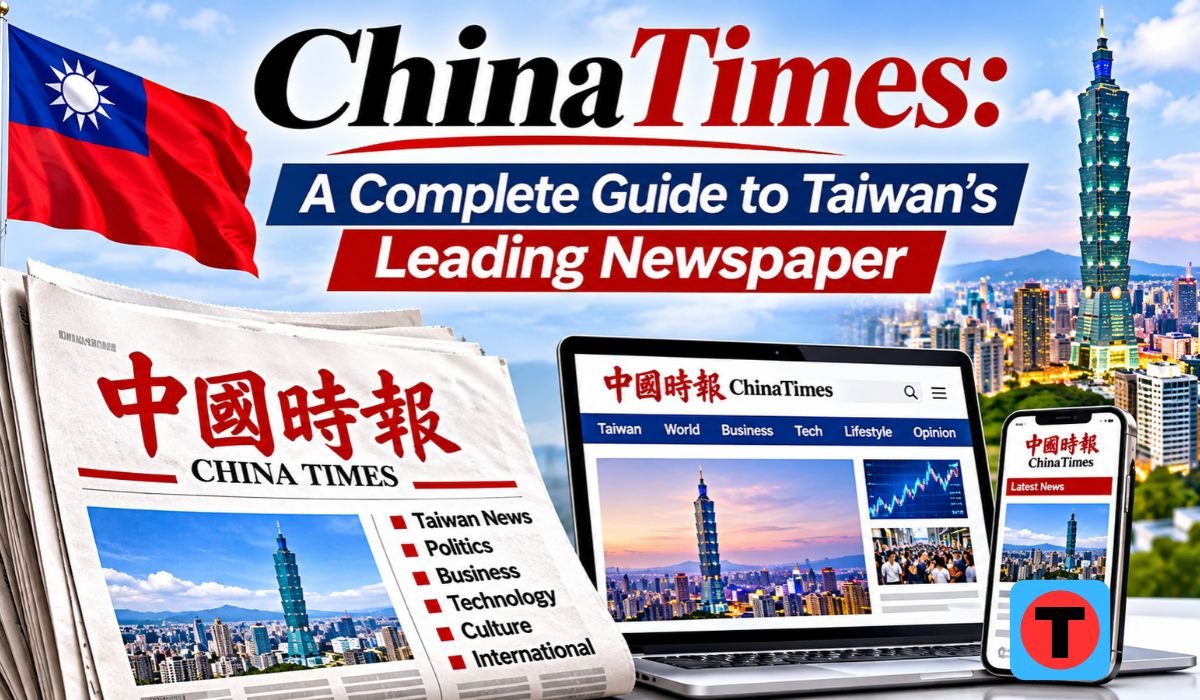
ChinaTimes is one of Taiwan’s most established Chinese-language newspapers, with a publishing history that stretches back more than seven decades. Known officially as the China Times, the newspaper has played an important role in Taiwanese journalism, covering politics, business, international affairs, entertainment, and everyday life.
Founded in 1950, China Times began as a small financial publication before growing into a major news organization. Its journey reflects Taiwan’s changing political environment, economic development, and evolving media industry. Today, the newspaper operates under Want Want China Times Group, a media organization whose ownership and editorial direction have attracted considerable public attention.
Understanding ChinaTimes means looking beyond its headlines. Its history, political associations, digital development, and public controversies offer valuable insights into the relationship between journalism, business ownership, and politics in Taiwan.
Quick Bio Information About ChinaTimes
| Information | Details |
|---|---|
| Official Name | China Times |
| Common Online Name | ChinaTimes |
| Chinese Name | 中國時報 |
| Chinese Abbreviation | 中時 |
| Newspaper Type | Daily Newspaper |
| Founded | February 1950 |
| Founder | Yu Chi-chung |
| Original Name | Credit News |
| Original Focus | Financial News and Price Indices |
| Country | Taiwan |
| Headquarters | Wanhua District, Taipei |
| Publication Language | Chinese |
| Current Name Adopted | September 1968 |
| Parent Organization | Want Want China Times Group |
| Major Acquisition | 2008 |
| Associated Business Leader | Tsai Eng-meng |
| Historical Political Association | Pan-Blue Coalition |
| Main Coverage | Politics, Business, World News, Sports, Entertainment |
| Digital Presence | ChinaTimes News Website |
| Official Website | chinatimes.com |
What Is ChinaTimes and Why Is It Important?
ChinaTimes is a Taiwanese daily newspaper that provides news and commentary about national events, international developments, economic affairs, and social issues. Its long publishing history has made it a recognizable name in Taiwan’s traditional media industry.
The newspaper became especially influential during the second half of the twentieth century, when printed newspapers were among the main sources of public information. Alongside United Daily News, ChinaTimes developed into one of Taiwan’s leading newspaper groups.
Its importance extends beyond reporting daily events. ChinaTimes has participated in public discussions about elections, government policies, economic development, and relations between Taiwan and mainland China. These subjects remain central to Taiwan’s political identity and international position.
Although its current audience size should not be assumed from its historical reputation, ChinaTimes remains significant for understanding Taiwan’s media landscape.
The History of ChinaTimes and Its Early Development
The history of ChinaTimes began in February 1950, when Yu Chi-chung established a publication called Credit News. Unlike the general-interest newspaper readers know today, the original publication concentrated on financial information, particularly price indices and economic developments.
As Taiwan’s economy and society changed, demand increased for broader news coverage. The publication responded by expanding its editorial content beyond financial reporting.
In January 1960, it adopted the name Credit Newspaper, reflecting its development into a more comprehensive daily publication. Another major transformation followed in September 1968, when it became China Times.
The newspaper also introduced color printing in March 1968, an important milestone in its publishing history. By the 1970s, it had grown into one of Taiwan’s two major traditional newspaper groups.
These developments helped ChinaTimes establish a strong identity during a period when print journalism was central to public communication.
Who Founded ChinaTimes? The Legacy of Yu Chi-chung
Yu Chi-chung was the founder of ChinaTimes and an influential figure in Taiwan’s newspaper industry. His decision to establish Credit News in 1950 laid the foundation for a publication that would eventually become a major national newspaper.
Under his leadership, the newspaper expanded its reporting, developed its publishing operations, and strengthened its position in Taiwan’s competitive media market.
Yu’s influence continued for decades as ChinaTimes developed into a broader news organization. His leadership helped transform a specialized financial publication into a newspaper covering many aspects of Taiwanese life.
Following his death in 2002, leadership responsibilities passed to members of his family. His second son, Yu Chien-hsin, assumed the newspaper’s presidency, while his eldest daughter, Yu Fan-ing, also held a senior position.
Yu Chi-chung’s lasting contribution was establishing a newspaper brand that continued operating through major political, technological, and ownership changes.
Who Owns ChinaTimes Today?
ChinaTimes is owned by Want Want China Times Group, which became associated with the newspaper following its acquisition by the Want Want business group in 2008.
Want Want was originally known for food manufacturing, particularly rice crackers and other packaged products. Its expansion into media marked a significant development in Taiwan’s business and publishing sectors.
Businessman Tsai Eng-meng played a central role in the acquisition. Under the new ownership, ChinaTimes became part of a wider media organization associated with television and digital publishing.
The group’s media interests have included China Television and Chung T’ien Television, commonly known as CTV and CTiTV.
The acquisition also generated debate about editorial independence. Critics questioned whether the newspaper’s reporting had become more sympathetic to Beijing’s political positions. These concerns remain an important part of discussions about ChinaTimes ownership and public trust.
ChinaTimes Headquarters and Newspaper Operations
ChinaTimes has its headquarters in Taipei, Taiwan’s capital and an important center for national politics, business, and media activity. The newspaper has historically been based in the city’s Wanhua District.
Its location places it within Taiwan’s broader news and publishing environment, where journalists follow government decisions, business developments, and public affairs.
Like other established newspapers, ChinaTimes depends on reporting, editing, publishing, and distribution to deliver information to readers.
Its transition into digital journalism has also changed how audiences encounter its reporting. Rather than relying exclusively on printed editions, readers can access news through online platforms.
This combination of traditional publishing experience and digital distribution reflects the wider transformation taking place across Taiwan’s newspaper industry.
What Kind of News Does ChinaTimes Cover?
ChinaTimes provides coverage across several major news categories, making it relevant to readers with different interests.
Political reporting is an important part of its editorial identity. Coverage includes Taiwan’s government, elections, political parties, public policies, and cross-strait relations.
Business and financial reporting also remain connected to the newspaper’s original roots. Economic developments, corporate activities, and market-related issues are important subjects for readers following Taiwan’s economy.
International news helps audiences understand events outside Taiwan, particularly developments affecting East Asia and global politics.
ChinaTimes also covers entertainment, sports, lifestyle, and social affairs. These subjects broaden its appeal beyond readers primarily interested in politics.
Together, these categories explain how a newspaper originally focused on financial information developed into a general news publication.
ChinaTimes Website and Digital News Platform
The ChinaTimes website has become an important part of the newspaper’s publishing activities. Through its online platform, readers can follow Taiwanese news without waiting for a printed edition.
Digital publishing allows the organization to present breaking news, political developments, business updates, and entertainment stories in a format suited to modern audiences.
Online access is particularly useful for Taiwanese readers living abroad who want to follow events in their home country.
The digital environment also creates new responsibilities. Readers expect timely updates, accurate headlines, transparent corrections, and reliable information. For an established newspaper such as ChinaTimes, maintaining these standards is essential to preserving credibility.
ChinaTimes Political Alignment and Editorial Views
ChinaTimes has historically been associated with Taiwan’s pan-Blue coalition, which includes the Kuomintang, commonly known as the KMT.
The pan-Blue political tradition generally emphasizes the Republic of China’s historical identity and supports varying degrees of engagement with mainland China.
Before the 2008 acquisition, ChinaTimes was associated with the more liberal wing of the Kuomintang. Its editorial direction subsequently became the subject of greater political debate.
Researchers and press freedom organizations have reported changes in the newspaper’s coverage following the Want Want acquisition. Freedom House, for example, has discussed research indicating a reduction in reporting about human rights issues in mainland China.
These findings contribute to wider questions about how corporate ownership can influence editorial priorities.
Freedom House+1
ChinaTimes and Taiwan-China Relations
Relations between Taiwan and mainland China are among the most sensitive subjects in Taiwanese journalism. ChinaTimes frequently appears in discussions about how media organizations cover these issues.
Taiwan operates as a self-governing democracy, while the government of the People’s Republic of China claims sovereignty over the island.
Political disagreements over Taiwan’s future influence elections, international relations, economic policies, and public opinion.
ChinaTimes’ ownership and editorial positions have attracted attention because of the Want Want business group’s commercial interests in mainland China.
Critics argue that such business connections may create pressure to favor particular political narratives. However, commercial relationships alone do not establish direct government control over a newspaper.
Understanding this distinction is essential when evaluating claims about media influence.
Major Controversies Surrounding ChinaTimes
ChinaTimes has faced several controversies concerning editorial independence and political influence.
In 2019, the Financial Times reported allegations that editors at ChinaTimes and CTiTV received instructions from China’s Taiwan Affairs Office concerning news coverage.
Want Want China Times Media Group rejected the allegations and pursued defamation complaints against the Financial Times and other parties.
Reporters Without Borders criticized the legal action, raising concerns about pressure on journalists. The company subsequently withdrew the complaints, and Taiwanese prosecutors ended the cases in 2021.
Taipei Times+1
The newspaper’s parent organization also faced additional scrutiny in 2025 over allegations involving political cooperation and disputed reporting. These matters should be understood as reported allegations unless supported by confirmed investigative findings.
Such controversies illustrate why editorial transparency remains important for public confidence in journalism.
ChinaTimes Compared With Other Taiwanese Newspapers
ChinaTimes belongs to a newspaper industry that includes several prominent publications with different histories and editorial perspectives.
United Daily News has traditionally been associated with the pan-Blue political environment, while Liberty Times is generally identified with a more Taiwan-centered, pan-Green editorial orientation.
These differences can influence how newspapers select stories, frame political developments, and interpret public policy.
However, political associations should not automatically determine whether an individual article is accurate.
Readers benefit from comparing coverage across multiple newspapers, particularly when following elections, cross-strait relations, or controversial government decisions.
ChinaTimes’ distinctive history, ownership structure, and editorial reputation make it an important publication in such comparisons.
ChinaTimes Eagles and Its Connection to Baseball
ChinaTimes has also been associated with Taiwanese professional baseball through the China Times Eagles.
The team competed in Taiwan’s professional baseball environment during the 1990s and represented an example of a media organization expanding into sports ownership.
However, its history became connected with a major game-fixing and gambling scandal that affected Taiwanese professional baseball.
The Eagles eventually disbanded, bringing an end to this chapter of the newspaper group’s activities.
Although unrelated to its daily reporting, the baseball team’s history offers an interesting perspective on the company’s wider involvement in Taiwanese popular culture.
How ChinaTimes Has Adapted to Modern Journalism
The transition from traditional newspapers to digital media has transformed the publishing industry.
For ChinaTimes, online distribution provides opportunities to reach audiences beyond Taiwan and publish information more quickly.
However, digital journalism also brings stronger competition from social media, independent news websites, television networks, and international publishers.
Readers increasingly discover news through search engines and mobile devices rather than newspaper front pages.
Established publications must therefore balance speed with accuracy while maintaining recognizable editorial standards.
ChinaTimes’ future relevance will depend partly on how effectively it responds to these changing expectations.
Challenges and Opportunities Facing ChinaTimes
ChinaTimes faces challenges familiar to traditional newspapers worldwide, including changing reading habits, competition for advertising revenue, and growing expectations for digital content.
Its political reputation creates an additional challenge because trust is particularly important when reporting on sensitive national issues.
Independent verification, transparent sourcing, and clear distinctions between news and opinion can help newspapers maintain reader confidence.
Digital publishing also creates opportunities to develop multimedia reporting, reach younger audiences, and make complex topics easier to understand.
For ChinaTimes, the central challenge is not simply attracting attention but maintaining credibility in a highly competitive information environment.
Why ChinaTimes Still Matters in Taiwan’s Media Landscape
ChinaTimes remains historically important because of its long publishing record and involvement in Taiwan’s political and cultural development.
Its evolution reflects major changes in Taiwanese society, from the expansion of print journalism to the growth of digital media.
The newspaper also demonstrates how ownership, political relationships, and editorial independence can shape public perceptions of news organizations.
For readers interested in Taiwan, ChinaTimes provides one perspective on national and international events.
Understanding its background helps readers evaluate its reporting more thoughtfully and appreciate the importance of consulting diverse information sources.
FAQs About ChinaTimes
What Is ChinaTimes?
ChinaTimes is a Chinese-language daily newspaper published in Taiwan. It covers politics, business, international news, entertainment, sports, and social developments. It is one of Taiwan’s historically prominent newspaper brands.
Who Founded ChinaTimes?
Yu Chi-chung founded the publication in February 1950. It originally operated under the name Credit News and concentrated on financial reporting before expanding into general news coverage.
Who Owns ChinaTimes?
ChinaTimes belongs to Want Want China Times Group. The newspaper group was acquired in 2008 by interests associated with Taiwanese businessman Tsai Eng-meng and the Want Want business empire.
Where Is ChinaTimes Located?
ChinaTimes is based in Taipei, Taiwan. Its headquarters have historically been located in the Wanhua District, an established part of the capital.
Is ChinaTimes a Chinese or Taiwanese Newspaper?
ChinaTimes is a Taiwanese newspaper published in Chinese. Although its name includes the word China, it was founded in Taiwan and operates within Taiwan’s media industry.
Is ChinaTimes Available Online?
Yes. ChinaTimes publishes news through its digital platform, allowing readers to access reporting about Taiwan, international affairs, business, entertainment, and other subjects.
What Is the Political Alignment of ChinaTimes?
ChinaTimes has traditionally been associated with Taiwan’s pan-Blue political coalition. Its editorial direction has also attracted criticism concerning perceived sympathy toward the Chinese government’s positions.
Why Is ChinaTimes Controversial?
The newspaper has faced criticism and allegations concerning political influence and editorial independence, particularly following its 2008 ownership change. Its parent company has disputed major allegations, including those reported by the Financial Times in 2019.
Final Thoughts on ChinaTimes
ChinaTimes is more than a long-established Taiwanese newspaper. Its history offers a revealing look at the development of journalism, business ownership, and political communication in Taiwan.
From its beginnings as Credit News in 1950 to its growth into a major media organization, ChinaTimes has experienced significant changes in publishing technology, leadership, and editorial direction.
Its connection with Want Want China Times Group and the controversies surrounding political influence have made media independence an important part of its public story.
For readers in 2026, understanding ChinaTimes means recognizing both its historical contribution to Taiwanese journalism and the questions surrounding its editorial reputation. Its story also highlights a broader lesson: reliable news consumption requires attention not only to headlines but also to ownership, sources, context, and independent verification.
Learn more and explore exciting content on: 1000 Bulbs: Your Complete Guide to Smart Lighting and Energy Savings













Leave a Reply