
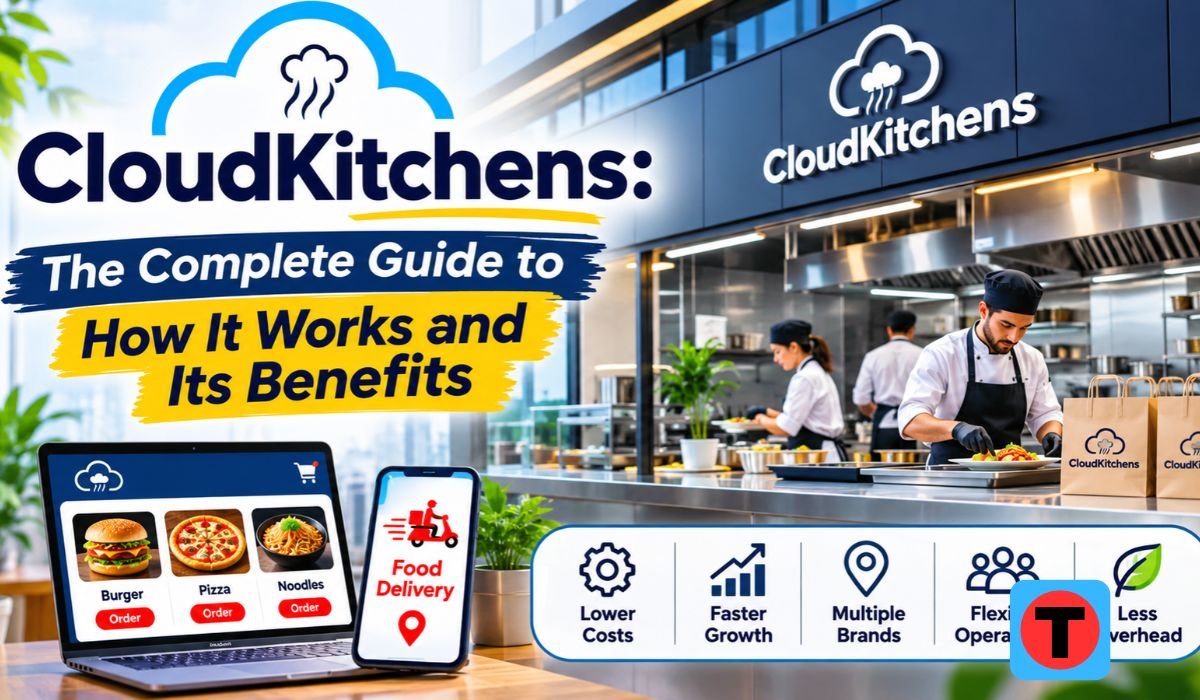
The restaurant industry has changed dramatically as more customers choose to order food online instead of dining out. Traditional restaurants often require expensive locations, dining areas, furniture, and large teams. CloudKitchens offers a different approach by providing commercial kitchen spaces designed primarily for food preparation and delivery.
CloudKitchens helps restaurant owners, food entrepreneurs, and established brands operate delivery-focused businesses without needing a conventional dining room. Its services combine kitchen infrastructure, digital technology, and operational support to make food production and delivery more manageable.
As the food delivery industry continues to evolve in 2026, understanding the CloudKitchens business model has become increasingly useful for entrepreneurs exploring new restaurant opportunities. This guide explains how CloudKitchens works, its main features, potential costs, benefits, challenges, and important considerations before starting a delivery-only food business.
What Is CloudKitchens?
CloudKitchens is a commercial kitchen infrastructure company that provides spaces and technology for restaurants focused on delivery and takeaway orders. Rather than opening a traditional restaurant with tables and customer seating, operators can prepare meals in kitchens designed for efficient production and courier pickup.
The company serves different types of food businesses, including independent restaurants, virtual brands, and established chains exploring additional delivery markets. Its approach allows operators to concentrate on preparing meals, managing orders, and serving customers through digital ordering channels.
CloudKitchens is closely associated with the ghost kitchen concept. A ghost kitchen is a professional food preparation facility that primarily fulfills online orders without offering a conventional dine-in experience. CloudKitchens provides infrastructure that supports this operating model.
CloudKitchens Quick Bio Information
| Information | Details |
|---|---|
| Company Name | CloudKitchens |
| Business Category | Restaurant Infrastructure and Food Technology |
| Industry | Food Service and Online Delivery |
| Business Type | Commercial Kitchen Infrastructure Provider |
| Main Service | Delivery-Focused Kitchen Spaces |
| Business Model | Kitchen Space and Operational Services |
| Primary Customers | Restaurant Owners and Food Entrepreneurs |
| Restaurant Format | Delivery-First Operations |
| Kitchen Purpose | Food Preparation and Order Fulfillment |
| Technology | Digital Kitchen Management Tools |
| Delivery Integration | Connections With Food Delivery Platforms |
| Operational Equipment | Tablets, Kiosks, TVs, and Courier Cubbies |
| Customer Support | Onboarding and Business Guidance |
| Main Objective | Simplify Delivery-Focused Restaurant Operations |
| Potential Advantage | Reduced Need for Traditional Dining Space |
| Related Industry Term | Ghost Kitchen |
| Alternative Industry Term | Virtual Kitchen |
| Mission | Help Food Businesses Reach Their Potential |
| Vision | Make Food Entrepreneurship More Accessible |
| Important Consideration | Costs and Services Vary by Agreement and Location |
The Story Behind CloudKitchens
CloudKitchens developed around the growing demand for online food delivery and the increasing costs associated with traditional restaurant operations. The business is associated with entrepreneur Travis Kalanick, the co-founder and former chief executive of Uber, who became involved in the company through City Storage Systems.
The company’s approach reflects a broader industry shift toward separating food production from the customer dining experience. Instead of relying entirely on expensive storefronts, restaurants can use specialized facilities to serve customers across surrounding delivery areas.
This model attracted attention because it offered a different way to expand restaurant operations. However, the success of any individual kitchen still depends on local demand, food quality, competition, and careful financial management.
How Does CloudKitchens Work?
CloudKitchens operates by providing commercial kitchen spaces that restaurant businesses can use for preparing delivery orders. An interested operator typically begins by exploring available locations, discussing kitchen requirements, and reviewing the applicable commercial agreement.
After securing a suitable space and meeting the necessary licensing and operational requirements, the restaurant can organize its equipment, ingredients, employees, and menu. Customers place orders through supported digital ordering channels, and kitchen staff prepare the requested meals.
Once an order is ready, it is packaged and handed over to a delivery courier. CloudKitchens facilities are designed to support this process through organized kitchen layouts and pickup infrastructure. The restaurant remains responsible for important business functions such as food preparation, customer satisfaction, and financial performance.
Key Features of CloudKitchens
One of the most important CloudKitchens features is its delivery-optimized kitchen infrastructure. These facilities are designed around food production rather than customer seating, helping operators focus on preparation, packaging, and fulfillment.
CloudKitchens also emphasizes technology that connects restaurant operations with digital delivery platforms. Its described tools include tablets, kiosks, television displays, and courier cubbies, which can support order coordination and pickup organization.
Another feature is dedicated partner support. According to the company’s description, its team provides onboarding assistance and guidance intended to help restaurant operators establish and improve their businesses.
Together, these services create a platform that combines physical kitchen space with operational technology and business support.
CloudKitchens Business Model Explained
The CloudKitchens business model differs from that of a traditional restaurant because the company primarily provides infrastructure and services rather than operating every restaurant brand within its facilities.
Restaurant partners use commercial kitchen spaces to prepare meals for their own customers. CloudKitchens supports the environment in which these businesses operate, while individual restaurant operators manage their menus, employees, food preparation, and business decisions.
Kitchen rental arrangements are central to this model, although specific fees and services depend on commercial agreements. Additional operational services may also influence the total cost.
For established restaurants, this approach can provide an alternative to opening a complete new dining location. However, lower physical setup requirements do not automatically mean higher profits.
Benefits of CloudKitchens for Restaurant Owners
CloudKitchens offers several potential benefits for entrepreneurs interested in delivery-focused restaurants. One advantage is the opportunity to avoid some expenses associated with traditional dining areas, including customer furniture, dining-room decoration, and certain front-of-house staffing requirements.
Another benefit is the possibility of entering new delivery markets without establishing a conventional restaurant storefront. Businesses may also find production-focused kitchen layouts useful for managing order preparation during busy periods.
Technology integration and operational support can help reduce some administrative complexity. However, these advantages depend on the facilities, services, and contractual arrangements available at each location.
Importantly, CloudKitchens does not eliminate food costs, employee wages, marketing expenses, or delivery commissions. Restaurant owners must still manage these carefully to build sustainable operations.
CloudKitchens Technology and Digital Tools
Technology plays an important role in the CloudKitchens operating environment. Delivery-focused restaurants often receive orders from several online channels, making accurate order management essential.
CloudKitchens describes proprietary technology designed to connect kitchens with leading food delivery applications and streamline operational workflows. Digital tools can help kitchen teams organize incoming orders, monitor preparation, and coordinate pickups.
Courier cubbies can provide designated collection spaces, while displays and tablets may help staff follow operational information. Data insights can also support decisions about preparation times, order patterns, and workflow improvements.
The exact capabilities available to restaurant partners should be confirmed directly, since technology packages and integrations may vary.
CloudKitchens Pricing and Operating Costs
CloudKitchens pricing is an important consideration for anyone planning to launch a delivery-only restaurant. The company does not establish a universal rental price in the supplied overview, and actual costs can vary by market, kitchen specifications, services, and agreement terms.
Restaurant owners should consider kitchen rental charges, deposits, equipment, permits, insurance, ingredients, packaging, utilities, and employee wages. Delivery platform commissions and marketing expenses can also significantly affect operating margins.
A useful financial approach is to calculate the contribution earned from each order after food, packaging, and delivery-related expenses. That amount must then cover fixed costs such as rent and staffing before the business generates an operating profit.
Before signing an agreement, entrepreneurs should request a complete breakdown of fees, responsibilities, renewal conditions, and cancellation terms.
CloudKitchens vs Traditional Restaurants
The main difference between CloudKitchens and traditional restaurants is the customer experience. Conventional restaurants usually provide seating, direct service, and a physical dining atmosphere. CloudKitchens supports businesses primarily focused on preparing food for delivery.
A traditional restaurant may require substantial investment in dining-room design, furniture, customer facilities, and service staff. A delivery-focused kitchen can avoid some of these requirements.
However, traditional restaurants may benefit from walk-in traffic, direct customer relationships, and additional dine-in revenue. Delivery-focused businesses often depend more heavily on online visibility, delivery coverage, and digital customer reviews.
Neither model is automatically better. The right choice depends on the restaurant concept, target customers, operating budget, and long-term business strategy.
CloudKitchens vs Ghost Kitchens and Virtual Kitchens
CloudKitchens, ghost kitchens, and virtual kitchens are closely related terms, but they do not mean exactly the same thing.
A ghost kitchen generally refers to a commercial food preparation operation designed mainly for delivery orders. A virtual restaurant usually refers to a food brand that serves customers through digital ordering channels without maintaining a separate traditional dining room.
CloudKitchens is a company that provides infrastructure supporting these business models. Multiple restaurant brands may operate from commercial kitchen facilities, depending on the arrangement and available space.
Understanding these differences helps entrepreneurs compare providers, business formats, and investment requirements without confusing a particular company with the wider industry.
How to Start a Food Business With CloudKitchens
Starting a food business with CloudKitchens requires more than renting a kitchen. Entrepreneurs should first research their target customers, local competition, delivery demand, and the types of meals that travel well.
The next consideration is choosing a suitable kitchen location. Delivery coverage, courier accessibility, operating costs, and nearby customer demand can all influence potential sales.
Business owners must also understand local food safety regulations, licensing requirements, insurance obligations, and equipment responsibilities. Before launching, they should develop a manageable menu, establish reliable suppliers, train employees, and test their order fulfillment process.
A realistic financial forecast is essential. The goal should be to establish whether expected sales can cover all operating expenses while leaving sufficient profit to support the business.
Challenges and Limitations of CloudKitchens
Although CloudKitchens provides useful infrastructure, the delivery-focused restaurant model comes with challenges. Competition can be intense because customers may compare many restaurants within the same delivery application.
Delivery platform commissions can reduce profit margins, particularly for businesses offering low-priced meals. Restaurants may also have limited control over courier delays and parts of the customer delivery experience.
Another challenge is building brand recognition without a physical storefront. Businesses often need strong menu photography, consistent food quality, positive customer reviews, and effective digital marketing.
Operators must also evaluate contractual commitments and recurring expenses. A kitchen that appears affordable initially may become difficult to sustain if sales remain below expectations.
Who Should Consider CloudKitchens?
CloudKitchens may appeal to first-time food entrepreneurs who want to explore delivery-focused operations without opening a full-service restaurant. It may also interest established restaurant brands seeking additional production capacity or access to new delivery areas.
Virtual restaurant operators can potentially benefit from kitchen facilities designed specifically for online orders. Businesses testing new menus or delivery concepts may also find the model worth evaluating.
However, CloudKitchens may be less suitable for restaurants whose success depends on atmosphere, hospitality, in-person experiences, or significant walk-in traffic.
The most important question is whether the business has enough customer demand and financial capacity to operate successfully within a delivery-first model.
Tips for Building a Successful Cloud Kitchen Business
Successful cloud kitchen operations require careful planning, consistent execution, and regular performance reviews. A strong menu should include meals that maintain their taste, appearance, and temperature during transportation.
Restaurant owners should monitor ingredient costs, packaging expenses, preparation times, and order accuracy. Small operational problems can become expensive when repeated across many daily orders.
Customer feedback also deserves attention. Reviews can reveal issues involving portion sizes, food quality, packaging, or delivery expectations.
Branding is equally important. Clear menu descriptions, attractive food photography, and reliable service can help a restaurant stand out in competitive delivery marketplaces.
Ultimately, sustainable growth depends on understanding actual profit per order rather than focusing only on total sales.
The Future of CloudKitchens and Food Delivery
The future of CloudKitchens is closely connected to changing customer preferences, restaurant operating costs, and advances in food service technology.
Digital ordering and delivery services have created new opportunities for restaurants, but competition and operating expenses remain important challenges. Businesses may increasingly use performance data to improve menu planning, staffing, inventory management, and order preparation.
Delivery-focused kitchen infrastructure could remain useful for restaurant brands seeking alternatives to traditional expansion. However, future growth will depend on customer demand, economic conditions, technology adoption, and the ability of operators to maintain sustainable margins.
CloudKitchens represents one approach within this evolving industry rather than a guaranteed replacement for traditional restaurants.
Is CloudKitchens Worth It?
CloudKitchens can be worth considering for businesses that have strong delivery demand, suitable menus, and realistic financial expectations.
Its potential advantages include access to commercial kitchen infrastructure, reduced need for dining space, operational technology, and support services. These features may simplify certain aspects of launching or expanding a delivery-focused restaurant.
However, profitability depends on rental costs, staffing, food expenses, delivery commissions, customer acquisition, and consistent order volume.
Before committing, restaurant owners should compare available alternatives, review contract terms, and prepare conservative financial projections. A successful food business needs more than convenient infrastructure; it needs customers, reliable operations, and healthy margins.
FAQs About CloudKitchens
What Is CloudKitchens?
CloudKitchens is a company that provides commercial kitchen spaces, technology, and operational support for delivery-focused food businesses. Its facilities help restaurant operators prepare meals for online orders without maintaining a traditional dining room.
How Does CloudKitchens Work?
Restaurant operators use commercial kitchen facilities to prepare customer orders received through digital ordering channels. Kitchen staff cook and package meals, while delivery couriers collect completed orders for customers.
Who Owns CloudKitchens?
CloudKitchens is associated with City Storage Systems and entrepreneur Travis Kalanick, who became involved in developing the business after leaving Uber. Current ownership percentages and corporate arrangements should be confirmed through updated company records.
How Much Does CloudKitchens Cost?
CloudKitchens costs depend on location, kitchen specifications, services, and contract terms. Operators should request current pricing and calculate additional expenses such as staffing, ingredients, packaging, equipment, and delivery commissions.
Is CloudKitchens the Same as a Ghost Kitchen?
Not exactly. A ghost kitchen is a general type of delivery-focused food preparation operation, while CloudKitchens is a company providing commercial kitchen infrastructure and related services.
Can Small Businesses Use CloudKitchens?
Small food businesses and independent restaurant operators may be able to use CloudKitchens, depending on location availability, commercial requirements, and financial suitability. Entrepreneurs should confirm eligibility and operating conditions before applying.
Does CloudKitchens Provide Delivery Services?
CloudKitchens describes technology that connects kitchen operations with leading food delivery applications. This does not necessarily mean the company itself performs every delivery. Courier arrangements and platform responsibilities depend on the specific service setup.
Is CloudKitchens Profitable?
CloudKitchens does not guarantee profitability for restaurant partners. Financial results depend on sales volume, menu pricing, ingredient costs, labor, rental expenses, delivery fees, and marketing performance. Careful budgeting and operational management are essential.
Final Thoughts
CloudKitchens offers an alternative approach to restaurant operations by combining delivery-focused commercial kitchen spaces, digital technology, and business support. Its model can help food entrepreneurs and established brands explore opportunities without the full requirements of a traditional dine-in location.
However, the benefits should be considered alongside ongoing expenses, competition, delivery platform dependence, and contractual responsibilities. Lower setup requirements alone do not guarantee a successful restaurant.
For entrepreneurs exploring food delivery opportunities in 2026, CloudKitchens is worth understanding as a potential business infrastructure solution. The strongest results are likely to come from combining suitable kitchen facilities with a compelling menu, efficient operations, careful financial planning, and a clear understanding of customer needs.




Leave a Reply