
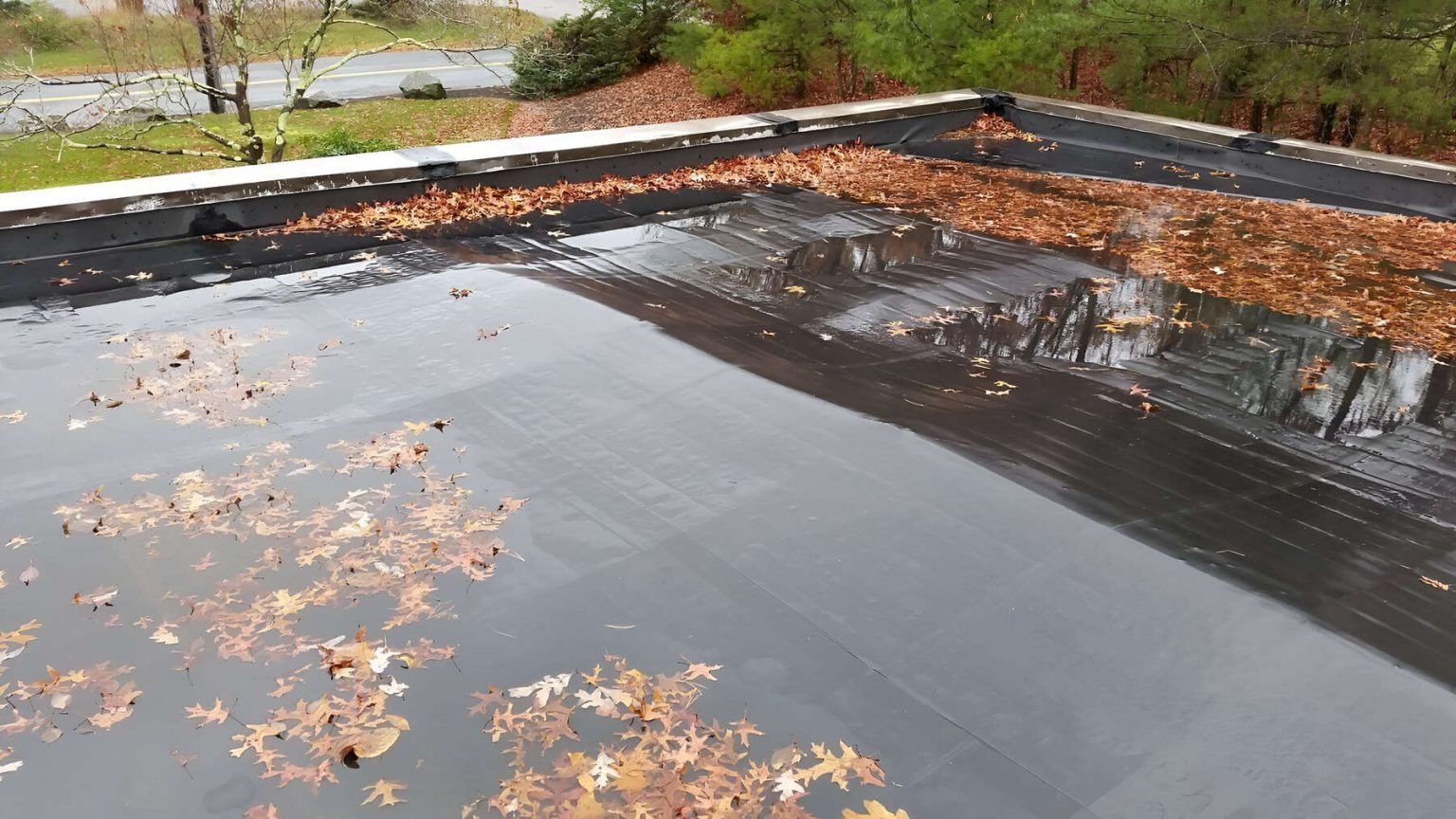
Flat and low-slope roofs dominate many New York City blocks, especially in prewar walk-ups and one-story commercial buildings. When water lingers after rain, it accelerates membrane wear, pushes open seams, and finds its way into joints around parapet walls, skylights, and HVAC curbs. That shallow pond near a scupper today can become blistering, alligatoring, and ceiling stains tomorrow. If you are weighing how to correct ponding on a built-up, modified bitumen, EPDM, or TPO roof, you have three proven levers: restore and protect the existing drainage, add or rework drains, and build slope with tapered insulation. The right choice depends on where the water stalls, how the roof is detailed, and what constraints your building presents.
Why Ponding Water Persists on NYC Flat Roofs
On city roofs framed for minimal pitch, small irregularities create big puddles. Settled decking around old roof drains, debris in through-wall scuppers, and low spots behind new HVAC curbs all interrupt flow. Freeze-thaw cycles force open flashing laps at parapets and coping stones, letting water track laterally beneath cap sheets. Before you choose a fix, document where water sits 24 to 48 hours after rain and what details are nearby. A quick assessment with a level, chalk lines to show flow paths, and photos at scuppers and leader heads helps a Bronx roofer determine whether cleaning, re-detailing, or reshaping the surface will move water to an outlet without creating new weak points.
Clearing Scuppers and Leader Heads for Immediate Relief
Debris is the fastest variable to correct, especially on roofs with parapet scuppers and outside leaders. Pull leaves and gravel from scupper boxes, replace missing strainers, and check that leader heads and elbows are not clogged or split. Verify that through-wall sleeves are intact and properly mortared, not rusted thin, and that mastic patches haven’t narrowed openings. Clean condensate lines so they discharge into drains, not across the membrane where algae films build up. Skip harsh chemical drain openers that can attack gaskets, and avoid pressure-washing near seams. Simple housekeeping at roof drains and scuppers often shrinks ponding enough to protect seams until you plan a longer-term measure.
Adding or Reworking Roof Drains and Sumps
When water consistently pools far from existing outlets, a new or relocated drain may be the most durable answer. That can involve core-drilling the deck, tying into interior piping, and forming a shallow sump so the drain sits in the local low point. Heat-traced leader lines, proper strainers, and clamping rings that match the specific membrane (EPDM, TPO, or modified bitumen) are critical. The trade-off is complexity: interior drains require coordination below the roof for plumbing, firestopping, and finishes, and they must be insulated to prevent condensation. Conversely, larger scuppers can move big volumes quickly but are exposed to wind-driven rain and ice, so sized sleeves and sound counterflashing at parapets matter.
Consider a one-story shop where a new RTU curb blocked the original flow path. A cricket of tapered insulation behind the curb can steer water to a reworked drain sump, while new curb flashing, reinforced with cover tape and metal counterflashing, keeps the assembly watertight. On older brick parapets, the same principle applies: a slight cricket can guide water to an enlarged scupper without raising the overall roof plane.
Building Slope with Tapered Insulation and Crickets
Tapered polyiso boards, typically laid at roughly one-eighth to one-quarter inch per foot, create positive drainage without altering the structure. Installed above a cover board and below a new membrane, they can push water toward drains or scuppers and eliminate chronic birdbaths. The limits are practical: added height must remain below counterflashing terminations, door thresholds, and coping stones, and it may require raising pitch pockets at penetrations. Weight is usually modest, but confirm deck capacity and coordinate with warranty terms for SBS-modified, EPDM, or TPO systems. Adhesives and fasteners must match the membrane type, and crickets behind skylights and HVAC curbs need clean transitions to prevent trapping water from being trapped along their shoulders.
Material Limits and Ongoing Care After Drainage Improvements
Compatibility mistakes shorten the life of any fix. Asphalt roof cement smeared over TPO or EPDM seams will not bond and can invite leaks; torching too close to wood decks or foam insulation risks fire. Avoid building overlays so high that flashings fall below the new surface or that counterflashing laps are buried. At parapets, sound metal coping, intact reglets, and sealed joints around scupper sleeves protect the edges that see the most movement. After improvements, set a routine: clear strainers each fall and spring, inspect crickets and sumps after major storms, reseal pitch pockets around conduit as needed, and add walkway pads to reduce punctures along foot-traffic paths. If other trades visit the roof, mark no-screw zones at membranes and confirm that condensate and relief lines terminate at drains, not across the field. Start with maintenance, escalate to reworked drains where geometry demands it, and invest in tapered insulation when reshaping the surface will offer lasting relief without compromising flashings. Thoughtful drainage decisions protect seams, reduce freeze-thaw stress, and extend the service life of a hard-working NYC flat roof.










Leave a Reply