
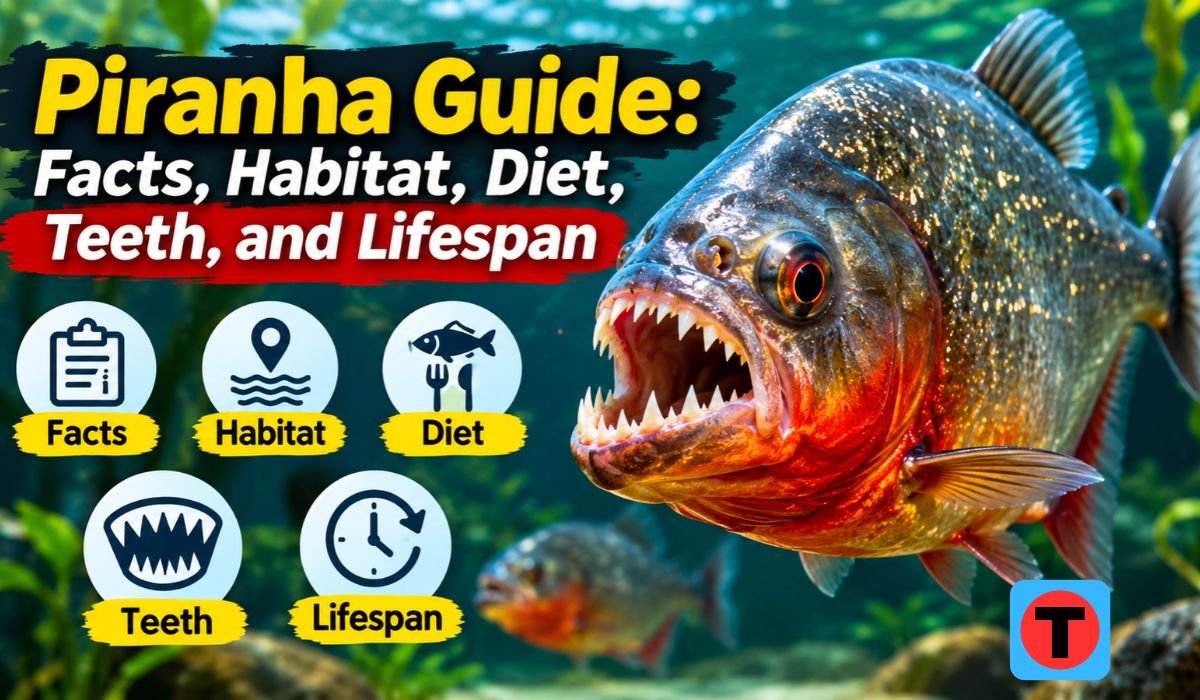
Piranha are among the most fascinating freshwater fish in the world. Famous for their sharp teeth, powerful jaws, and frightening reputation, these South American fish have captured people’s attention for generations. Movies often portray them as aggressive predators that attack anything entering the water. However, their real behaviour is far more interesting and complex than these dramatic stories suggest.
This Piranha Guide explores everything you need to know about these remarkable fish, including their habitat, diet, physical characteristics, lifespan, reproduction, and survival strategies. Although some species are effective predators, others consume plants, fruits, and seeds. Piranhas also play important roles in freshwater ecosystems by controlling prey populations and recycling nutrients.
Understanding how piranhas live helps separate scientific facts from popular myths. From their unusual tooth replacement process to their social behaviour, these fish demonstrate remarkable adaptations to life in South America’s rivers.
Quick Bio Information
Common Name
Piranha
Scientific Family
Serrasalmidae
Animal Group
Ray-Finned Fish
Natural Habitat
Freshwater
Native Continent
South America
Major River Systems
Amazon and Orinoco
Typical Length
15–30 cm for many species
Body Shape
Deep and Compressed
Teeth
Sharp and Triangular
Jaw Strength
Powerful Bite
Diet
Varies by Species
Reproduction
Egg-Laying
Social Behaviour
Often Form Shoals
Famous Species
Red-Bellied Piranha
Scientific Name
Pygocentrus nattereri
Activity Pattern
Often Active During Day
Lifespan
Species-Dependent; Often 10+ Years in Captivity
Ecological Role
Predator, Scavenger, and Prey
What Is a Piranha?
A piranha is a freshwater fish belonging to a group within the family Serrasalmidae. This family also includes pacus and related South American fishes. Piranhas are particularly recognizable because of their cutting teeth and strong jaws, which help them feed on different types of food.
There are dozens of recognized piranha species, although the exact number depends on scientific classification. They vary in size, colour, feeding habits, and behaviour. The red-bellied piranha is one of the most widely recognized species, while black piranhas are known for their impressive biting ability.
Despite their intimidating appearance, piranhas are not constantly searching for large animals to attack. They spend much of their time finding food, avoiding predators, and responding to environmental changes. Their behaviour depends on their species, age, surroundings, and available food.
Appearance and Physical Characteristics
Piranhas have strong, deep bodies that are flattened from side to side. This shape helps them move through freshwater environments while maintaining good control over their movements. Their bodies are covered with scales, and their fins provide balance and direction while swimming.
Their colouring differs between species. Some have silver or grey bodies, while others display darker shades or bright red and orange bellies. The red-bellied piranha is particularly famous for its colourful underside, although its appearance can change with age.
Piranhas also have relatively large eyes that help them respond to movement underwater. Their powerful muscles, compact bodies, and specialized mouths make them effective feeders. These characteristics are adaptations shaped by their natural habitats rather than signs that every piranha is unusually aggressive.
Piranha Size, Weight, and Lifespan
Piranha size varies considerably among species. Many commonly encountered piranhas measure approximately 15 to 30 centimetres in length, although some species grow larger. Black piranhas can reach around 40 centimetres or more under favourable conditions.
Their weight depends on body size, species, age, and food availability. Larger individuals may weigh several kilograms, while smaller species remain relatively lightweight throughout adulthood.
Piranha lifespan also differs between species and environments. Some can survive for more than a decade in captivity when provided with suitable water conditions and nutrition. Wild lifespans are harder to establish because fish face predators, disease, seasonal changes, and competition.
Healthy water, sufficient food, and suitable temperatures are important for survival. However, there is no single lifespan that accurately describes every piranha species.
Different Types of Piranha Species
Piranhas are a diverse group rather than one single type of fish. Their physical features and feeding habits can differ significantly.
The elongated piranha (Serrasalmus elongatus) has a more slender body and is known for feeding on fish, including their fins and scales.
These differences demonstrate why general statements about piranha behaviour can sometimes be misleading. Each species has its own ecological adaptations.
Piranha Habitat and Geographic Distribution
Piranhas naturally inhabit freshwater systems throughout tropical South America. They are especially associated with the Amazon and Orinoco river basins, although different species occur in additional river systems across the continent.
Their environments include rivers, lakes, streams, floodplains, and flooded forests. Some prefer slow-moving water, while others occupy habitats with stronger currents. Seasonal flooding creates new feeding and breeding opportunities as water spreads into surrounding vegetation.
Flooded forests are particularly important because they provide shelter, insects, fruits, seeds, and other food resources. During dry seasons, shrinking water bodies may increase competition and change feeding behaviour.
Piranha Diet and Feeding Habits
The Piranha Diet is more varied than its frightening reputation suggests. Many species are omnivorous, consuming both animal and plant material, while others are more strongly carnivorous.
Their food may include fish, insects, crustaceans, aquatic invertebrates, fruits, and seeds. Some species also feed on fish scales or fins. Piranhas may consume dead animals, helping recycle nutrients within freshwater ecosystems.
Feeding behaviour changes according to species, age, season, and food availability. Juvenile piranhas often consume smaller prey, while larger individuals can handle tougher food.
Although piranhas sometimes gather around food, this does not mean they always hunt cooperatively. Group feeding may occur when several fish discover the same food source.
Their flexible feeding habits allow many species to survive in environments where food availability changes throughout the year.
Piranha Behaviour and Social Lifestyle
Piranha behaviour is influenced by environmental conditions and the presence of other animals. Some species form groups called shoals, while others spend more time alone.
Red-bellied piranhas commonly gather in shoals, which may reduce the risk of being attacked by larger predators. Grouping provides safety, particularly in environments where birds, reptiles, and larger fish hunt them.
Piranhas can also produce sounds using specialized muscles associated with their swim bladders. Researchers have observed sound production during confrontations and other interactions.
Aggressive behaviour can increase when fish are stressed, confined, defending resources, or experiencing unfavourable conditions. However, aggression is not their permanent state.
Their daily activity patterns vary, but many are active during daylight hours. Their alertness and ability to respond quickly to movement help them survive in complex river environments.
Piranha Teeth and Bite Strength
Piranha teeth are among their most distinctive physical features. They are sharp, triangular, and arranged to form effective cutting edges. When the jaws close, the teeth work together to slice through food.
Unlike human teeth, piranha teeth are replaced throughout life. In many species, teeth on one side of a jaw are replaced together, allowing the fish to maintain an effective cutting surface.
Their bite strength is equally remarkable. Research on black piranhas has demonstrated unusually high bite forces relative to body size. Powerful jaw muscles and specialized skeletal structures help produce this force.
Piranhas use their teeth to cut fish, remove flesh, and process other suitable foods. However, their powerful bite does not mean they attack every animal they encounter.
Their teeth are specialized feeding tools that have evolved to meet the demands of their natural environments.
Piranha Life Cycle and Reproduction
The Piranha Life Cycle begins when mature fish reproduce in suitable freshwater environments. Reproductive behaviour varies among species, but breeding is often associated with seasonal environmental conditions.
Females lay eggs, which males fertilize externally. In some species, adults prepare or defend nesting areas among aquatic vegetation or other suitable habitats.
Certain piranhas display parental care, guarding eggs and protecting breeding territories. This behaviour increases the chances that developing young will survive.
After hatching, young fish are called fry. They begin life as small, vulnerable animals that depend on suitable food and shelter.
As they grow, juveniles develop stronger jaws, more effective teeth, and the physical characteristics of adults. Their diets may change as their feeding abilities improve.
Eventually, mature piranhas reproduce, continuing the life cycle. Growth rates and reproductive timing depend on species and environmental conditions.
Natural Predators and Survival Strategies
Despite their sharp teeth, piranhas are prey for several larger animals. Their natural predators include large predatory fish, caimans, and fish-eating birds.
Young piranhas are particularly vulnerable because of their small size. They may hide among plants, remain near sheltered areas, or gather with other fish for protection.
Adult piranhas rely on alertness, swimming ability, and defensive biting when threatened. Their body shape helps them move through complicated underwater environments.
Seasonal changes can create additional challenges. During periods of low water, fish may become concentrated in smaller habitats, increasing competition and exposure to predators.
These pressures help explain why piranhas are often cautious rather than constantly aggressive. Survival requires avoiding danger as well as finding food.
Are Piranhas Dangerous to Humans?
One of the most common questions in any Piranha Guide concerns human safety. Although piranhas can bite people, their reputation as relentless human predators is greatly exaggerated.
Most piranhas do not actively seek humans as prey. Nevertheless, bites can occur when fish are disturbed, when people enter certain breeding areas, or under stressful environmental conditions.
Incidents may become more likely in shallow waters during dry seasons, when fish and people occupy limited spaces.
Piranha bites can cause painful injuries because of their sharp teeth and powerful jaws. People should therefore avoid handling wild piranhas and follow local safety guidance when swimming in areas where they occur.
Understanding their behaviour is more useful than assuming they are either completely harmless or constantly dangerous.
Piranha Myths Versus Reality
Popular entertainment has created several misconceptions about piranhas. One familiar myth suggests that a shoal can instantly consume any large animal entering the water.
Although piranhas can remove flesh efficiently, dramatic feeding scenes are not representative of their normal behaviour.
Another misconception is that every piranha species is aggressive. In reality, their behaviour differs considerably, and many spend much of their time avoiding threats.
Some people also believe piranhas can detect a tiny drop of blood from enormous distances. While they respond to chemical signals and movement in water, such exaggerated detection claims lack reliable scientific support.
Separating these myths from reality reveals animals that are well adapted to their environments rather than the unstoppable predators portrayed in fictional stories.
Importance of Piranhas in Freshwater Ecosystems
Piranhas contribute to the ecological balance of South American freshwater habitats. As predators, they influence populations of smaller fish and other aquatic organisms.
Their feeding activities may affect how prey animals behave and where they spend their time. This creates relationships that extend beyond individual predator-prey encounters.
Piranhas also consume animal remains, contributing to the recycling of nutrients. However, their ecological role is broader than simply cleaning rivers.
They are themselves an important food source for larger predators, connecting different levels of aquatic food webs.
Environmental threats such as habitat destruction, pollution, and changes to river systems can affect piranha populations. Protecting freshwater biodiversity requires maintaining the habitats that support these interconnected species.
Amazing Piranha Facts and Fun Facts for Kids
Piranhas have several unusual characteristics that make them interesting to study. Their triangular teeth fit together to create effective cutting surfaces, while their strong jaws allow them to handle different foods.
Some piranhas have bright red bellies, while others are silver, grey, or dark. Their appearance depends on species, age, and environmental conditions.
Piranhas are related to pacus, a group of South American freshwater fish known for consuming substantial amounts of plant material.
Another surprising fact is that some piranhas communicate through sounds. These noises may occur during confrontations and other social interactions.
For younger readers, perhaps the most interesting discovery is that piranhas are not always the hunters. Larger fish, birds, and reptiles also eat them.
These facts show that piranhas are ordinary members of complex natural ecosystems, despite their extraordinary reputation.
FAQs About Piranha
What Do Piranhas Eat?
Piranhas eat different foods depending on their species. Their diets may include fish, insects, crustaceans, fruits, seeds, and other plant material. Some also consume dead animals or feed on fish fins and scales. Not every piranha is primarily carnivorous.
Where Do Piranhas Live?
Piranhas naturally live in freshwater habitats across South America. They are especially common in the Amazon and Orinoco river systems. Their habitats include rivers, lakes, streams, floodplains, and flooded forests.
How Long Do Piranhas Live?
Piranha lifespan varies by species and living conditions. Some species can survive for more than ten years in captivity with suitable care. Their lifespan in the wild is influenced by predators, disease, food availability, and environmental changes.
Are Piranhas Dangerous to People?
Piranhas can bite humans, but serious attacks are uncommon compared with their reputation. Bites may occur when fish are threatened, stressed, or concentrated in shallow water. People should follow local safety advice in habitats where piranhas live.
Why Do Piranhas Have Sharp Teeth?
Piranhas have sharp teeth that help them cut food efficiently. Their triangular teeth work together with powerful jaws to slice fish and other suitable foods. Their teeth are naturally replaced as they wear down.
Do Piranhas Hunt in Groups?
Some piranha species gather in shoals, but grouping does not always indicate cooperative hunting. Shoaling can help protect individuals from predators. Several fish may also feed around the same food source without coordinating their actions.
What Is the Most Famous Piranha Species?
The red-bellied piranha, scientifically known as Pygocentrus nattereri, is one of the most famous species. It is recognized for its reddish underside, sharp teeth, and social behaviour. It is also frequently featured in wildlife documentaries and scientific research.
Final Thoughts
Piranhas are remarkable freshwater fish whose real lives are much more complex than their frightening reputation suggests. Their powerful jaws, specialized teeth, varied diets, and fascinating social behaviour make them important animals in South American rivers.
This Piranha Guide shows that these fish are not simply aggressive predators. They are adaptable members of freshwater ecosystems that contribute to food webs, nutrient recycling, and ecological balance.
Learning about Piranha Habitat, Diet, Lifespan, Teeth, and Behaviour helps us appreciate their importance in nature. Rather than fearing them because of fictional stories, understanding their biology provides a clearer picture of these fascinating fish and the environments they call home.
Learn more and explore exciting content on: Intern Scout: The Complete Guide to Finding Internships and Career Opportunities













Leave a Reply