
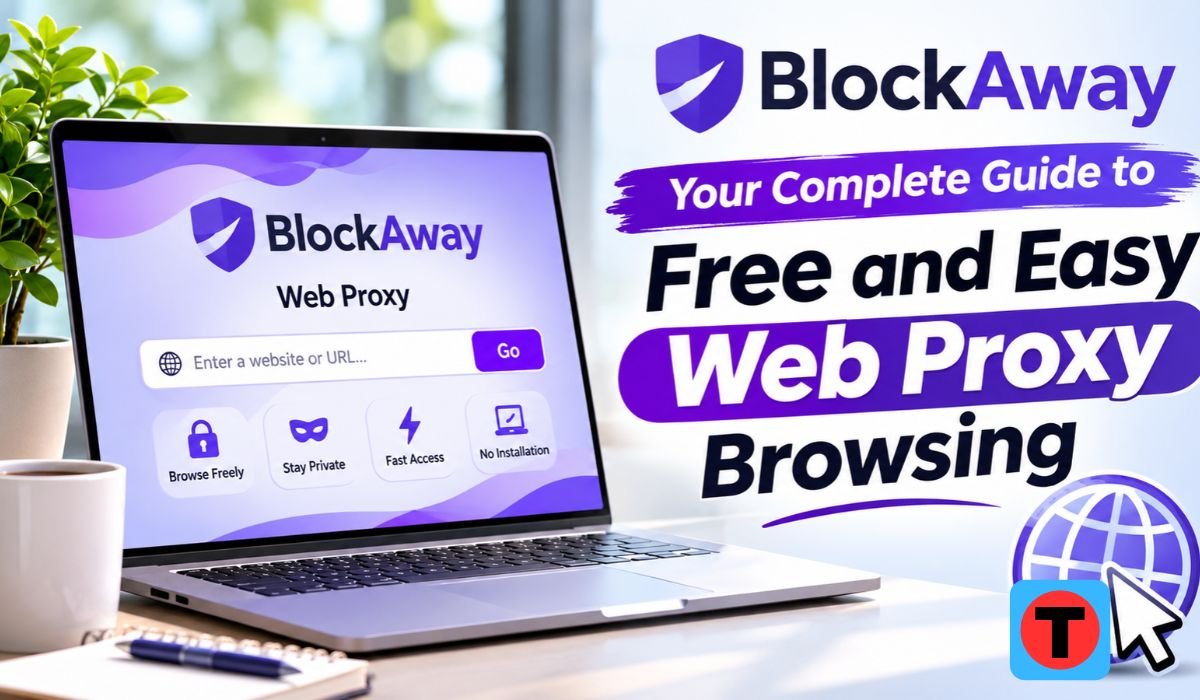
The internet has become an essential part of everyday life, whether you’re studying, working, watching videos, or connecting with friends. However, not every website is accessible on every network. Schools, universities, workplaces, and internet providers sometimes restrict certain online services. This is where BlockAway offers a convenient browsing option.
Blockaway is a browser-based web proxy service designed to help users access websites through an intermediary server. It offers free basic access, IP address masking, and a straightforward interface that doesn’t require complicated software installation.
But how does Blockaway actually work, and how much privacy does it provide? Understanding these questions is important before using any online proxy. This guide explores Blockaway advertised features, benefits, security considerations, limitations, and practical uses in 2026.
What Is BlockAway?
BlockAway is an online proxy service that allows users to request websites through a separate server rather than connecting directly to them. Its main purpose is to make web browsing more accessible while masking the user’s public IP address from destination websites.
Unlike traditional proxy configurations, which may require changes to browser or operating system settings, BlockAway provides a web-based interface. Users can enter a website address or search query and access supported content through the proxy.
The service advertises compatibility with popular websites, including search engines, social media platforms, and video services. It also promotes USA and European proxy server options.
Although BlockAway describes itself as a privacy-focused solution, using a proxy does not guarantee complete anonymity or protection from every form of online tracking.
BlockAway Quick Bio Information
| Information | Details |
|---|---|
| Service Name | BlockAway |
| Service Type | Web Proxy |
| Primary Purpose | Browser-Based Website Access |
| Basic Pricing | Advertised As Free |
| Main Technology | Proxy Server |
| Installation | Not Required For Basic Web Access |
| Browser Configuration | Generally Not Required |
| Website Input | URL Or Search Query |
| IP Address Masking | Supported By Proxy Technology |
| Advertised Server Regions | USA And Europe |
| Video Compatibility | YouTube Support Advertised |
| Social Media | Compatibility Advertised |
| Search Engine Access | Quick Links Available |
| Proxy Link Sharing | Advertised Feature |
| Mobile Compatibility | Not Independently Confirmed |
| Complete Anonymity | Not Guaranteed |
| Traffic Encryption | Depends On Connection And Implementation |
| Privacy Logging Policy | Not Verified From Supplied Information |
| Main Limitation | Website And Network Compatibility |
| Intended Users | General Web Browsers |
These details reflect BlockAway’s published service description and general proxy functionality. Specific technical capabilities, current availability, and security practices require independent verification.
How Does BlockAway Web Proxy Work?
BlockAway works by placing a proxy server between your browser and the website you want to visit. Instead of sending a request directly to the destination website, your browser communicates with the proxy, which retrieves the requested content.
For example, when someone enters a website address into BlockAway, the proxy attempts to contact that website and return its content. The destination website generally sees the proxy server’s IP address rather than the user’s original public IP.
This arrangement can provide an additional layer of separation between users and websites. However, the proxy provider may still process information about browsing requests.
Modern websites also rely on cookies, JavaScript, and interactive features. A web proxy must handle these technologies correctly for pages to function normally.
Key Features of BlockAway Web Proxy
One of BlockAway’s main attractions is its simple browser-based design. Users can access its basic service without downloading a separate application or changing device-wide network settings.
The platform advertises free proxy browsing, IP address masking, compatibility with popular websites, and support for video streaming. Its description also mentions proxy server options in the United States and Europe.
Another advertised feature is the ability to share proxy links. This may make it easier to direct someone toward a webpage through the service, although shared links should be checked for sensitive information.
BlockAway also emphasizes advanced proxy technology intended to improve compatibility. Actual speed, streaming performance, and website functionality may differ depending on server conditions and destination websites.
How to Use BlockAway for Website Browsing
Using BlockAway is designed to be straightforward, even for someone unfamiliar with proxy technology.
Begin by opening the authentic BlockAway website in your browser. Once the homepage loads, locate the address or search field. Enter the website URL you want to visit, or type a search query if that option is available.
The proxy then attempts to retrieve the requested webpage. If successful, the content appears through the proxy interface, allowing you to browse supported pages.
BlockAway also advertises quick links to services such as Google, DuckDuckGo, YouTube, Facebook, Wikipedia, Reddit, Instagram, TikTok, Twitter, and Twitch.
Before entering personal information, verify that you’re using a trustworthy service. Remember that accessing a website through a proxy doesn’t automatically make the session private or secure.
Why People Use BlockAway for Restricted Websites
Website restrictions can occur for several reasons. Schools may limit entertainment platforms to reduce distractions, while workplaces may restrict certain services for productivity or security. Some websites also apply regional access controls.
BlockAway is promoted as a website-unblocking service because proxy servers can sometimes provide an alternative route to publicly available web content.
However, a proxy cannot guarantee access to every website. Network administrators may block proxy services, and destination websites can reject connections from known proxy addresses.
Users should also understand that technical accessibility doesn’t remove legal requirements, copyright restrictions, or organizational browsing policies.
Is BlockAway Safe and Secure to Use?
Safety is an important consideration when evaluating BlockAway or any free web proxy.
A proxy can hide your original public IP address from a destination website, but that alone doesn’t establish whether the service protects your information effectively.
The connection between your browser and the proxy, the proxy’s handling of website traffic, and its data retention practices all affect privacy.
BlockAway’s supplied description promotes security and anonymity, but it does not provide enough technical evidence to confirm independent security audits, logging policies, or comprehensive encryption safeguards.
For this reason, avoid using unfamiliar proxy services for online banking, confidential business documents, or other highly sensitive activities.
BlockAway Privacy Protection and Anonymous Browsing
Many people associate proxy servers with anonymous browsing. While proxies can improve IP address privacy, anonymity is more complicated than simply hiding an address.
Websites may recognize visitors through account logins, browser cookies, device characteristics, and tracking technologies. A proxy generally doesn’t eliminate these identifiers.
Your browser may also retain local history unless you manage it separately. Meanwhile, the proxy operator may have access to connection information depending on its architecture and policies.
For better privacy, use updated browsers, review website permissions, manage cookies carefully, and understand what information a service collects.
BlockAway should therefore be viewed as an IP-masking browsing tool rather than a guarantee of complete online anonymity.
Can BlockAway Access YouTube and Social Media?
BlockAway advertises support for popular video websites and social networking platforms, making entertainment and communication important parts of its appeal.
However, websites such as YouTube, Instagram, TikTok, and Facebook use complex technologies to deliver interactive content. These can include streaming systems, authentication processes, JavaScript applications, and security checks.
Some features may work normally through a proxy, while others may experience buffering, broken layouts, or login difficulties.
Video performance also depends on internet speed, proxy server capacity, and network conditions.
Although BlockAway promotes video access, users should not assume unlimited streaming or guaranteed compatibility with every platform.
BlockAway Proxy Server Locations and Browsing Speed
BlockAway’s service description mentions proxy server options in the USA and Europe. Server location matters because it can influence routing, connection latency, and how destination websites interpret a request’s geographic origin.
A server closer to the user or destination website may sometimes provide better performance, although distance is only one factor.
Connection quality also depends on server congestion, bandwidth, website complexity, and the number of people sharing proxy resources.
Free proxy services may experience inconsistent performance during busy periods. Using a proxy also introduces an additional network connection, so it doesn’t automatically make browsing faster.
The best experience depends on the service’s available infrastructure and current operating conditions.
BlockAway vs VPN: Which Is Better?
BlockAway and VPN services both route internet traffic through intermediary systems, but they serve different purposes.
A browser-based web proxy generally handles requests made through its website interface. A VPN, by comparison, can route traffic from multiple applications through an encrypted connection between the device and VPN server.
BlockAway’s advantage is convenience. Users can access its advertised basic features without installing specialized software.
VPNs often provide broader traffic coverage and more comprehensive connection protection, although their security also depends on the provider and configuration.
For occasional browser-based access, a web proxy may be convenient. For protecting traffic across applications or using unfamiliar networks, a reputable VPN may be more suitable.
Neither option guarantees complete anonymity.
Main Benefits and Limitations of BlockAway
BlockAway’s strongest advertised benefits are accessibility, simplicity, and free basic browsing.
Its browser-based interface reduces the need for technical configuration, while proxy routing can conceal the user’s original public IP address from destination websites.
The service may also appeal to people who want a convenient way to access publicly available information through an intermediary connection.
However, limitations deserve equal attention. Some websites may reject proxy traffic, interactive features may not function correctly, and video playback may be inconsistent.
Privacy protection is also limited by the provider’s technical implementation and data practices.
Understanding these tradeoffs helps users make realistic decisions rather than expecting a free proxy to provide every feature of a comprehensive privacy service.
Does BlockAway Work on Mobile Devices?
Mobile browsing is increasingly important, so many readers naturally wonder whether BlockAway works on Android phones, iPhones, and tablets.
Because BlockAway is described as browser-based, its general approach may be compatible with mobile web browsers. However, the supplied information doesn’t independently establish current support for specific devices or browser versions.
Mobile users may encounter differences in webpage layouts, video playback, touch navigation, and authentication features.
If testing BlockAway on a smartphone, begin with a simple public webpage before attempting more complex services.
Avoid installing unofficial applications claiming to represent BlockAway unless their authenticity and security can be verified.
Common BlockAway Problems and Troubleshooting
Like other proxy services, BlockAway may occasionally experience loading or compatibility problems.
If the proxy website doesn’t open, check your internet connection and confirm that you’re visiting the correct address. Temporary service interruptions or network restrictions may also affect availability.
When a destination website fails to load, the problem may involve scripts, cookies, security systems, or restrictions against proxy traffic.
Slow browsing can result from network congestion, server load, or complex webpage content. Testing a simpler website can help identify whether the problem affects one destination or the overall connection.
For login failures, use the destination website’s official access method rather than weakening browser security settings.
BlockAway Alternatives and Responsible Browsing
BlockAway isn’t the only option for people interested in web proxy technology.
Other browser-based proxies, privacy-focused browsers, and VPN services offer different combinations of accessibility, security, and convenience.
When comparing alternatives, consider the provider’s reputation, privacy documentation, connection security, website compatibility, and transparency about data collection.
Avoid assuming that a paid service is automatically secure or that a free service is necessarily unsafe. Trustworthiness depends on verifiable practices rather than marketing language.
Responsible browsing also means respecting network policies, avoiding suspicious websites, and protecting confidential information.
For users with demanding security requirements, independently reviewed privacy tools are generally preferable to unfamiliar proxy websites.
FAQs About BlockAway
What Is BlockAway Used For?
BlockAway is a browser-based web proxy service designed to retrieve websites through an intermediary server. It is advertised for website accessibility, IP address masking, and convenient online browsing without installing additional software.
Is BlockAway Completely Free?
BlockAway advertises a free basic proxy service. However, the supplied information doesn’t establish whether every feature is free or whether premium options have changed in 2026. Users should check current service terms before relying on specific pricing.
Is BlockAway Safe to Use?
BlockAway may provide basic IP address masking, but its overall safety depends on connection security, data handling, and provider practices. Complete security cannot be confirmed from promotional descriptions alone. Avoid sharing sensitive information through an unverified proxy.
Does BlockAway Hide Your IP Address?
A properly functioning web proxy generally presents its own public IP address to destination websites instead of the user’s original address. However, cookies, account logins, and other tracking methods may still identify visitors.
Can BlockAway Access Blocked Websites?
BlockAway is advertised as a website-unblocking service and may access certain websites through proxy routing. However, results depend on network restrictions, destination website policies, and technical compatibility. Access to every website is not guaranteed.
Can I Watch YouTube Through BlockAway?
BlockAway advertises YouTube compatibility and video streaming support. Actual playback quality depends on proxy performance, browser compatibility, network speed, and the streaming platform’s technical requirements.
Does BlockAway Work on Android and iPhone?
BlockAway’s browser-based design suggests possible mobile use, but current compatibility with specific Android and iOS browsers has not been independently verified. Users should test supported public webpages and avoid unofficial applications.
Is BlockAway Better Than a VPN?
BlockAway may be easier for occasional browser-based access because it doesn’t require a separate application. A reputable VPN generally provides broader traffic protection and encrypted device-to-server connections. The better option depends on privacy needs and intended use.
Final Thoughts on BlockAway
BlockAway presents itself as a convenient free web proxy for people who want straightforward website access without complicated technical setup. Its advertised features include IP address masking, browser-based access, social media compatibility, video support, and proxy server options in the USA and Europe.
These capabilities make it an interesting option for understanding how online proxy services work. However, convenience should never be confused with guaranteed security.
A proxy can change how websites receive your requests, but it cannot automatically eliminate tracking, protect every application, or ensure unrestricted access.
For anyone considering BlockAway in 2026, the most sensible approach is to understand its capabilities, verify the provider’s privacy practices, and use the service responsibly.
Ultimately, BlockAway is best understood as a convenient web proxy option rather than a complete online privacy solution. Knowing that difference helps readers make safer, more informed browsing decisions.
Learn more and explore exciting content on: USAJOBS: Your Complete Guide to Finding Federal Government Jobs






Leave a Reply