
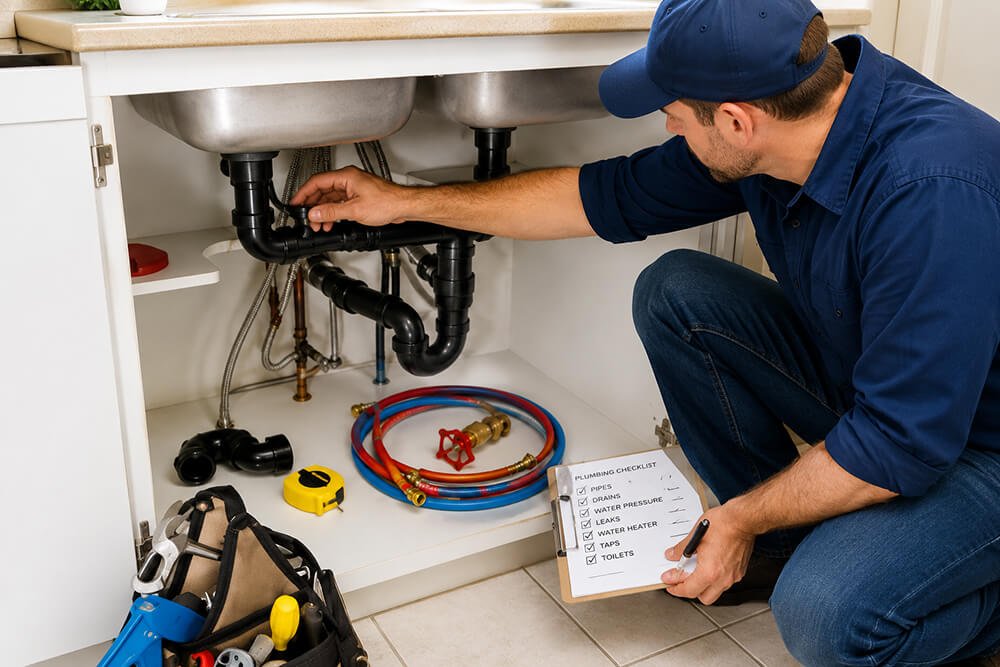
Home plumbing rarely fails without sending signals first. A faucet that drips after shutoff, a toilet that runs for no clear reason, a washing machine standpipe that burps, or pipes that bang during a shower all point to specific issues. Learning to read these early warnings can help you limit damage, avoid unsafe quick fixes, and explain the problem clearly when you schedule service. This article focuses on practical, non-destructive checks you can do from the fixture to the main supply: inspect aerators and cartridges, listen at floor drains, find the pressure-reducing valve, and recognize water heater red flags like a dripping temperature and pressure relief valve. Use these clues to decide what you can stabilize now and what needs professional repair.
-
Fixture Clues: Faucets, Toilets, and Showers That Tell on Your Plumbing
If a faucet drips even after you firmly close it, debris on the cartridge seat or a worn cartridge is likely. Wobble at the base of a toilet can point to loose closet bolts or a compromised wax ring, which can allow sewer gas to escape around the flange. Sudden hot-cold swings in the shower often trace back to a sticking pressure-balancing spool in the mixing valve or a wider pressure imbalance from a failing pressure-reducing valve. If a few quick checks don’t isolate the issue, call Papillion plumbers at Local Plumbing and Drain Company for help.
Remove and rinse a faucet aerator if one sink has weak flow while others are fine; mineral scale or sand grains can clog the screen. Under a sink, feel the supply lines where they meet the angle stops for damp braids or green-blue stains that suggest slow leaks and copper corrosion. In the tank, a soft, blackened toilet flapper that leaves carbon on your fingers can cause “ghost flushing,” as can a fill valve that hisses due to sediment. These checks tell you whether a small part swap will help or whether the symptom reflects a larger system issue.
-
Low Water Pressure: Aerator Clog, Supply Leak, or Failing Pressure Reducing Valve?
Is the low pressure universal or isolated? If every fixture is weak, start at the main shutoff to confirm it is fully open, then look for a pressure-reducing valve on the main line near the water meter or where the line enters the home. A stuck PRV can starve the house or spike pressure, triggering water hammer and stressing supply lines. If only one faucet is weak, test without the aerator; if flow returns, clean or replace the aerator. Whole-house pressure that slowly fades over minutes can hint at a partially closed valve, a supply-side restriction, or a leak downstream of the meter. A spinning leak indicator on the meter when all fixtures are off is a strong clue.
Consider where the weak flow is worst. For example, a basement utility sink fed by a long run may suffer from a kinked PEX bend or an obstructed manifold port. Outdoor hose bibbs that trickle after a freeze may signal a cracked vacuum breaker or damage at a frost-free sillcock. On irrigation systems, a split at the backflow preventer will bleed pressure even when zones are off. In each case, tracing from the fixture back to the nearest valve can isolate the faulty segment.
-
Drain and Sewer Warnings You Should Not Ignore
When several fixtures on the same branch drain slowly together, the restriction is likely beyond the P-traps, possibly in the lateral or at the main cleanout. Gurgling at a sink after the tub drains suggests a venting problem: as water moves, it can siphon a trap if the vent stack is blocked, allowing sewer gas to enter. If a basement floor drain backs up during showers upstairs, the main line may be compromised by heavy grease, wipes, or tree roots. Use a cup plunger on a sink or toilet, not chemical drain cleaner, which can weaken rubber gaskets and the wax ring and create hazards for anyone who later snakes the line.
Picture this common scenario: the washing machine pumps out, and the standpipe overflows, yet the nearby laundry sink drains slowly too. That pattern points to a restriction downstream of the standpipe’s trap, often near a wye connection. Another example is a kitchen sink that returns black water after the dishwasher runs, indicating a blockage past the disposer and into the branch. In both cases, removing the trap to check for a rigid obstruction and inspecting the cleanout cap can clarify whether a home-grade auger will reach or whether a professional cable machine is needed.
-
Water Heater Behaviors That Predict Trouble
Popping or rumbling from a tank-style water heater is almost always sediment boiling at the bottom. Flushing through the drain valve can remove loose scale, though heavy buildup may require professional descaling. A temperature and pressure relief (T&P) valve that drips intermittently can reflect thermal expansion if the expansion tank has lost air charge. Never cap a T&P valve; it is a safety device. Check the expansion tank by tapping it: it should sound hollow on the top half. A tank that smells like sulfur can be anodes reacting with minerals; replacing the anode rod with a different alloy, as manufacturer guidance permits, can help.
Look closely at connections. A slow weep at dielectric unions, rust around the cold inlet ball valve, or white crust at the heater nipples signals corrosion that can worsen suddenly. For gas units, a pilot light that will not stay lit may have a failing thermocouple. For electric models, lukewarm water with no obvious leaks could mean a tripped high-limit switch or a failed heating element. Set the thermostat to about 120 degrees Fahrenheit to reduce scald risk and scale formation while keeping sanitation reasonable.
First Aid Steps to Contain Damage Before a Pro Arrives
Find the main shutoff inside the home and practice turning it a quarter turn if it is a ball valve. In a leak, shut the closest angle stop first to isolate the fixture; if that fails, close the main and open a low faucet or outside hose bibb to drain pressure. If you shut off the main on a gas or electric water heater for an extended period, turn the heater off to avoid running it dry. Place a bucket under a sink trap and remove the cleanout plug to relieve a slow sink without splashing. A wet/dry vacuum can control a floor drain backup while you locate the main cleanout to check for standing water.
Move items off the floor near water sources, take clear photos of the leak source and the water meter reading, and note which fixtures misbehave together. These details shorten diagnostic time. Avoid overtightening supply connectors during any DIY stopgap; crushing a plastic fill valve or cracking a faucet shank creates bigger repairs. With a few stabilizing steps and a clear symptom checklist, you can protect your home and give the technician a head start when the doorbell rings.









Leave a Reply