
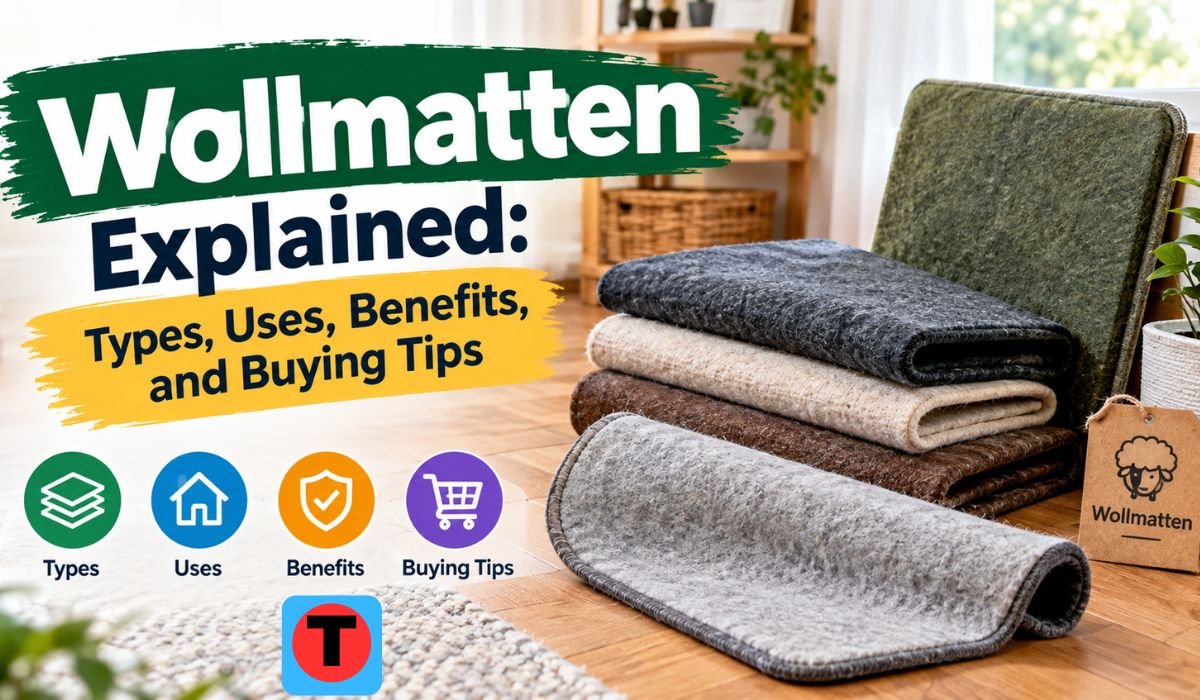
Wollmatten may sound like a specialized German product, but the idea is quite simple. The German word Wollmatten generally means Wool Mats, and it can describe a surprisingly wide range of products. Depending on how they are made, wool mats can be used as floor coverings, felt pads, insulation materials, acoustic panels, garden covers, meditation surfaces, or protective mats.
What makes Wollmatten interesting is the natural structure of wool itself. Wool is a protein-based fibre produced by sheep, and its natural crimp, elasticity, and ability to manage moisture give it useful characteristics in many textile applications.
However, there is an important detail to understand from the beginning: not every Wollmatte is made from 100% wool. Some products contain synthetic fibres, backing materials, adhesives, coatings, or other components. That means the name alone does not tell you everything about a particular mat.
This guide explains what Wollmatten are, how they are made, where they are used, what benefits they may offer, their drawbacks, and what to check before buying one.
What Are Wollmatten?
Wollmatten is the plural form of the German term for wool mats, while Wollmatte refers to a single wool mat. The word combines Wolle, meaning wool, with Matten, meaning mats. In everyday use, however, Wollmatten is better understood as a broad category rather than the name of one standardized product.
A Wollmatte may be a soft decorative rug, a dense piece of wool felt, a thick insulation material, or a specialized technical mat. Its appearance and performance depend on the wool, fibre density, manufacturing method, thickness, backing, and intended purpose.
Pure wool is a natural and renewable fibre. Wool also has a complex structure that helps it manage moisture and recover from bending or compression. Its natural crimp creates small spaces that can hold air, contributing to its insulating characteristics.
This explains why wool can be useful in products designed for warmth, comfort, cushioning, and moisture management. At the same time, a wool mat should not automatically be described as waterproof, fireproof, or completely biodegradable. Those characteristics depend on the finished product and its construction.
What Materials Are Used In Wollmatten?
The material composition is one of the most important things to check before purchasing Wollmatten. A product may contain pure wool, but another product may use wool together with polyester, cotton, latex, plastic backing, adhesives, dyes, or protective treatments.
There is also a difference between saying that a mat has a 100% Wool Surface and saying that the entire product is made from 100% wool. A mat can have a pure wool upper surface while its underside contains synthetic material.
This matters for cleaning, durability, grip, recycling, and environmental impact. It also matters when a buyer is specifically looking for a natural or biodegradable product.
The wool itself is primarily composed of keratin, the same broad family of protein that forms human hair and nails. Wool’s internal structure contributes to its elasticity, strength, moisture management, and resilience.
For that reason, checking the complete material description is much more useful than relying only on words such as “natural wool,” “eco-friendly,” or “pure wool.”
How Are Wollmatten Made?
Wollmatten can be manufactured in several different ways, and the production method has a major effect on the finished product. Felting is one of the best-known methods. Wool fibres can be compressed and mechanically interlocked through combinations of moisture, heat, pressure, and movement. The result can be a dense, flat material with a wide range of thicknesses.
Another method is Needle Punching. In this process, special needles repeatedly pass through loose fibres, causing them to become entangled. Needle-punched wool materials can be made for insulation, padding, technical applications, and other purposes.
Wool can also be woven into rugs and floor mats. Decorative products may be Tufted or Knotted, allowing manufacturers to create different patterns, textures, and levels of thickness. The finished mat may then receive a backing, stitched edge, adhesive layer, or non-slip treatment.
These additional components are important because they can change how the Wollmatte behaves. A dense felt sheet and a decorative wool rug may both be called Wollmatten, but they can have completely different cleaning instructions, durability, grip, and intended uses.
Quick Bio Information
| Fact | Information |
|---|---|
| Term | Wollmatten |
| Singular | Wollmatte |
| Meaning | Wool Mats |
| Language | German |
| Main Fibre | Wool |
| Common Animal Source | Sheep |
| Fibre Type | Natural Protein Fibre |
| Main Protein | Keratin |
| Fibre Structure | Naturally Crimped |
| Key Characteristic | Moisture Management |
| Thermal Benefit | Air-Trapping Insulation |
| Common Indoor Use | Rugs And Floor Mats |
| Technical Use | Insulation And Felt |
| Garden Use | Soil And Weed Covering |
| Wellness Use | Meditation And Gentle Yoga |
| Common Construction | Felted, Woven, Tufted, Or Needle-Punched |
| Important Buying Check | Full Material Composition |
| Environmental Consideration | Backing And Added Materials Matter |
| Main Care Concern | Excess Moisture And Incorrect Washing |
What Are The Main Types Of Wollmatten?
The term Wollmatten covers several different product categories. Wool Floor Mats And Rugs are among the most familiar. They can add softness and warmth to bedrooms, living rooms, offices, and other indoor areas. Depending on their construction, they may be woven, tufted, knotted, or felted.
Felted Wool Mats are usually denser and flatter. They are useful underneath furniture, on shelves and tables, beneath equipment, or wherever a protective layer is needed. Their dense surface can help reduce scratches and provide light cushioning.
Wool Insulation Mats are a different category entirely. Purpose-made wool insulation can be used in building applications such as walls, roofs, floors, ceilings, and timber structures. Their performance depends on the product’s density, thickness, construction, and tested specifications. An ordinary decorative wool rug should never be assumed to provide the same performance as certified building insulation.
Acoustic Wool Mats are designed to absorb some sound energy. They can be useful in offices, studios, meeting rooms, music spaces, and home cinemas where reducing echo is important. They absorb sound rather than making a room completely soundproof.
There are also Garden Wool Mats, which can be placed around plants and garden beds, as well as Meditation And Yoga Mats designed for slower practices. Dense wool felt can additionally serve as a protective or technical material in crafts, construction, and specialized applications.
How Do Wollmatten Work?
The performance of Wollmatten comes largely from the natural structure of wool. Wool fibres have a characteristic waviness called crimp. This three-dimensional structure creates spaces where still air can become trapped. Still air slows heat transfer, which helps explain wool’s insulating qualities.
Wool is also hygroscopic, meaning it can absorb and release moisture vapour. The International Wool Textile Organisation notes that wool can absorb substantial amounts of moisture vapour because of its fibre structure.
This does not mean a Wollmatte is waterproof. Wool can interact with moisture vapour, but prolonged exposure to liquid water can still cause problems depending on the product.
Wool’s spring-like structure also contributes to resilience. Fibres can bend and recover, which can help a properly made wool product retain its shape. The exact performance of a Wollmatte, however, depends on fibre type, density, thickness, construction, and finishing.
Where Are Wollmatten Commonly Used?
Wollmatten can appear in many parts of everyday life. At home, wool rugs and mats can make hard surfaces feel softer and warmer. Dense felt can be placed under furniture or objects to reduce contact between hard surfaces.
In buildings, specially manufactured wool products can serve as thermal or acoustic materials. In gardens, natural wool mats may be used over soil to help cover the ground around plants. Their usefulness depends on their composition and whether the manufacturer specifically designed them for outdoor or soil contact.
Wollmatten can also be found in wellness settings. Their warmth and softness can make them comfortable for meditation, relaxation, yoga Nidra, restorative yoga, and other slower activities. For fast or demanding exercise, however, grip becomes much more important.
Craft workers can use wool felt for pressing, padding, sewing, and protective applications. Technical wool mats may also be manufactured for specialized industrial or construction purposes. The key lesson is simple: the name Wollmatten describes a material category, not a universal application.
What Are The Benefits Of Wollmatten?
One major benefit of wool is that it is a natural and renewable fibre. Sheep grow new fleece, making wool a renewable raw material. Wool fibres also have a natural structure that supports moisture management, elasticity, and thermal performance.
For floor mats, these characteristics can translate into warmth, softness, and comfort. For dense felt products, they can provide cushioning and surface protection. For properly designed insulation materials, the fibre structure can contribute to thermal performance.
Wool can also help manage moisture vapour. This is different from waterproofing, but it can be useful in environments where humidity changes. Its natural elasticity can also help products resist permanent deformation under ordinary use.
Another potential advantage is sound absorption. Dense fibrous materials can help absorb some sound energy, which can make rooms with many hard surfaces feel less echoing.
The benefits should always be considered alongside the product’s actual specifications. A thin wool rug, for example, cannot be expected to perform like a purpose-built insulation board.
What Are The Drawbacks Of Wollmatten?
Wollmatten also have limitations. High-quality wool products can cost more than basic synthetic alternatives, particularly when the wool is fine, the construction is dense, or the product is handmade.
Some wool mats may shed loose fibres, especially when new. Light shedding can decrease with normal use and appropriate cleaning, but continued heavy shedding may indicate a construction or maintenance problem.
Moisture is another consideration. Wool can manage moisture vapour, but a wool mat that remains wet for a long time may develop odours, staining, distortion, or other damage. Natural wool can also be vulnerable to textile pests such as clothes moth larvae.
Texture varies too. Fine wool can feel soft, while coarse fibres may feel rougher. Finally, wool should not be called fireproof. Building or technical products must be evaluated according to their actual tested fire performance rather than general assumptions about wool.
Are Wollmatten Sustainable And Eco-Friendly?
Wool has several environmental characteristics that make it interesting from a sustainability perspective. It is a renewable natural fibre, and pure wool can biodegrade under suitable environmental conditions. Woolmark describes wool as renewable and biodegradable, while also emphasizing the natural fibre’s complex structure.
However, the sustainability of a finished Wollmatte depends on more than the fibre itself. A mat containing plastic backing, synthetic fibres, adhesives, coatings, or other materials may not break down in the same way as pure untreated wool.
The wider environmental picture also includes sheep farming, processing, transportation, manufacturing, cleaning, product lifespan, and disposal. A durable product that remains useful for many years can have a different overall impact from a low-quality product that needs frequent replacement.
This is why it is better to ask “What is this particular Wollmatte made from?” rather than assuming every wool mat is automatically environmentally friendly.
What Certifications Should You Look For?
For shoppers concerned about sourcing, certifications can provide additional information. The Responsible Wool Standard, or RWS, is a voluntary standard that addresses sheep welfare, land management, social requirements, and supply-chain traceability. Textile Exchange says RWS certification uses third-party auditing and chain-of-custody requirements.
For recycled materials, the Global Recycled Standard, or GRS, verifies recycled inputs and tracks them through the supply chain. It also includes social, environmental, and chemical requirements for certified processing.
There is also an important 2026 update to be aware of. Textile Exchange has published its Materials Matter Standard, which is scheduled to become effective on December 31, 2026, with mandatory implementation for relevant Tier 4 audits from December 31, 2027. The new system is intended to bring several existing material standards into a more unified framework.
For consumers, the practical lesson is to check what certification actually applies to the product instead of assuming that a sustainability logo means the entire product is made from a particular material.
How To Choose The Right Wollmatte
The best Wollmatte depends on what you want it to do. Start with the intended application rather than the appearance. A living-room rug needs different characteristics from a garden cover, meditation mat, or insulation product.
For flooring, consider thickness, density, durability, backing, edge construction, and grip. For meditation, softness and warmth may matter more, while yoga requires careful attention to traction and stability.
For garden use, check whether the product is specifically intended for soil contact and whether it contains synthetic fibres, coatings, or backing. For insulation, look for tested thermal performance, fire information, density, installation requirements, and compliance with applicable building standards.
The material label deserves special attention. Check whether the product is entirely wool or simply has a wool surface. Also examine cleaning instructions, expected lifespan, weight, dimensions, and exposure to moisture.
A good buying decision is less about finding the mat with the most impressive description and more about matching the construction to the job.
How To Clean And Maintain Wollmatten
Care requirements vary considerably, so the manufacturer’s instructions should always come first. Many wool floor products benefit from gentle regular vacuuming. Excessive suction can pull fibres from some loosely constructed surfaces.
When a spill occurs, blotting is usually preferable to aggressive rubbing. Rubbing can spread a stain and place unnecessary stress on the fibres. Strong chemicals and bleach should not be used unless the manufacturer specifically approves them.
Avoid soaking a wool mat unless it is designed for wet cleaning. Excess water can contribute to shrinkage, distortion, colour problems, or damage to backing materials. If a Wollmatte becomes wet, it should be dried thoroughly before storage.
Rotating a floor mat from time to time can distribute wear more evenly. Valuable, handmade, or heavily stained products may benefit from professional cleaning.
Before long-term storage, make sure the mat is clean and completely dry. Wool products should be kept in a dry environment and checked occasionally for insects or moisture.
Wollmatten Compared With Other Materials
Compared with synthetic mats, Wollmatten may provide a more natural feel and strong warmth and moisture-management characteristics, while synthetic products may offer advantages in price, water resistance, cleaning convenience, or predictable grip. Neither material is ideal for every situation.
Cotton mats can be lightweight, soft, and relatively easy to wash. Wool can provide greater warmth and resilience in some constructions, but it often requires more careful handling.
For building insulation, wool is only one of many options. Mineral wool, fibreglass, cellulose, wood fibre, hemp, cork, and foam products are also available. The right choice depends on thermal performance, moisture conditions, fire requirements, available space, cost, installation, and local regulations.
For gardens, wool mats compete with materials such as cardboard, straw, bark, compost, and landscape fabric. A biodegradable wool product may appeal to someone seeking a natural ground cover, while another material may be more appropriate for a particular climate or growing system.
Common Mistakes To Avoid When Buying Wollmatten
One of the biggest mistakes is assuming that every Wollmatte is 100% wool. Always read the complete composition. Another common mistake is confusing a 100% Wool Surface with a completely wool-made product.
It is also easy to buy based only on appearance. A beautiful wool rug may not be suitable for heavy traffic, wet locations, technical insulation, or exercise.
Ignoring the backing is another problem. Backing can affect grip, cleaning, recyclability, and biodegradability. Buyers should also avoid assuming that a wool mat is waterproof simply because wool naturally manages moisture.
For specialized applications, relying on general descriptions rather than tested specifications can create bigger problems. Insulation, acoustic, and building products should be selected according to their documented performance.
How Long Do Wollmatten Last?
There is no single lifespan that applies to all Wollmatten. A high-quality wool rug used carefully indoors can remain useful for many years, while a thin or poorly constructed product may wear much sooner.
Durability depends on wool quality, fibre density, construction, thickness, traffic, sunlight, moisture, cleaning, and storage. A dense felt mat used under furniture experiences very different conditions from a wool rug placed in a busy entrance.
Good maintenance can help extend useful life. Keeping a mat dry, cleaning it appropriately, preventing unnecessary abrasion, and storing it correctly can all make a difference.
Longevity is also part of sustainability. A well-made Wollmatte that remains functional for many years may offer better practical value than a cheaper product that needs frequent replacement.
Are Wollmatten Right For You?
Wollmatten can be a useful choice when you want warmth, softness, natural fibre content, moisture-vapour management, cushioning, or a wool-based material for a specialized application.
They can be particularly appealing for indoor rugs, dense felt products, meditation surfaces, and purpose-made insulation or acoustic materials. But wool is not automatically the best option everywhere.
A synthetic mat may make more sense where frequent washing, high water resistance, or strong grip is the priority. A different technical insulation material may be more appropriate when a project has strict performance, space, fire, or cost requirements.
The most important question is therefore not simply whether wool is “good” or “bad.” It is whether the specific Wollmatte has the right construction and performance for the environment in which it will be used.
Final Thoughts
Wollmatten are much more than simple wool rugs. The term covers a broad family of wool-based mats ranging from decorative floor coverings to dense felt, garden products, acoustic materials, meditation surfaces, and technical insulation.
Wool brings several useful natural properties to these products. Its crimped structure helps trap air, while its fibre chemistry supports moisture management and elasticity.
At the same time, buyers should avoid broad assumptions. Not every Wollmatte is 100% wool, waterproof, biodegradable, washable, or suitable for technical applications.
The smartest approach is to examine the product’s full material composition, construction, thickness, density, backing, intended use, care requirements, and technical specifications. If sustainability is important, certifications and supply-chain information can also provide useful context.
Ultimately, the right Wollmatte is not necessarily the thickest, softest, most expensive, or most natural-looking option. It is the one whose materials and construction match the job it needs to perform.
FAQs About Wollmatten
What Does Wollmatten Mean?
Wollmatten is a German term that generally means Wool Mats. The singular form is Wollmatte. The word can describe many different wool-based products rather than one particular brand or standardized mat. Depending on the product, Wollmatten can be used for flooring, furniture protection, insulation, acoustic treatment, gardening, meditation, and technical applications.
Are Wollmatten Made From 100% Wool?
Not necessarily. Some Wollmatten are made from pure wool, while others contain synthetic fibres, cotton, adhesives, latex, plastic backing, dyes, or protective treatments. A product described as having a 100% Wool Surface may still contain synthetic material underneath. Checking the complete material composition is therefore important.
Are Wollmatten Waterproof?
No. Wool can naturally absorb and release moisture vapour, but that does not make a wool mat waterproof. The outer structure of wool can provide some resistance to moisture, but prolonged exposure to liquid water can still cause problems. The backing and other components of the finished mat can also affect its water resistance.
Can Wollmatten Be Washed?
Some can be washed, while others should only be vacuumed or professionally cleaned. The correct method depends on the wool, construction, dyes, backing, and adhesives used in the product. Excess water can cause shrinkage, distortion, or backing damage, so the manufacturer’s care instructions should always be followed.
Do Wollmatten Attract Moths?
Natural wool can be vulnerable to clothes moth larvae and other textile pests. The risk can be greater when wool products are stored for long periods without cleaning or inspection. Keeping a Wollmatte clean and dry and storing it properly can help reduce problems. Some wool products may also receive insect-protection treatments.
Are All Wollmatten Biodegradable?
No. Pure wool is a biodegradable natural fibre under suitable conditions, but a complete Wollmatte may contain synthetic fibres, plastic backing, adhesives, coatings, or other materials. Those components can affect how the finished product breaks down. Always examine the complete product composition before making a biodegradability claim.
Can Wollmatten Be Used As Insulation?
Some Wollmatten are specifically manufactured as insulation products, but an ordinary decorative wool rug should not be used as a substitute for building insulation. Purpose-made insulation should have appropriate technical information covering characteristics such as thermal performance, fire behaviour, density, and installation. Local building requirements may also apply.
Are Wollmatten Good For Yoga?
Wool mats can work well for meditation, relaxation, yoga Nidra, Yin Yoga, and other slower practices where warmth and softness are useful. They may be less suitable for fast or sweaty exercise if the surface does not provide enough grip. Anyone using a wool mat for exercise should prioritize stability and traction as well as comfort.
Learn more and explore exciting content on: Kari Matchett: Age, Career, Family, and Life Story













Leave a Reply