
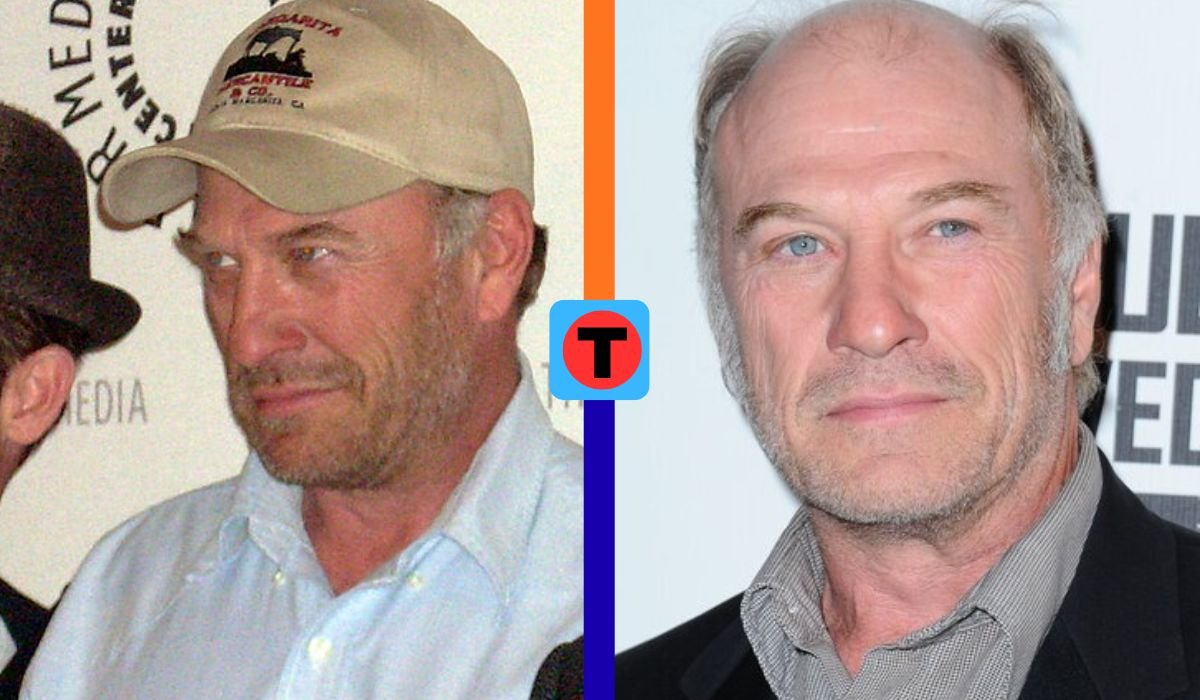
Ted Levine has built a long and respected acting career, but for many movie fans, his name will forever be connected with one unforgettable character: Jame Gumb, better known as Buffalo Bill, in the 1991 psychological thriller The Silence of the Lambs. Levine’s performance was frightening, controlled, and intensely memorable, helping make Buffalo Bill one of the most recognizable villains in modern cinema. Yet there is much more to Levine’s story than that single role. Born in Bellaire, Ohio, in 1957, he developed his craft in theater before moving into television and film, eventually appearing in projects such as Heat, The Fast and the Furious, Shutter Island, Jurassic World: Fallen Kingdom, and the television series Monk.
In recent years, Ted Levine has also spoken more openly about the controversial transgender themes surrounding The Silence of the Lambs. Looking back with decades of additional experience, he has acknowledged that certain aspects of the film have not aged well and that some lines were unfortunate. His comments offer an interesting way to reconsider both Buffalo Bill and the actor behind him.
Quick Bio Information
| Fact | Details |
|---|---|
| Full Name | Frank Theodore Levine |
| Known As | Ted Levine |
| Birth Date | May 29, 1957 |
| Birthplace | Bellaire, Ohio, United States |
| Profession | Actor |
| Education | Marlboro College |
| Early Training | Regional and Summer Theater |
| Theater Base | Chicago Theater Community |
| Major Breakthrough | The Silence of the Lambs |
| Famous Character | Jame Gumb / Buffalo Bill |
| Famous TV Role | Captain Leland Stottlemeyer |
| TV Series | Monk |
| Monk Run | 2002–2009 |
| Notable Film | Heat |
| Notable Film | Shutter Island |
| Notable Film | Jurassic World: Fallen Kingdom |
| Acting Specialty | Character Roles |
| Recognizable Feature | Deep, Distinctive Voice |
| Career Length | Several Decades |
| Current Status | Active Actor |
Ted Levine’s Early Life And Background
Ted Levine was born Frank Theodore Levine on May 29, 1957, in Bellaire, Ohio. He later grew up in Oak Park, Illinois, and eventually attended Marlboro College in Vermont. Rather than entering Hollywood through the conventional route, Levine spent important early years developing his skills on stage. His background in theater became a major part of his acting identity and helped him develop the physical presence and vocal control that later became so useful on camera.
Levine worked in summer stock and regional theaters in Vermont, Michigan, and West Virginia before settling in Chicago. During the 1980s, he became associated with Chicago theater groups and venues including The Remains, Wisdom Bridge, The Goodman, and Steppenwolf Theatre Company. This period matters because Levine was already an experienced stage performer before mainstream audiences knew his name. His later screen performances were therefore built on years of practical acting experience rather than sudden celebrity.
How Ted Levine Began His Acting Career
Theater gave Levine an important foundation, but television and film eventually provided his wider audience. His stage credits included productions such as Biloxi Blues, Buried Child, Your Home in the West, El Salvador, Killers, Life and Limb, and The Time of Your Life. His work in Sam Shepard’s Buried Child at Steppenwolf was particularly notable, earning him a 1996 Joseph Jefferson Award nomination for Actor in a Supporting Role.
Levine gradually moved into television and movies, taking on the kind of character roles that would become his specialty. His distinctive deep voice and imposing screen presence made him particularly effective in crime stories, dramas, thrillers, and law-enforcement productions. However, his career has never been limited to villains. One of the more interesting parts of the Ted Levine story is how he repeatedly worked to demonstrate that he could play ordinary, complicated, and even sympathetic people.
Ted Levine And The Silence Of The Lambs
Everything changed when Levine was cast as Jame Gumb, the murderer known as Buffalo Bill, in Jonathan Demme’s The Silence of the Lambs. Released in 1991 and adapted from Thomas Harris’s 1988 novel, the film follows FBI trainee Clarice Starling as she investigates Buffalo Bill while seeking information from the imprisoned Hannibal Lecter. Levine’s role was not the conventional leading part, but his performance became one of the film’s most enduring elements.
Levine approached Buffalo Bill as a psychologically disturbed individual rather than simply trying to create a stereotypical movie monster. His preparation was intense, and he has previously discussed how deeply he immersed himself in the character. The result was a performance built around voice, movement, silence, physical behavior, and unpredictability. Buffalo Bill could be terrifying without constantly shouting or attacking someone, which made Levine’s portrayal especially effective. His performance also became so closely associated with the film that escaping the character’s shadow later became an important part of his career.
Why Buffalo Bill Became An Iconic Character
Buffalo Bill remains memorable because Levine did not play him as a simple one-dimensional villain. The character’s unsettling behavior, unusual mannerisms, and private world create a sense of discomfort that stays with viewers. The film also places him opposite Clarice Starling, whose investigation gradually brings the audience closer to the truth. This structure allows Buffalo Bill to remain mysterious for much of the story before Levine’s performance finally takes center stage.
The character’s fame also created a difficult professional problem for Levine. After The Silence of the Lambs, audiences and casting professionals could easily associate him with sadistic or frightening characters. Levine has spoken about the frustration of being repeatedly considered for villains and about wanting opportunities to play more ordinary people. His later work shows that he successfully expanded beyond Buffalo Bill, although the character remains his most famous screen role.
Was Buffalo Bill Intended To Be Transgender?
This is one of the most important questions to answer carefully when discussing Ted Levine Buffalo Bill. Buffalo Bill is not presented as a straightforward representation of a transgender woman. The movie itself attempts to distinguish Jame Gumb from transgender identity, while explaining his desire to transform himself through his psychological history and extreme self-loathing. Director Jonathan Demme later said that Gumb was not intended to be gay or transgender and described the character’s transformation as an attempt to escape himself.
Levine has made a similar distinction. In discussing the role, he explained that he did not play Gumb as gay or trans, but rather as a deeply disturbed heterosexual man. That distinction is essential because confusing a fictional serial killer’s psychological storyline with the lives and identities of transgender people can create an inaccurate understanding of both the movie and transgender identity.
Ted Levine’s Changing View Of The Character
Although Levine did not raise the same concerns while making the movie in 1991, his perspective has changed considerably. In recent comments, he acknowledged that some aspects of The Silence of the Lambs do not hold up particularly well and that certain lines in the script are unfortunate. He connected this change in understanding to becoming more knowledgeable about transgender issues over the years.
Levine also explained that working with transgender people on later projects helped him better understand the culture and the reality surrounding gender. That experience appears to have changed how he evaluates his earlier work. His comments are notable because they do not simply dismiss criticism by saying the character was never intended to be transgender. Instead, Levine recognizes that intention and impact can be different things.
Why The Film Has Faced Transgender Representation Criticism
The controversy surrounding The Silence of the Lambs has existed for decades. Critics and LGBTQ+ advocates have argued that placing gender transformation alongside murder, psychological illness, and predatory behavior can reinforce harmful associations, even when the story explicitly says the character is not transgender. Academic discussions of the film have similarly examined how Buffalo Bill’s body transformation became connected to ideas about gender, identity, and monstrosity.
This criticism is important because movies can communicate ideas visually as well as through dialogue. A film may tell viewers that a character is not representative of a particular group, while simultaneously presenting imagery that audiences remember more strongly. The Silence of the Lambs became a hugely influential movie, so its portrayal reached an enormous audience. That helps explain why questions about its representation have remained part of its cultural legacy long after its original release.
Jonathan Demme’s Defense Of Buffalo Bill
Director Jonathan Demme addressed the controversy in a 2014 interview. He acknowledged a directorial failure in not making it clearer that Jame Gumb was not gay, but he also explained that the character’s story was rooted in abuse, self-loathing, and a desire to escape his own identity. According to Demme’s explanation, becoming a woman was imagined by Gumb as another way of becoming someone other than himself.
That explanation provides useful context, but it does not eliminate the criticism. The debate is ultimately about both intention and representation. Demme may have intended one thing, while viewers and critics experienced the imagery differently. Looking at both sides gives readers a more complete understanding than simply labeling the movie either completely offensive or completely harmless.
Lily Wachowski And The Wider LGBTQ+ Conversation
The discussion around Buffalo Bill fits into a much larger history of LGBTQ+ representation in Hollywood. Critics have pointed out that transgender and gender-nonconforming characters were historically often presented through stereotypes involving deception, instability, comedy, or violence. Discussions of The Silence of the Lambs place the film within this longer tradition of complicated and sometimes damaging screen portrayals.
Lily Wachowski has also spoken strongly about the harm caused when transgender women are portrayed as predators. Her criticism reflects a broader demand for stories that allow transgender characters to exist as complete human beings rather than reducing them to frightening plot devices. This perspective helps explain why Levine’s recent willingness to reconsider his famous role has attracted attention.
Ted Levine’s Career After Buffalo Bill
Ted Levine’s career continued successfully long after The Silence of the Lambs. He appeared in films including Nowhere to Run, Heat, Bullet, The Fast and the Furious, The Manchurian Candidate, Memoirs of a Geisha, American Gangster, and Shutter Island. Later credits included Jurassic World: Fallen Kingdom and The Report.
These performances show why it would be misleading to define Levine only as Buffalo Bill. In Heat, he played Bosko, while Shutter Island gave him another dramatic supporting role. In Jurassic World: Fallen Kingdom, he appeared as Ken Wheatley. His filmography demonstrates a performer who has repeatedly moved between crime, drama, action, thriller, and mainstream entertainment.
Ted Levine On Television And Monk
For many viewers, Levine’s most important post-Buffalo Bill role came on television. He played Captain Leland Stottlemeyer in the USA Network series Monk, appearing as a major character throughout the show’s 2002–2009 run. Stottlemeyer was dramatically different from Buffalo Bill, giving Levine an opportunity to show warmth, humor, authority, frustration, and loyalty.
The success of Monk helped broaden public recognition of Levine. Instead of seeing him only as the terrifying figure from The Silence of the Lambs, viewers could watch him play a police captain who was part of a recurring ensemble. This is one reason Ted Levine Monk remains an important search term for fans researching his career. His television work ultimately became just as important to his identity as a character actor as his movie roles.
Ted Levine’s Acting Style And Strengths
One of Levine’s most recognizable qualities is his deep bass voice. His physical presence is equally important. He can make a character seem authoritative without needing exaggerated movements, and he has a natural ability to create tension through stillness and facial expression. These qualities helped make Buffalo Bill frightening, but they have also been useful in portraying police officers, military figures, investigators, fathers, criminals, and other authority figures.
Another strength is his willingness to disappear into character. Rather than trying to make every role look like “Ted Levine,” he adjusts his voice, body language, and personality to suit the part. His extensive theater experience likely contributed to this flexibility. That background also helps explain why his performances often feel grounded even when the surrounding story is highly dramatic.
Ted Levine’s Most Notable Movies And TV Shows
When readers search for Ted Levine movies and TV shows, The Silence of the Lambs will naturally appear first, but his body of work is much broader. His film credits include Heat, The Fast and the Furious, American Gangster, Memoirs of a Geisha, Shutter Island, The Hills Have Eyes, Jurassic World: Fallen Kingdom, and The Report. On television, Monk remains one of his defining projects, while other credits include The Bridge, The Alienist, Here and Now, Big Sky, and Mayfair Witches.
His later work also demonstrates that Levine remains active well into his sixth decade of professional acting. Current film and television listings include 2026 projects such as Cape Fear, Something Very Bad Is Going to Happen, and Starbright, alongside upcoming or developing projects.
Ted Levine’s Legacy And What His Buffalo Bill Comments Mean Today
The legacy of Ted Levine is unusual because one performance became so famous that it could easily overshadow an entire career. Buffalo Bill remains culturally powerful, but Levine’s decades of work demonstrate a much wider range. His theater background, television success, and extensive filmography all deserve recognition alongside his most famous villain.
His recent comments also provide a useful lesson about changing cultural standards. A performance created in 1991 can be viewed differently in 2026 because society has developed a more detailed understanding of transgender identity and representation. Levine’s willingness to say that certain elements were wrong does not erase the film’s history, nor does it require audiences to forget its artistic achievements. Instead, it allows people to discuss the movie with more context and honesty.
Final Thoughts
Ted Levine is much more than the actor who played Buffalo Bill. He is a stage-trained character actor whose career has stretched across movies, television, and theater for decades. His performance in The Silence of the Lambs remains his signature role, but projects such as Monk, Heat, Shutter Island, American Gangster, and Jurassic World: Fallen Kingdom show how successfully he moved beyond that early image.
At the same time, Levine’s recent reflections make the story of Buffalo Bill more complicated and more relevant. He now recognizes that some aspects of the film’s treatment of transgender issues were harmful, even though he and Demme did not intend Buffalo Bill to represent a transgender person. That distinction matters. So does the recognition that creative intention does not always determine cultural impact. For modern audiences, the most useful way to view Levine’s career is not simply through the frightening character that made him famous, but through the long, varied body of work that came afterward.
FAQs About Ted Levine
Who Is Ted Levine?
Ted Levine is an American Character Actor born May 29, 1957, in Bellaire, Ohio. He became internationally famous for playing Jame Gumb, or Buffalo Bill, in The Silence of the Lambs. He later became widely recognized for playing Captain Leland Stottlemeyer on Monk.
What Role Did Ted Levine Play In The Silence Of The Lambs?
Ted Levine played Jame Gumb, the serial killer known as Buffalo Bill. His performance became one of the film’s most memorable elements and remains the role most strongly associated with his name.
Is Buffalo Bill A Transgender Character?
Buffalo Bill should not simply be described as a transgender woman. The film distinguishes Jame Gumb from transgender identity, while the character’s desire for transformation is connected to his psychological problems and self-loathing. Levine has also said he portrayed Gumb as a disturbed heterosexual man rather than as a transgender person.
Did Ted Levine Regret Playing Buffalo Bill?
Levine has not said that he simply regrets taking the role. Instead, he has expressed regret about certain aspects of the movie and its treatment of transgender issues. He has acknowledged that some lines and elements have not aged well and said his understanding of transgender issues has changed over time.
What Is Ted Levine Best Known For Besides Buffalo Bill?
Besides Buffalo Bill, Levine is especially known for Captain Leland Stottlemeyer on Monk. His film work also includes Heat, American Gangster, Shutter Island, The Fast and the Furious, and Jurassic World: Fallen Kingdom.
Was Ted Levine In Heat?
Yes. Ted Levine played Bosko in Michael Mann’s 1995 crime film Heat, adding another prominent crime-related performance to his growing film career.
How Long Did Ted Levine Play Stottlemeyer On Monk?
Levine played Captain Leland Stottlemeyer throughout the main run of Monk, which aired from 2002 through 2009. He later reprised the role in Mr. Monk’s Last Case: A Monk Movie in 2023.
Is Ted Levine Still Acting In 2026?
Yes. Ted Levine continues to work as an actor, with recent and upcoming film and television projects adding to his decades-long career.
Learn more and explore exciting content on: Loni Willison: The Untold Story of the Former Fitness Model










Leave a Reply