
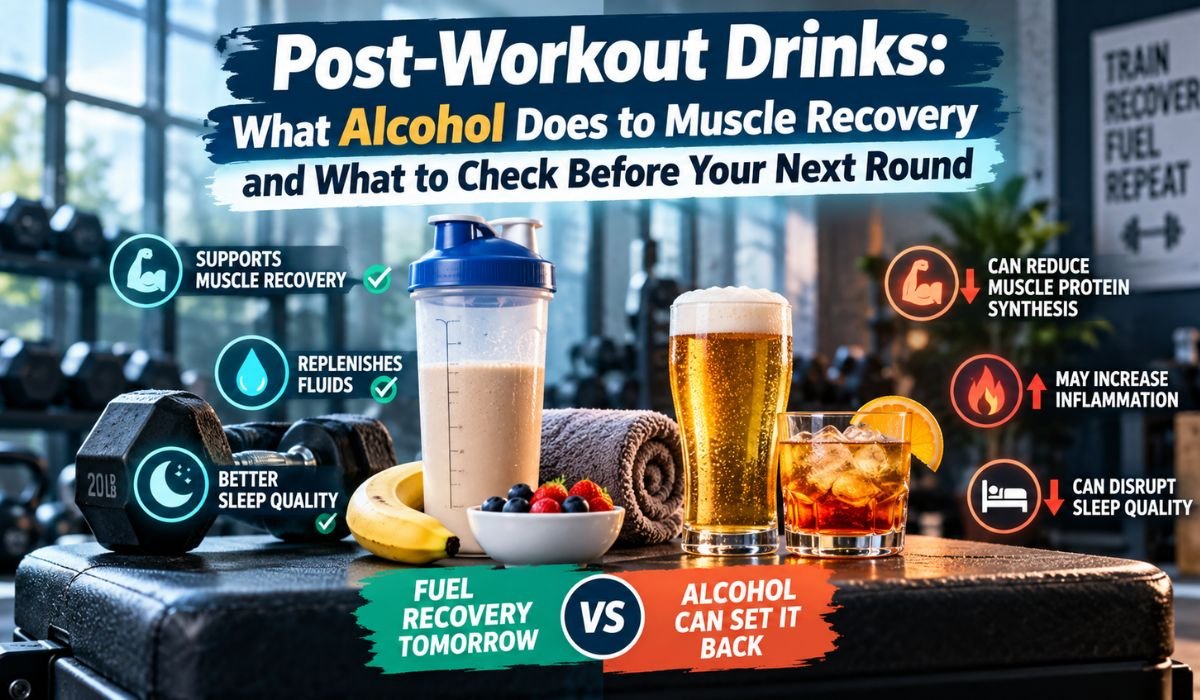
For plenty of people, a hard workout and a cold drink go together. Weekend league games end at the bar, running clubs meet up at a brewery, and a post-gym beer can feel like a well-earned reward. In many sports, celebrating with alcohol after a big effort is practically tradition.
Research suggests it is worth checking what that drink does to the work you just put in. Alcohol can interfere with the processes your muscles rely on to repair and grow, and heavy drinking after exercise can noticeably slow recovery. Awareness of alcohol’s health effects is rising too. Gallup’s 2026 survey found that 51% of U.S. adults now believe drinking one or two alcoholic beverages a day is bad for health. For most people, a few adjustments are enough. For anyone whose drinking has started to undo far more than their workouts, help can range from talking with a doctor to structured recovery at a luxury rehab or another treatment program. Here is what the science says.
How Muscle Recovery Works
When you train, especially with resistance or high-intensity work, you create small amounts of stress and damage in muscle fibers. In the hours afterward, your body repairs and rebuilds those fibers through a process called muscle protein synthesis. Over time, that repair process is what makes muscles stronger and better adapted to training. Eating enough protein after exercise supports it, and good sleep plays a major role as well.
What the Research Found About Alcohol
The most widely cited study on this topic was published in 2014 in PLOS ONE by Evelyn Parr and colleagues. Eight physically active men completed a demanding session of resistance training, interval cycling, and steady cycling. Afterward, they consumed either protein alone, alcohol with protein, or alcohol with carbohydrate. The alcohol dose was heavy, about 1.5 grams per kilogram of body weight, roughly 12 standard drinks, designed to reflect binge drinking seen in some team sports.
Compared with protein alone, muscle protein synthesis was about 24% lower when alcohol was consumed with protein and about 37% lower when alcohol was consumed with carbohydrate. The researchers concluded that alcohol suppresses the muscle’s building response after exercise and may impair recovery and adaptation to training, even when protein is eaten at the same time.
An Important Detail About Dose
The study tested heavy drinking, not a single beer. That matters. It shows what binge drinking after training can do, but it does not mean one moderate drink will have the same effect. Still, the results suggest that the more you drink after a workout, the more you may be working against your own progress.
What to Check Before Your Next Post-Workout Round
You do not have to give up social traditions entirely to protect your training. Running through these quick checks can help you make choices that support your goals.
- Check how much you are planning to drink. The Parr study found the biggest effects with heavy drinking. Keeping intake low, or skipping alcohol on hard training days, limits how much it can interfere with recovery.
- Check that you have eaten protein first. Alcohol with protein reduced muscle protein synthesis less than alcohol with carbohydrate. Eating a protein-rich meal before any drinking gives your muscles a better starting point.
- Check your hydration. Exercise causes fluid loss through sweat, and alcohol increases urine production. Drinking water first, and alternating with water if you do drink, helps you avoid compounding dehydration.
- Check your sleep plans. Research on alcohol and sleep has found that alcohol disrupts sleep in the second half of the night and can reduce REM sleep. Since sleep is central to recovery, a late night of drinking can cost more than you expect.
- Check your next training session. If you have another hard workout, race, or game the next day, that is a strong reason to keep drinking light or skip it altogether.
These checks take only a moment, but they can make a real difference in how you feel and perform the next time you train.
Alcohol-Free Ways to Celebrate
Many teams and clubs are finding new ways to mark a good session. Smoothies, protein shakes, sparkling water, and nonalcoholic beer are increasingly common at post-game gatherings. Gallup’s 2026 survey found that among people who drink nonalcoholic alternatives, 38% say they are drinking more of them than before. Choosing a lower-alcohol or alcohol-free option can keep the social side of sport while protecting recovery.
When Drinking Starts to Outweigh Training
Exercise is often part of a healthy routine, and for some people it is a key tool in managing stress and recovery from substance use. If you notice that drinking regularly undoes your progress, that you struggle to cut back, or that alcohol has become the main reason you look forward to the end of a workout, it may be time to talk with a doctor. If you drink heavily every day, do not stop suddenly without medical advice, because alcohol withdrawal can be dangerous.
The Bottom Line
A post-workout drink is a common ritual, but heavy drinking after exercise can blunt the very recovery process that makes training worthwhile. Keeping drinks light, eating protein first, staying hydrated, and protecting your sleep can help you enjoy the social side of fitness without sacrificing your results.
Frequently Asked Questions (FAQs)
1. Does alcohol affect muscle growth?
Heavy drinking can. A 2014 study in PLOS ONE found that consuming a large amount of alcohol after exercise reduced muscle protein synthesis by about 24% with protein and 37% with carbohydrate, compared with protein alone.
2. Is one beer after a workout a problem?
The 2014 study tested heavy drinking of about 12 standard drinks, so its results do not directly apply to a single beer. However, research suggests that larger amounts of alcohol interfere more with recovery, so keeping intake low is the safer choice.
3. What should I eat or drink after exercise instead?
Protein-rich foods and plenty of water support muscle repair and rehydration. Smoothies, protein shakes, sparkling water, or nonalcoholic beer can work well for post-workout socializing.











Leave a Reply