
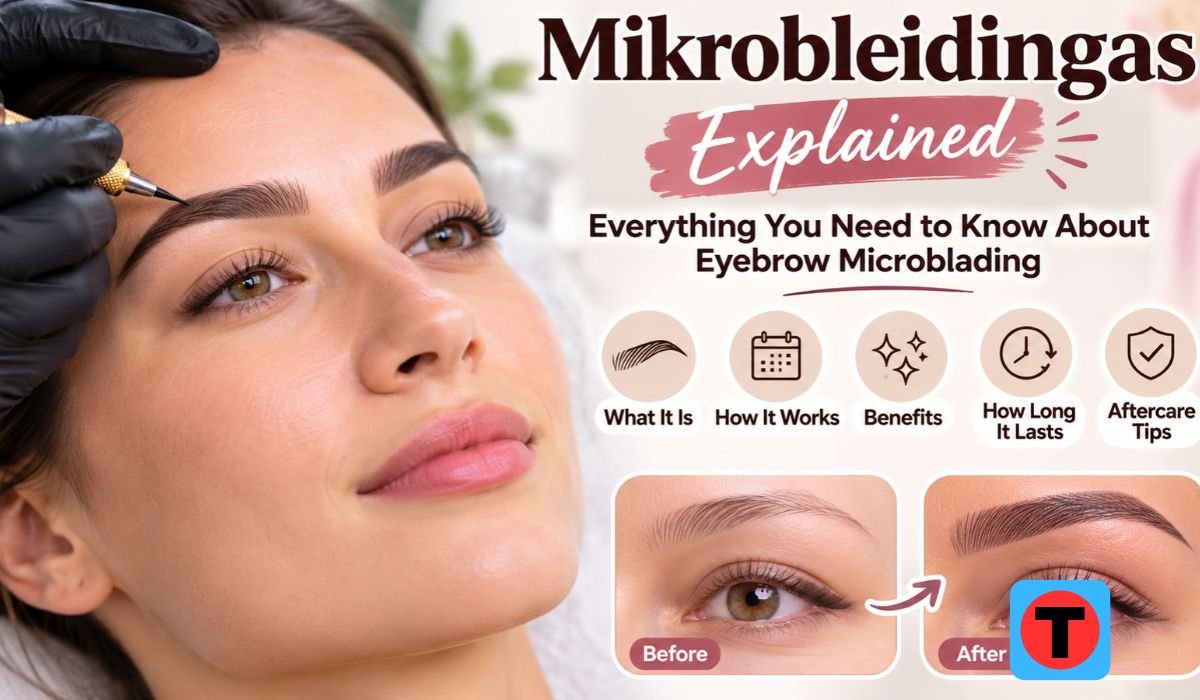
Well-shaped eyebrows can make a noticeable difference to your overall appearance. However, filling in sparse or uneven eyebrows every morning can become time-consuming. This is where Mikrobleidingas offers an interesting alternative. Also known as Microblading, this cosmetic technique creates fine, hair-like strokes that give eyebrows a fuller and more defined appearance.
In 2026, Microblading remains an option for people exploring Semi-Permanent Makeup and personalized eyebrow treatments. However, understanding how the procedure works is just as important as choosing your preferred eyebrow shape. From skin suitability and healing to costs and potential complications, several factors deserve careful consideration before booking an appointment.
Quick Bio Information About Mikrobleidingas
| Information | Details |
|---|---|
| Name | Mikrobleidingas |
| English Meaning | Microblading |
| Language of Term | Lithuanian |
| Treatment Type | Cosmetic Tattooing |
| Primary Purpose | Eyebrow Enhancement |
| Application Area | Eyebrows |
| Technique | Manual Hair-Like Strokes |
| Equipment | Specialized Handheld Tool |
| Pigment Placement | Superficial Dermis |
| Treatment Duration | Often Around 1–3 Hours |
| Result | Fuller-Looking Eyebrows |
| Longevity | May Remain Visible for Several Years |
| Healing Period | Several Weeks |
| Maintenance | Individualized Touch-Ups |
| Pain Level | Varies by Individual |
| Cost | Depends on Location and Practitioner |
| Potential Risks | Infection, Allergies, and Scarring |
| Alternative Treatments | Powder Brows and Combination Brows |
| Hair Growth Benefits | Does Not Stimulate Hair Growth |
| Removal | Professional Removal May Be Possible |
What Is Mikrobleidingas?
Mikrobleidingas is the Lithuanian term for Microblading, a specialized form of Eyebrow Micropigmentation that improves the appearance of natural eyebrows. Instead of applying makeup to the skin’s surface, a trained practitioner introduces cosmetic pigment into the upper dermis using a handheld instrument containing fine needles.
The technique creates small markings that resemble individual eyebrow hairs. These strokes can fill visible gaps, improve eyebrow definition, and create the impression of greater density. Unlike eyebrow pencils or powders, the pigment remains beneath the skin and gradually changes over time. Although frequently described as Semi-Permanent Makeup, Mikrobleidingas is technically a form of Cosmetic Tattooing and should be approached with appropriate care.
History and Evolution of Microblading
Eyebrow enhancement has changed considerably over the years. Traditional cosmetics, eyebrow pencils, powders, and tattooing have all played a role in helping people achieve their preferred appearance. Modern Microblading builds upon cosmetic tattooing by focusing on individual hair-like strokes rather than uniform blocks of color.
Contemporary eyebrow treatments offer greater flexibility in shape, shading, and pigment selection. Practitioners can customize designs according to existing eyebrow hair and personal preferences. However, the exact historical origins of modern Microblading are not consistently documented. Its development is best understood as part of the wider evolution of Permanent Makeup and Cosmetic Micropigmentation rather than the invention of a single verified individual.
How Does Mikrobleidingas Work?
The science behind Microblading involves two main layers of the skin: the epidermis and the dermis. Ordinary eyebrow makeup stays on the surface, while Microblading introduces pigment beneath the outer layer. This allows the color to remain visible beyond the skin’s normal renewal cycle.
A practitioner carefully positions pigment strokes to follow the direction of existing eyebrow hairs. The objective is to create a balanced appearance that complements natural facial features. Pigment retention depends on skin characteristics, pigment formulation, application technique, and the body’s healing response. This explains why two people receiving similar treatments may experience different results.
PubMed Central (PMC)+1
The Microblading Procedure
A professional Microblading appointment begins with a consultation. The practitioner examines your natural eyebrows, discusses your medical history, and helps determine a suitable eyebrow shape. This planning stage is often called Eyebrow Mapping.
Once you approve the proposed shape, the practitioner selects an appropriate pigment color. A topical numbing product may be used to reduce discomfort before pigment application begins. The practitioner then creates fine strokes using specialized equipment.
After completing the treatment, the practitioner provides recovery instructions and discusses follow-up appointments. Treatment time varies depending on the complexity of the design. Remember that freshly microbladed eyebrows may look darker and more defined than the final healed result.
Benefits of Mikrobleidingas
One of the main benefits of Mikrobleidingas is its ability to create Fuller-Looking Eyebrows without requiring daily pigment application. People who spend considerable time shaping their eyebrows may find the treatment convenient.
Microblading can also improve the appearance of uneven eyebrows and fill visible gaps. Its customized approach allows practitioners to create subtle or more defined designs depending on individual preferences.
Another advantage is its longer-lasting appearance compared with conventional makeup. However, these benefits depend on the quality of the treatment and individual healing. Microblading does not produce new eyebrow hair, repair damaged hair follicles, or address underlying medical causes of hair loss.
Who Should Consider Microblading?
Mikrobleidingas may appeal to people with naturally thin eyebrows, uneven eyebrow shapes, or visible gaps caused by previous overplucking. Both men and women can consider the procedure because eyebrow designs can be adapted to different preferences.
However, Microblading is not suitable for everyone. People with active skin infections, certain inflammatory skin conditions, or a history of raised scars should seek medical advice before treatment. Individuals with conditions affecting wound healing also require careful assessment.
Pregnant individuals may prefer to postpone elective cosmetic tattooing. Anyone experiencing sudden or unexplained eyebrow thinning should investigate the underlying cause with a healthcare professional before pursuing cosmetic enhancement.
Microblading for Different Skin Types
Skin characteristics can significantly influence the appearance and longevity of microbladed eyebrows. People with very oily skin may experience faster fading or less sharply defined pigment strokes. Powder Brows may be an alternative worth discussing in these circumstances.
Dry and combination skin can also respond differently depending on skin health, pigment selection, and healing patterns. Sensitive skin may require additional evaluation because the treatment temporarily damages the skin barrier.
No skin type guarantees perfect results. A responsible practitioner should examine your skin rather than recommend a treatment solely because it is fashionable or commercially popular. Individual assessment helps establish more realistic expectations.
U.S. Dermatology Partners+1
Microblading vs Powder Brows
Although Microblading, Powder Brows, and Combination Brows belong to the broader category of Cosmetic Micropigmentation, they produce different visual effects. Microblading emphasizes individual strokes, while Powder Brows generally create a soft, shaded appearance resembling eyebrow makeup.
| Feature | Microblading | Powder Brows | Combination Brows |
|---|---|---|---|
| Appearance | Hair-Like Strokes | Soft Shading | Strokes and Shading |
| Application | Typically Manual | Typically Machine-Assisted | Combined Techniques |
| Finish | Hair-Like Definition | Powdered Makeup Effect | Customized Definition |
| Longevity | Varies | Varies | Varies |
| Maintenance | Possible Touch-Ups | Possible Touch-Ups | Possible Touch-Ups |
| Skin Penetration | Yes | Yes | Yes |
Traditional Eyebrow Tattooing may create a more continuous color pattern, although modern tattooing methods vary considerably. Choosing the right technique depends on your existing eyebrows, skin characteristics, and preferred appearance.
Preparing for Microblading and Managing Pain
Good preparation begins with an honest consultation. Inform your practitioner about allergies, medications, previous cosmetic treatments, and existing skin conditions. Avoid changing prescribed medications without consulting your healthcare provider.
Discuss your preferred eyebrow shape before the appointment and allow the practitioner to evaluate your natural hair pattern. Choosing a conservative design may offer greater flexibility as beauty preferences change.
Microblading discomfort varies between individuals. Some people experience mild scratching sensations, while others find the procedure more uncomfortable. Numbing products may help manage sensitivity, but a completely painless experience cannot be guaranteed.
Healing Process and Aftercare
The Microblading Healing Process usually takes several weeks. Initially, eyebrows may appear darker than expected, accompanied by mild redness and sensitivity. Superficial flaking may develop as the skin recovers, and pigment intensity can change throughout the healing period.
Follow your practitioner’s written Microblading Aftercare instructions carefully. Avoid scratching, picking, swimming, and applying unsuitable cosmetics to actively healing skin. Ask when you can safely resume your regular skincare routine.
Increasing pain, spreading redness, pus, fever, or significant swelling should not be ignored. These symptoms may indicate an infection requiring medical assessment. Severe swelling around the eyes or changes in vision require urgent medical attention.
PubMed Central (PMC)+1
How Long Does Mikrobleidingas Last?
Microblading results often remain noticeable for approximately one to three years, although individual experiences vary considerably. Skin characteristics, pigment composition, application methods, and subsequent treatments can influence how quickly the color fades.
Some people require follow-up appointments to address uneven pigment retention. Others may remain satisfied with their results for longer periods without additional treatment.
An important consideration is that Semi-Permanent Makeup does not necessarily disappear completely. Traces of pigment may remain visible for several years. Repeated touch-ups should therefore be considered carefully rather than treated as an automatic maintenance requirement.
How Much Does Mikrobleidingas Cost in 2026?
Microblading costs depend on geographical location, practitioner experience, treatment complexity, and whether follow-up services are included. A 2026 beauty industry report suggests that some treatments in the United States cost approximately $500 to $2,000, although this is not a universal price range.
Cosmopolitan
Before booking, request a complete price estimate covering the consultation, initial procedure, possible touch-ups, and aftercare services. Correction or removal can create additional expenses.
Rather than selecting a practitioner based entirely on affordability, consider their qualifications, hygiene standards, and healed treatment results. A higher price does not automatically guarantee better quality.
Microblading Risks and Side Effects
Despite its cosmetic benefits, Mikrobleidingas carries potential health risks. Because the treatment penetrates the skin, contaminated instruments or pigments may introduce harmful microorganisms. Allergic reactions, persistent inflammation, unwanted color changes, and scarring are also possible.
Dermatology research has documented complications following cosmetic eyebrow tattooing. Even professionally performed treatments cannot eliminate every risk.
The U.S. Food and Drug Administration also states that it has not approved pigments for cosmetic injection into the skin. Understanding these concerns is an important part of making an informed decision about Permanent Makeup.
FDA+1
Choosing a Qualified Microblading Practitioner
A qualified practitioner should explain their training, treatment methods, safety procedures, and the limitations of Microblading. Sterile single-use needles, appropriate protective equipment, and a clean working environment are essential.
In Lithuania, permanent makeup providers must hold the appropriate hygiene permit. European Union regulations also restrict certain hazardous substances in tattoo and Permanent Makeup inks. Requirements differ internationally, making it important to check local regulations.
nvsc.lrv.lt+1
Ask to see photographs of fully healed eyebrows rather than relying exclusively on freshly completed treatments. A trustworthy practitioner should welcome questions and avoid promising flawless or risk-free results.
Microblading Removal and Common Myths
One widespread misconception is that microbladed eyebrows always fade completely. Another is that the treatment encourages natural eyebrow growth. Neither claim is accurate.
Professional laser treatment may help remove unwanted cosmetic pigmentation, but effectiveness depends on the pigment and individual circumstances. Multiple appointments may be necessary, and complete removal is not guaranteed.
Certain pigments can also darken following laser exposure. A qualified dermatologist or experienced medical laser specialist should assess unwanted eyebrow pigmentation before treatment. Avoid attempting removal with harsh chemicals, abrasive products, or unapproved tattoo removal creams.
FDA+1
Is Mikrobleidingas Worth It?
Mikrobleidingas may be worthwhile for people who want more defined eyebrows and a simpler daily makeup routine. However, the initial expense, healing period, maintenance requirements, and potential complications deserve equal consideration.
If you frequently change your eyebrow shape or prefer experimenting with different styles, temporary products such as eyebrow pencils, powders, and tinted gels may offer greater flexibility without penetrating the skin.
Ultimately, the best eyebrow enhancement method is one that suits your appearance, skin health, lifestyle, budget, and personal comfort. There is no single treatment that works perfectly for everyone.
Final Thoughts
Mikrobleidingas offers a personalized approach to eyebrow enhancement by combining cosmetic artistry with specialized pigmentation techniques. It can create Fuller-Looking Eyebrows, improve definition, and reduce dependence on daily eyebrow makeup.
However, achieving satisfactory results requires more than choosing an attractive eyebrow design. Professional qualifications, proper hygiene, healthy skin, careful aftercare, and realistic expectations all play important roles.
Before committing to Microblading in 2026, take time to understand its benefits and limitations. An informed decision is far more valuable than following a beauty trend or relying on promotional promises.
FAQs About Mikrobleidingas
What Does Mikrobleidingas Mean?
Mikrobleidingas is the Lithuanian term for Microblading. It describes a cosmetic tattooing technique that introduces pigment into the skin to create markings resembling natural eyebrow hairs.
Is Mikrobleidingas Permanent?
It is commonly classified as Semi-Permanent Makeup because its appearance generally fades over time. However, some pigmentation may remain visible for several years and might not disappear completely.
How Long Does Microblading Last?
Results commonly remain noticeable for one to three years. Individual skin characteristics, pigment formulation, healing response, and treatment technique influence longevity.
Is Microblading Painful?
Discomfort varies from person to person. Appropriate numbing products may reduce sensitivity, although some scratching, pressure, or irritation may still occur during treatment.
Does Microblading Promote Eyebrow Hair Growth?
No. Microblading creates the visual impression of additional eyebrow hairs. It does not stimulate hair follicles or treat medical conditions responsible for eyebrow hair loss.
Can Microblading Be Removed Completely?
Professional laser treatment may reduce unwanted pigmentation. However, complete removal is not guaranteed, and treatment suitability depends on the pigment and skin characteristics.
Is Mikrobleidingas Safe?
Microblading carries risks, including infection, allergic reactions, scarring, and unwanted pigmentation changes. Choosing a qualified practitioner and following appropriate aftercare can reduce preventable complications but cannot eliminate every risk.














Leave a Reply