
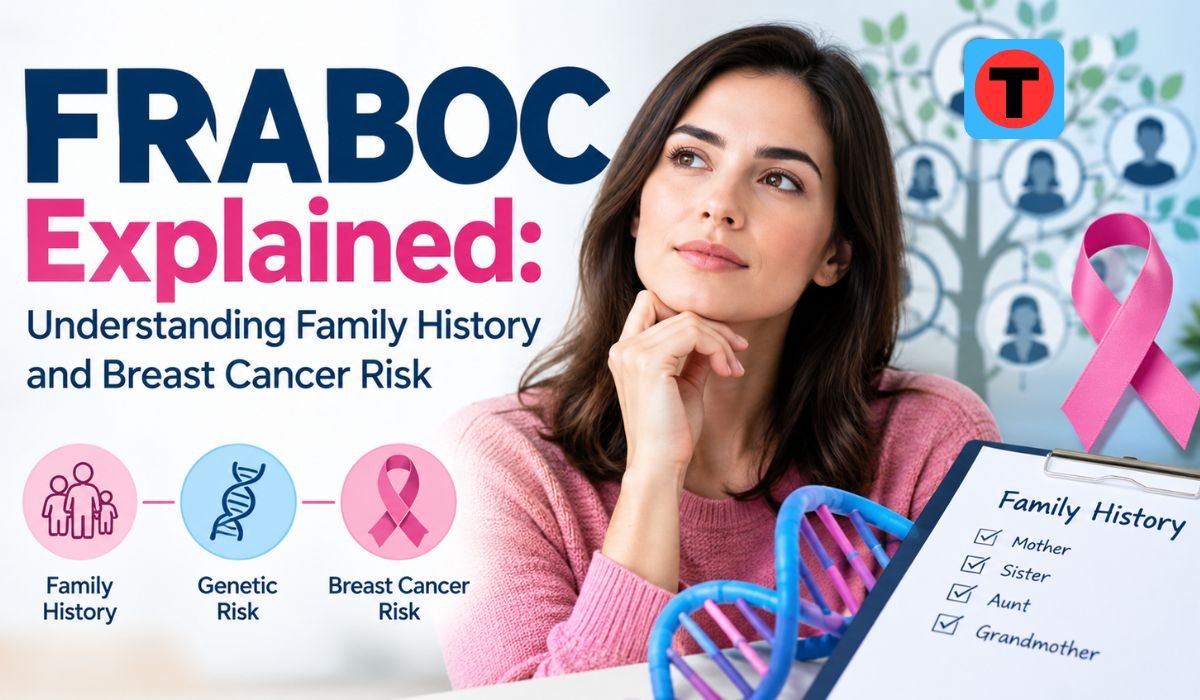
Learning that breast or ovarian cancer has affected someone in your family can naturally lead to questions. You may wonder whether your own risk is higher, whether you need extra screening, or whether a genetic condition could be involved. In Australia, one tool that was created to help healthcare professionals answer some of these questions was FRABOC, short for Familial Risk Assessment – Breast and Ovarian Cancer. FRABOC was an online clinical tool that used family-history information to help assess breast and ovarian cancer risk. Older Cancer Australia guidance specifically directed health professionals to FRABOC when a more detailed assessment was needed.
FRABOC is no longer available through the Cancer Australia website. Current Australian breast cancer risk assessment has moved toward newer approaches, including iPrevent, which considers family history alongside a wider range of personal and medical factors. Understanding FRABOC is still useful, however, because it explains an important idea that remains central today: family history can provide valuable clues about breast cancer risk, but having cancer in the family does not automatically mean that a person has an inherited cancer condition or will develop cancer.
What Is FRABOC?
FRABOC stands for Familial Risk Assessment – Breast and Ovarian Cancer. It was designed as a clinical risk-assessment resource rather than as a diagnostic test. Its purpose was to help healthcare professionals interpret a woman’s family history of breast and ovarian cancer and place that information into a meaningful risk context. Cancer Australia’s historical guidance described FRA-BOC as an online resource for estimating breast or ovarian cancer risk in situations involving different family-history patterns.
This distinction matters. FRABOC did not look for cancer inside the body, and it did not examine a person’s DNA. It was not a mammogram, biopsy, blood test, or genetic test. Instead, it helped organize information about relatives, cancer types, and ages at diagnosis so that a healthcare professional could decide whether the family pattern appeared broadly average, moderately increased, or potentially high risk. The approach was especially useful because family histories can become complicated very quickly, particularly when several relatives on the same side of a family have had cancer.
What Does FRABOC Stand For?
The name itself describes the purpose of the tool. “Familial Risk Assessment” refers to evaluating cancer risk that may be associated with a person’s family history. “Breast and Ovarian Cancer” identifies the two cancers at the centre of the assessment. The connection between these cancers is important because certain inherited gene changes, particularly changes involving BRCA1 and BRCA2, can increase the risk of both breast and ovarian cancers. Cancer Council Australia explains that only a small percentage of certain cancers are caused by an inherited faulty gene, and even when an inherited gene change is present, it does not mean that every family member will develop cancer.
That is why FRABOC should be understood as a risk-assessment framework, not a prediction of someone’s future. A family can have several cancer diagnoses for different reasons, including chance and shared environmental or lifestyle factors. A familial pattern can sometimes indicate an inherited predisposition, but professional assessment is needed to understand what the pattern actually means.
Quick Bio Information
| Fact | Information |
|---|---|
| Full Name | Familial Risk Assessment – Breast and Ovarian Cancer |
| Common Name | FRABOC or FRA-BOC |
| Country | Australia |
| Main Purpose | Familial Breast and Ovarian Cancer Risk Assessment |
| Original Context | Cancer Australia Clinical Guidance |
| Primary Focus | Family History and Cancer Risk |
| Breast Cancer | One of the Main Cancers Considered |
| Ovarian Cancer | One of the Main Cancers Considered |
| Type of Resource | Clinical Risk-Assessment Tool |
| Genetic Test | No |
| Cancer Diagnosis | No |
| Family History | Central to the Assessment |
| Important Genes | BRCA1 and BRCA2 |
| Maternal History | Relevant |
| Paternal History | Relevant |
| Current Availability | Former Tool; No Longer Available on Cancer Australia |
| Modern Resource | iPrevent |
| Newer Approach | Broader Individualized Risk Assessment |
| Specialist Care | Familial Cancer Services May Be Used for Higher-Risk Situations |
How Did FRABOC Assess Family Cancer History?
The value of a family-history assessment comes from looking at the pattern, rather than focusing on one diagnosis in isolation. Important details include how many blood relatives had cancer, what type of cancer they had, how closely related they are to the person being assessed, and how old they were when the cancer was diagnosed. Cancer Council Australia notes that a greater number of affected blood relatives and younger ages at diagnosis can make an inherited faulty gene more likely to be involved.
The type of cancer also matters. A family history involving breast cancer alone can mean something different from a family history involving breast and ovarian cancer, particularly when several relatives are affected. Male breast cancer can also be an important clue. Australian familial cancer guidance identifies patterns such as breast cancer diagnosed under 50, male breast cancer, breast and ovarian cancer in the same person, and additional breast or ovarian cancers within a family as circumstances that may warrant closer familial assessment.
Why Both Sides of the Family Matter
One of the most useful lessons from family cancer assessment is that both sides of the family count. It is easy to think about a mother’s relatives when considering breast cancer because breast cancer is often discussed in relation to mothers, sisters, and aunts. But inherited gene changes can come from either parent. Cancer Council Australia specifically recommends looking at cancer history on both the father’s and mother’s sides of the family.
This is particularly important for BRCA1 and BRCA2. A father can carry a pathogenic variant without having breast cancer himself and can pass that genetic change to a daughter or son. Consequently, a family history should not stop at the maternal grandmother or mother’s sisters. Information about paternal aunts, uncles, grandparents, and other blood relatives can also contribute to a more complete picture.
Family History Factors That May Indicate Increased Risk
Certain patterns can raise the possibility of an inherited cancer predisposition. These include several blood relatives developing breast or ovarian cancer, particularly when they are closely related or when cancers appear on the same side of the family. A younger-than-usual age at diagnosis can also be important. Australian guidance gives particular attention to breast cancer diagnosed before age 50, male breast cancer, and combinations involving breast, ovarian, pancreatic, or certain prostate cancers.
However, these clues should not be treated as a personal diagnosis. For example, having one relative diagnosed with breast cancer does not automatically mean that a person has a hereditary cancer syndrome. Likewise, not having an obvious family history does not guarantee that a person has no risk. Family structures can be small, relatives may be unaware of previous diagnoses, and genetic causes can sometimes occur without a dramatic family pattern.
The Three FRABOC Risk Categories
Historical Australian guidance associated with FRABOC described three broad levels of familial breast cancer risk. The first was at or slightly above average risk, representing women whose family history did not suggest a strong inherited pattern. The second was moderately increased risk, where the family history was more notable and additional risk assessment or screening considerations could apply. The third was potentially high risk, where referral to a family cancer clinic for more detailed assessment and possible genetic testing could be appropriate.
Older Cancer Australia material indicated that the majority of women were in the average or slightly above average category, while the moderately increased and potentially high-risk categories represented much smaller groups. These figures belong to the historical framework and should not be presented as a current personal risk calculation. Modern assessment tools use more information and can produce individualized estimates. The key point remains that risk exists on a spectrum rather than being simply “safe” or “unsafe.”
What Happens When Family History Looks More Concerning?
When a family history suggests a potentially significant inherited risk, a healthcare professional may recommend assessment through a familial cancer service or family cancer clinic. These services can review the family tree in greater detail, assess whether genetic testing is appropriate, and discuss possible screening or risk-management approaches. Cancer Council Australia says genetic testing is generally offered to people considered at high risk of carrying an inherited faulty gene because of factors such as strong family history or the age at which cancer was diagnosed.
Genetic testing is also more informative when approached carefully. Cancer Council Australia explains that testing may initially be performed on a family member who has had a relevant cancer. If a particular faulty gene is identified, testing can then be offered to other relatives who may carry the same change. This is one reason genetic counselling and specialist assessment can be valuable rather than ordering a test without understanding what the result could mean.
Is FRABOC Still Available In Australia?
No. The FRA-BOC tool is no longer available on the Cancer Australia website. BreastScreen Queensland currently states that the former FRA-BOC tool has been replaced by iPrevent for breast cancer risk assessment.
This explains why readers searching for an old FRABOC reference may find historical Cancer Australia documents but cannot find the original online calculator. FRABOC remains relevant as part of the history of Australian familial cancer risk assessment, but it should not be treated as a current online calculator or as a substitute for modern clinical advice.
What Is iPrevent?
iPrevent is a newer breast cancer risk-assessment and risk-management decision-support tool developed at the Peter MacCallum Cancer Centre. It is designed to support discussions between women and their doctors about breast cancer risk, prevention, and screening.
The major difference is breadth. iPrevent asks about a person’s own medical history, previous breast biopsies, family history, reproductive factors, lifestyle factors, and previous breast disease. Its family-history section can include information about parents, grandparents, children, siblings, aunts, uncles, nieces, and nephews, including approximate ages at diagnosis for relevant cancers.
FRABOC And iPrevent: What Has Changed?
The change from FRABOC to iPrevent reflects a broader move toward individualized risk assessment. Historical FRABOC guidance concentrated strongly on familial patterns and broad categories. iPrevent combines family history with additional personal and medical information and uses validated mathematical models, including IBIS/Tyrer-Cuzick and BOADICEA, to estimate breast cancer risk.
iPrevent presents estimated breast cancer risk over the next 10 years and over the remaining lifetime, up to age 80, and places the result into risk categories based on comparison with population risk. The Peter MacCallum Cancer Centre currently describes average risk as less than 1.5 times population risk, moderate risk as 1.5 to 3 times population risk, and high risk as more than three times population risk.
This does not mean a person should enter information into a tool and make medical decisions alone. iPrevent itself is intended to facilitate prevention and screening discussions with a doctor, and people with certain histories may need specialist genetic or familial cancer assessment.
What Should You Tell Your GP?
If breast or ovarian cancer has occurred in your family, it can help to gather as much reliable information as possible before speaking with your GP. Try to find out which relatives were diagnosed, what type of cancer they had, approximately how old they were at diagnosis, and whether the cancers occurred on your mother’s or father’s side. Information about breast, ovarian, pancreatic, and prostate cancers can be relevant to modern risk assessment. iPrevent also notes that exact ages are helpful but estimates can be entered when exact information is unavailable.
You do not need to build a perfect family tree before making an appointment. Start with what you know. Older relatives may be able to provide missing information, and medical records can sometimes clarify the diagnosis. The important thing is to give your healthcare professional enough information to decide whether ordinary screening is appropriate or whether a more detailed risk assessment is warranted.
Does Family History Mean You Will Develop Breast Cancer?
No. A family history can increase risk in some circumstances, but it does not mean that cancer is inevitable. Cancer Council Australia explains that even when an inherited faulty gene increases cancer risk, not every family member who carries that gene will necessarily develop the disease.
It is also important to distinguish familial cancer from genetic cancer. Peter MacCallum Cancer Centre explains that familial cancer describes cancer appearing to run in a family without necessarily knowing the precise genetic reason, whereas genetic cancer refers to cancer associated with a specific inherited gene change. This distinction helps explain why family history is important even when genetic testing does not identify a particular mutation.
Understanding BRCA1 And BRCA2
BRCA1 and BRCA2 are genes that play an important role in hereditary breast and ovarian cancer assessment. Certain inherited pathogenic variants in these genes can substantially increase cancer risk. Cancer Council Australia notes that BRCA1 and BRCA2 are important genes associated with hereditary breast and ovarian cancer and that genetic testing may be appropriate for a relatively small group of people with a strong family history or other relevant features.
A genetic result can affect more than one person because relatives may share the same inherited variant. That is why testing is generally handled through appropriate clinical services with counselling and discussion of the potential benefits, limitations, and consequences. A genetic test should not be viewed as a simple yes-or-no prediction of whether someone will develop cancer.
Why Breast Cancer Risk Is More Than Family History
Modern risk assessment recognizes that family history is only one part of the picture. iPrevent considers reproductive and lifestyle factors, previous breast disease, and other personal information alongside family cancer history. Breast density is another factor receiving greater attention in Australia. Peter MacCallum Cancer Centre notes that dense breasts are one of several breast cancer risk factors and can also make cancer harder to detect on a mammogram. The centre emphasizes that breast density should not be considered by itself when estimating lifetime risk.
This broader approach is one reason older FRABOC information should be interpreted carefully in 2026. The underlying importance of family history has not disappeared, but modern assessment can combine that history with more information to provide a more individualized estimate.
The Emotional Side Of Knowing Your Risk
There is also a human side to family cancer history. Finding out that a close relative had breast or ovarian cancer can create uncertainty even when nobody has suggested that you are personally at high risk. People may become more alert to symptoms or spend time wondering what a relative’s diagnosis means for them.
A structured conversation with a GP or appropriate cancer-risk service can replace some of that uncertainty with useful information. It does not guarantee reassurance, and an assessment can sometimes lead to further testing or monitoring. But knowing what information matters can be more useful than trying to interpret a family history alone.
Final Thoughts
FRABOC is best understood as an important part of the history of familial breast and ovarian cancer risk assessment in Australia. It provided a structured way for healthcare professionals to interpret family-history patterns and identify women who might benefit from more detailed assessment.
Although FRABOC is no longer available, its central lesson remains relevant: family history is information worth understanding, not a prediction that cancer will happen. Both sides of the family matter, the age and pattern of diagnoses can be significant, and inherited gene changes are only one possible explanation for cancer occurring within a family.
In 2026, newer tools such as iPrevent provide a broader approach by combining family history with personal and other risk factors. The most useful next step for someone concerned about their family history is therefore not to rely on an old FRABOC result or attempt to diagnose inherited risk alone. A conversation with a GP or appropriate familial cancer service can help turn family history into a clearer, evidence-based understanding of personal risk and possible screening or prevention options.
FAQs About FRABOC
What Does FRABOC Mean?
FRABOC stands for Familial Risk Assessment – Breast and Ovarian Cancer. It was an Australian clinical tool designed to help healthcare professionals assess breast and ovarian cancer risk using family-history information. It was a risk-assessment resource rather than a cancer test or genetic test.
Is FRABOC Still Available?
No. The former FRA-BOC tool is no longer available on the Cancer Australia website. Current Australian resources point toward newer approaches, including iPrevent, for breast cancer risk assessment.
Does One Relative With Breast Cancer Mean I Am High Risk?
Not necessarily. The significance of family history depends on several details, including the number of affected relatives, how closely related they are, the type of cancer, and their ages at diagnosis. A healthcare professional can interpret the complete family pattern rather than relying on one diagnosis.
Does My Father’s Family History Matter?
Yes. Inherited cancer-predisposition genes can come from either parent, so both maternal and paternal family histories are important. Cancer Council Australia specifically recommends considering cancer history on both sides of the family.
What Is iPrevent?
iPrevent is a breast cancer risk-assessment and risk-management decision-support tool developed by Peter MacCallum Cancer Centre. It considers family history together with personal, reproductive, lifestyle, and previous breast-disease information and provides individualized risk estimates for discussion with a doctor.
Does FRABOC Diagnose Breast Cancer?
No. FRABOC was a risk-assessment tool. It did not diagnose breast cancer, detect a tumour, or replace mammography, biopsy, genetic testing, or clinical examination.
When Is Genetic Testing Considered?
Genetic testing is generally considered when a person’s history suggests a sufficiently high likelihood of an inherited cancer-predisposition gene. Cancer Council Australia notes that testing is appropriate for a relatively small number of people and is generally provided through appropriate clinical services.
What Information Should I Take To My Doctor?
Bring whatever reliable family-history information you can find, including the relatives who had cancer, the type of cancer, approximate age at diagnosis, and whether the relatives are from your mother’s or father’s side. Information about breast, ovarian, pancreatic, and prostate cancers may be relevant to modern assessment.
Learn more and explore exciting content on: Merfez: What It Means, How It Is Used, and Why It Matters





Leave a Reply