
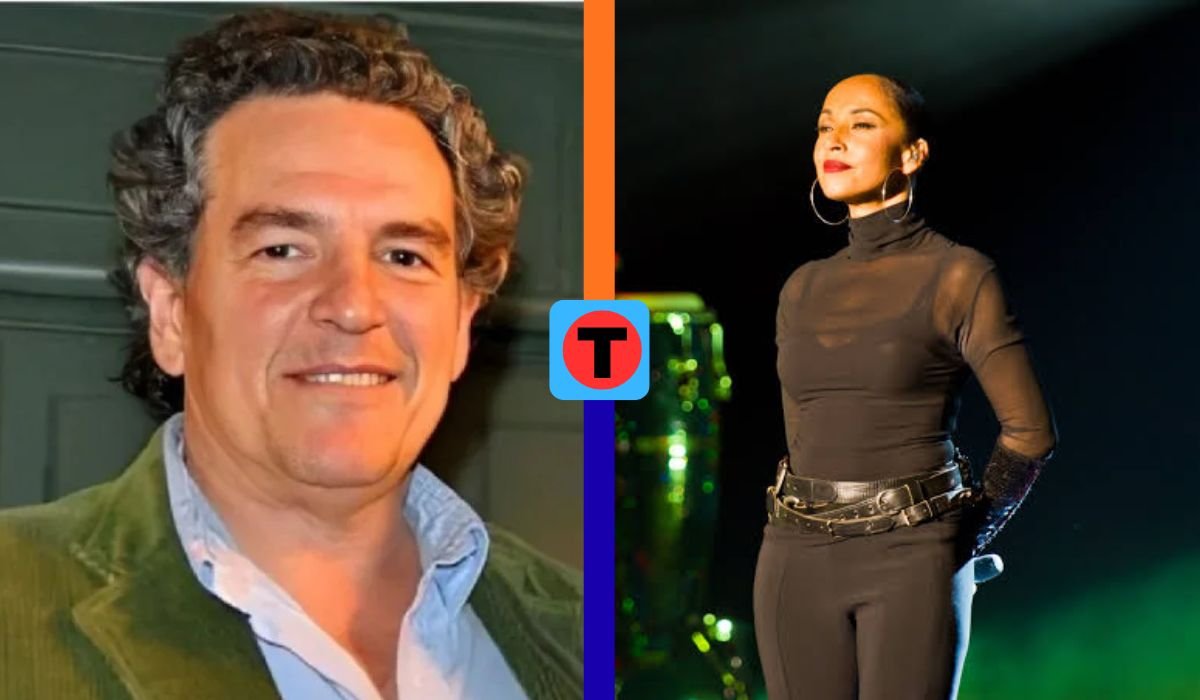
Carlos Scola Pliego is a name that often appears alongside Sade Adu, one of the most recognizable singers of her generation. Their marriage in 1989 and divorce in 1995 made the Spanish filmmaker part of Sade’s personal history, but there is more to his story than his relationship with the singer. Long before their marriage, Carlos Scola Pliego had already built experience behind the camera, working in script supervision, assistant directing, writing, producing, and documentary filmmaking.
His professional record is especially interesting because it shows a gradual move through different parts of film production. Records identify him under both Carlos Scola and Carlos Scola Pliego, and his credits include Spanish productions as well as international projects. He worked on films such as Never Say Never Again and Eleni, and later directed documentaries including Ngira: Gorilas en la montaña and Donde termina el corazón.
At the same time, much of his personal life remains difficult to document. Reliable sources do not establish his exact birth date, education, parents, siblings, current residence, or verified net worth. That makes it important to distinguish documented film credits from details that have simply been repeated online.
Carlos Scola Pliego Quick Bio Information
| Detail | Information |
|---|---|
| Full Name | Carlos Scola Pliego |
| Professional Name | Carlos Scola |
| Nationality | Spanish |
| Profession | Filmmaker |
| Known For | Film Career And Marriage To Sade Adu |
| Main Roles | Assistant Director, Director, Writer, Producer |
| Early Film Work | Script And Continuity Department |
| Spouse | Sade Adu |
| Marriage Year | 1989 |
| Divorce Year | 1995 |
| Documentary Work | Ngira: Gorilas en la montaña |
| Documentary Film | Donde termina el corazón |
| International Credit | Never Say Never Again |
| Television Credit | Christopher Columbus |
| Other Credit | Eleni |
| Later Credit | Goal II: Living the Dream |
| Date Of Birth | Not Reliably Confirmed |
| Age | Not Reliably Confirmed |
| Children With Sade Adu | None Publicly Documented |
| Verified Net Worth | Not Publicly Available |
Who Is Carlos Scola Pliego?
Carlos Scola Pliego is a Spanish filmmaker whose career developed largely away from the spotlight. Film databases list him under the shorter name Carlos Scola as well as his full name, and his credits cover several different production departments. IMDb currently lists him as a second-unit or assistant director, director, writer, producer, and member of the script and continuity department.
That range is important because it shows that his professional identity was not limited to one job. He started with technical production work, moved into assistant directing, and eventually took on directing and writing responsibilities of his own. His career was therefore already established before his marriage to Sade made his name more recognizable outside the film industry.
What Is Known About Carlos Scola Pliego’s Early Life?
The early life of Carlos Scola Pliego is one of the least documented parts of his biography. There is no strong public record establishing a precise birth date, age, childhood story, parents, siblings, or detailed family background.
What can be followed more confidently is his professional history. Film records place Carlos Scola in Spanish cinema from the late 1970s onward. Because his earliest surviving credits are production-related, they provide a more dependable picture of his career than the many personal claims that circulate on biography websites.
This is also why an accurate Carlos Scola Pliego biography should resist the temptation to invent missing details. When reliable evidence does not exist, saying that information is unavailable is more useful than repeating an unsupported claim.
Did Carlos Scola Pliego Study Filmmaking?
There is no widely verified public record establishing where Carlos Scola Pliego studied filmmaking or whether he attended a specific university or film school. His professional credits instead show a largely practical path into the industry.
His early work involved script and continuity supervision. On Ópera Prima, released in 1980, he is listed in the script and continuity department as script supervisor. That role requires close attention to dialogue, actions, props, costumes, and other details so that scenes filmed at different times can be edited together consistently.
This kind of work gave Scola direct experience with the day-to-day mechanics of filmmaking. He later moved into assistant directing, suggesting a progression through practical production roles rather than a career built around public recognition.
How Did Carlos Scola Pliego Start His Film Career?
The earliest documented part of his career dates to the late 1970s. Available film records associate him with La boda del señor cura in 1979 and then Ópera Prima in 1980. These credits place him firmly inside Spanish film production before his marriage to Sade Adu.
From there, his career expanded. IMDb records show assistant-director and second-assistant-director positions on a series of productions during the early 1980s. Among them were Dos y dos, cinco, Black Commando, Hundra, and G’olé!.
This progression is one of the most useful facts about Carlos Scola Pliego. He did not suddenly enter the film industry because of Sade Adu. His professional history was already developing several years before the couple married.
Carlos Scola Pliego’s Career As An Assistant Director
Assistant directing became an important part of Scola’s career. The role is generally focused on organizing and coordinating production rather than being the same as the film’s principal director. It can involve schedules, locations, cast and crew coordination, and the practical demands of getting scenes filmed.
Scola’s international experience included Eleni. The American Film Institute’s catalog specifically lists Carlos Scola as assistant director for the Spanish crew on the production.
He was also associated with the 1985 television miniseries Christopher Columbus. These projects show that his work extended beyond smaller Spanish productions and into international productions using Spanish crews and locations.
Did Carlos Scola Pliego Work On Never Say Never Again?
Yes. Carlos Scola is associated with Never Say Never Again, the 1983 James Bond-related film starring Sean Connery as James Bond. His involvement was behind the camera rather than as a principal creative figure.
Available film records associate him with second-assistant-director work on the production. Other databases characterize some of these international credits as uncredited, which is an important distinction when describing his contribution.
His connection to Never Say Never Again is nevertheless a notable part of the Carlos Scola Pliego filmography. It places him within a major international production during a period when his career was expanding through assistant-director work.
Other Notable Film And Television Credits
Never Say Never Again was only one part of Scola’s production career. Film records also associate him with Hundra, G’olé!, Black Commando, Scarab, Curse of the Pink Panther, Eleni, and Christopher Columbus. His precise role varies from one production to another.
That variety is significant. Rather than working exclusively in one type of Spanish movie, Scola gained experience on productions with different scales, genres, and international connections.
His filmography therefore gives readers a better understanding of the professional world he occupied. Much of his work happened behind the scenes, where audiences rarely recognize individual crew members even though their responsibilities are essential to completing a production.
When Did Carlos Scola Pliego Move Into Documentary Filmmaking?
A major change came in the late 1980s, when Scola began taking on more direct creative responsibility. His filmography includes documentary projects in which he worked as a director and writer.
One of the clearest examples is Ngira: Gorilas en la montaña, a 1988 documentary short. IMDb credits Carlos Scola as co-director and writer and also lists him as producer in its full credits. The film was produced in Spain and filmed in the Democratic Republic of the Congo.
The move into documentary filmmaking is important because it shows a different side of his career. Instead of supporting another director’s production, Scola was now involved in shaping the subject, story, and final presentation himself.
What Was Donde termina el corazón About?
Scola followed that work with Donde termina el corazón in 1989. The documentary runs approximately 95 minutes and is described as a view of Africa stretching from the pygmy communities of the Ituri Forest to the suburbs of Nairobi. Carlos Scola is credited as both director and writer.
The film was released in Spain and lists the Democratic Republic of the Congo among its filming locations. These details make the project one of the clearest examples of Scola taking full creative responsibility for a substantial documentary production.
Together, Ngira and Donde termina el corazón show that Carlos Scola Pliego was more than an assistant director. He also pursued documentary storytelling and subjects involving nature, people, and different environments.
How Did Carlos Scola Pliego Meet Sade Adu?
The exact circumstances of Carlos Scola Pliego’s first meeting with Sade Adu are not firmly established by the strongest available sources. Various websites have published different versions, but there is not enough reliable evidence to present one particular meeting story as fact.
What is clear is that the relationship developed during the 1980s. By the end of that decade, Sade and the Spanish filmmaker had married.
Sade’s official biography confirms that she married Spanish film director Carlos Scola Pliego in 1989. Her official site also explains that her private life was an important part of her decision to stay away from the constant demands of the entertainment press.
When Did Carlos Scola Pliego And Sade Adu Get Married?
Carlos Scola Pliego and Sade Adu married in 1989. Sade’s official biography identifies him as a Spanish film director and specifically places their marriage in that year.
Some online sources provide a precise wedding date, but those details are not consistently supported by strong independent records. For that reason, 1989 is the safest date to use in a factual biography.
The marriage also occurred during an important period in Sade’s career. Her first albums had made her internationally successful, while she remained notably private about her personal life. Her official biography says that she rarely gave interviews and was uncomfortable with intrusive media attention.
Why Did Carlos Scola Pliego And Sade Adu Divorce?
Carlos Scola Pliego and Sade Adu eventually divorced in 1995. The end of the marriage is documented, but the precise reason for the divorce is not established through a detailed, authoritative public account.
That distinction matters. Online biographies sometimes assign a specific reason to celebrity divorces even when the people involved have not publicly provided a complete explanation. In this case, there is not enough evidence to turn speculation into fact.
Sade has spoken about the emotional effect of the relationship’s ending, but those comments represent her own experience. They do not provide a complete account of Carlos Scola Pliego’s perspective or every private circumstance surrounding the divorce.
What Did Sade Adu Say About The Separation?
Sade has historically kept her private life away from the spotlight. Her official biography notes her reluctance to participate heavily in promotional interviews because of intrusive media interest.
That privacy helps explain why there is relatively little detailed public material about her marriage to Carlos. Later comments from Sade have described the emotional difficulty surrounding the end of the relationship, but they should be understood as her perspective rather than as a complete history of the marriage.
This is also why claims connecting the divorce to specific songs need care. Sade’s music often explores love and emotional change, but a fan interpretation is not the same thing as a confirmed statement from the artist.
Did Carlos Scola Pliego And Sade Adu Have Children?
There are no publicly documented children from Carlos Scola Pliego and Sade Adu’s marriage. Sade later became a parent in 1996, after the marriage to Carlos had ended.
This distinction is important because some online biographies can blur the timeline. Sade’s child was born after her divorce from Carlos, so that child should not be described as Carlos Scola Pliego’s child.
Beyond his marriage to Sade, reliable public information about Carlos’s family is extremely limited. There is no strong evidence establishing a larger family history that can be confidently included in a detailed biography.
Did Carlos Scola Pliego Influence Sade Adu’s Music?
The possibility is sometimes discussed by fans, particularly when considering songs released around or after the end of Sade’s marriage. However, there is no sufficiently strong evidence to state that specific songs were definitively written about Carlos Scola Pliego.
The safer approach is to acknowledge the timing without turning interpretation into fact. Sade’s work contains themes of love, separation, longing, and emotional change, but those subjects are broad enough that they cannot automatically be assigned to one relationship.
For readers searching for Carlos Scola Pliego And Sade Adu information, this distinction makes the biography more trustworthy. It is possible to discuss the cultural interest surrounding their marriage without claiming knowledge of artistic intentions that have not been clearly documented.
What Happened To Carlos Scola Pliego After The Divorce?
After his divorce from Sade, Carlos Scola Pliego became much less visible in mainstream media. His professional record, however, includes a later connection to Goal II: Living the Dream, released in 2007. IMDb lists Carlos Scola among the additional crew on that production.
The 2007 credit is useful because it shows that his professional film record extends beyond the 1980s and 1990s. At the same time, available records do not provide a detailed account of what he did afterward.
A lack of public information should not automatically be interpreted as evidence that he stopped working. It simply means that later activities are not sufficiently documented in accessible reliable sources.
What Is Carlos Scola Pliego Doing Today?
As of 2026, Carlos Scola Pliego’s current life remains largely private. Reliable public sources do not establish his current residence, exact age, relationship status, or day-to-day occupation.
His public record is much stronger when it comes to historical film credits. That makes it possible to describe his career with reasonable confidence, while his current circumstances must be treated more cautiously.
There is also no verified public figure for Carlos Scola Pliego’s net worth. Online estimates should not be presented as fact without financial records or a credible source explaining how the figure was calculated.
Carlos Scola Pliego’s Life Beyond Sade Adu
It is easy to understand why searches for Carlos Scola Pliego often begin with Sade Adu. Their marriage connected a relatively private filmmaker with one of the world’s most recognizable music artists.
But his filmography tells a broader story. He worked in script supervision, moved into assistant directing, participated in international productions, and eventually directed and wrote documentaries. IMDb’s career record lists two directing credits and multiple writing and production credits alongside his assistant-director work.
His career therefore deserves to be viewed on its own terms. The marriage to Sade explains much of his public recognition, but it does not explain the full professional history of Carlos Scola Pliego.
What Is Confirmed And What Remains Private?
The strongest evidence establishes Carlos Scola Pliego as a Spanish filmmaker who worked under the name Carlos Scola in several film-production roles. His documented career includes script supervision, assistant direction, documentary direction and writing. His marriage to Sade Adu in 1989 is also well established, while the marriage ended in 1995.
Other details remain uncertain. His exact birthday, age, childhood, parents, siblings, formal education, current residence, current relationship status, and net worth are not reliably established by the sources reviewed for this article.
That distinction is especially valuable in an online biography. A useful article does not need to answer every question with a number or a definite statement. Sometimes the most accurate answer is that reliable evidence is not publicly available.
Final Thoughts
Carlos Scola Pliego’s story is more interesting than a simple description of him as Sade Adu’s former husband. His career began years before the marriage and developed through the practical side of filmmaking. He worked in script supervision and assistant direction before taking on writing, producing, and documentary directing responsibilities.
His connection to productions such as Never Say Never Again and Eleni shows his experience with international film work, while Ngira: Gorilas en la montaña and Donde termina el corazón reveal his own work as a documentary filmmaker.
His marriage to Sade in 1989 and their divorce in 1995 remain the most widely discussed parts of his personal history. Yet much of the rest of his private life remains outside the public record.
For that reason, the clearest picture of Carlos Scola Pliego is also the most careful one: he was a Spanish filmmaker with a varied behind-the-camera career who became internationally recognizable through his marriage to Sade Adu, while many personal details about his life have remained private.
FAQs About Carlos Scola Pliego
Who Is Carlos Scola Pliego?
Carlos Scola Pliego is a Spanish filmmaker whose professional credits include assistant directing, directing, writing, producing, and script supervision. He is also known for his 1989 marriage to singer Sade Adu. Film databases commonly list him under the professional name Carlos Scola.
When Did Carlos Scola Pliego Marry Sade Adu?
Carlos Scola Pliego married Sade Adu in 1989. Sade’s official biography confirms the marriage and identifies him as a Spanish film director.
When Did Carlos Scola Pliego And Sade Adu Divorce?
Their marriage ended in divorce in 1995. The year is widely documented, although detailed public information explaining the private reasons for the divorce is limited.
Did Carlos Scola Pliego And Sade Adu Have Children?
There are no publicly documented children from their marriage. Sade became a parent in 1996, after her marriage to Carlos had ended.
What Movies Did Carlos Scola Pliego Work On?
His documented film and television career includes La boda del señor cura, Ópera Prima, Black Commando, Hundra, G’olé!, Never Say Never Again, Eleni, and Christopher Columbus, among other productions. His exact role differed across projects.
Did Carlos Scola Pliego Work On Never Say Never Again?
Yes. Film records associate Carlos Scola with second-assistant-director work on the 1983 production. Some databases identify the contribution as uncredited, so it is more accurate to describe him as part of the production crew rather than as a principal creative figure.
What Is Carlos Scola Pliego’s Net Worth?
There is no trustworthy publicly verified figure for Carlos Scola Pliego’s net worth. Online estimates vary, but without reliable financial documentation they should be treated as speculation rather than established fact.
Where Is Carlos Scola Pliego Today?
His current residence and professional activities are not reliably documented. The latest widely listed film-related record connects him with additional crew work on Goal II: Living the Dream in 2007, while later details of his life remain largely private.
Learn more and explore exciting content on: Who Is Keilani Bautista? Everything to Know About Dave Bautista’s Daughter














Leave a Reply