
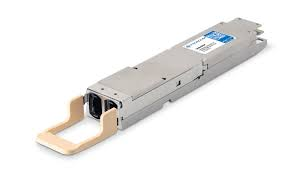
As data center networks move toward 800G Ethernet, optical connectivity must deliver higher bandwidth while maintaining practical transmission distances and manageable deployment costs. 800GBASE-SR8 is designed for short-reach optical links, using multiple parallel optical lanes to transmit data over multimode fiber. This makes it suitable for high-bandwidth connections in data center environments where devices are located relatively close together. Understanding why this technology uses an 850nm wavelength helps network operators evaluate its capabilities and choose the right optical infrastructure.
What Is 800GBASE-SR8?
Understanding the SR8 Optical Architecture
800GBASE-SR8 is an 800 Gigabit Ethernet optical interface designed for short-reach transmission over multimode fiber. The “SR” designation refers to short reach, while “8” indicates an eight-lane optical architecture. Rather than carrying the entire data rate over a single optical lane, the interface distributes transmission across multiple lanes. With eight optical lanes operating at approximately 100G per lane, the system delivers an aggregate data rate of 800G.
This parallel architecture is well suited to high-density data centers, where servers and switches may require substantial bandwidth over relatively short fiber links. An 800GBASE-SR8 QSFP-DD transceiver integrates the optical components needed to transmit and receive these signals. When evaluating 800G QSFP-DD modules, buyers should check the supported Ethernet interface, optical reach, connector configuration, and switch compatibility rather than relying on the data rate alone.
Why Does 800GBASE-SR8 Use 850nm Wavelength?
The Relationship Between 850nm and Multimode Fiber
The 850nm wavelength is widely used in multimode fiber communication because it works well with optical components designed for short-reach data transmission. Multimode fiber has a relatively large core that allows multiple optical modes to propagate through the fiber. This structure makes it practical to couple light from sources such as vertical-cavity surface-emitting lasers, commonly known as VCSELs, into the fiber.
VCSELs operating around 850nm are widely used in short-reach optical interconnects because they can support high-speed modulation and can be manufactured in compact, cost-effective designs. These characteristics make the wavelength a practical choice for parallel optical links in data centers. The specific transmitter technology depends on the module design, but 850nm VCSEL-based transmission is a common approach for multimode SR applications.
Balancing Performance and Cost
Choosing an optical wavelength involves more than selecting a number on a specification sheet. The transmitter, receiver, fiber characteristics, transmission distance, and manufacturing cost must work together as a complete system. For short links, 850nm multimode solutions can offer a practical balance between bandwidth and cost, especially when many connections are needed across a large data center.
Multimode fiber and its associated optical components can be economical for short-reach links because the larger fiber core makes optical alignment and coupling less demanding than in many single-mode implementations. However, this does not mean that multimode fiber is always cheaper or better. The total cost depends on the required reach, fiber plant already installed, connector and cabling choices, and the network’s upgrade plans.
How Does 850nm Multimode Fiber Support 800G Transmission?
Eight Parallel Optical Lanes
The SR8 architecture uses eight optical lanes to achieve its aggregate bandwidth. Each lane carries a portion of the total data, allowing the interface to reach 800G without relying on a single optical channel operating at the full rate. The transceiver and corresponding fiber connection must preserve the intended lane mapping between the transmitting and receiving devices.
This design also affects cabling. An 800GBASE-SR8 module uses a high-density multi-fiber interface, such as MPO-16/APC in the product configuration discussed here. The exact connector type and polarity must match the transceiver and the corresponding fiber assembly. A connector that physically fits is not sufficient if the optical contacts, polarity, or lane arrangement are incorrect.
Transmission Distance and Fiber Quality
SR8 is intended for short-reach connections, and the supported distance depends on the multimode fiber category and the exact transceiver specification. Some 800GBASE-SR8 products specify transmission up to 50 meters under defined conditions. This reach should not be assumed for every fiber type or installation.
Fiber quality, connector cleanliness, insertion loss, and the number of connection points can all affect link performance. For reliable deployment, network operators should verify that the installed fiber meets the module’s requirements and that the complete channel remains within the applicable optical budget. A clean connector end face and correct polarity are particularly important in high-speed parallel optical systems.
850nm Multimode Fiber vs. 1310nm Single-Mode Fiber
Different Wavelengths for Different Applications
850nm multimode and 1310nm single-mode solutions serve different networking needs. Multimode fiber uses a larger core and is commonly associated with short-reach optical connections, while single-mode fiber has a much smaller core and is widely used for longer distances. Many 1310nm single-mode interfaces use optical architectures such as DR4, which are designed for different reach and fiber requirements than SR8.
Neither wavelength is universally superior. An 850nm SR8 solution may be appropriate for short links within a data center, particularly when compatible multimode cabling is already available. A 1310nm single-mode solution may be preferable when the required distance exceeds the SR8 link budget or when the network is standardized on single-mode fiber. The correct choice depends on the distance, infrastructure, supported interface, and total deployment cost.
Where Is 800GBASE-SR8 Used?
800GBASE-SR8 can be used for short-reach 800G Ethernet connectivity in high-bandwidth data center networks. Potential applications include connections between compatible switches and other supported network equipment, where the distance and optical interface meet the module specifications. Its parallel optical architecture can support high-capacity links in environments that require many fast connections within a limited physical space.
Before deployment, operators should confirm that both ends support the intended 800G Ethernet interface and that the module’s form factor, wavelength, fiber type, connector, and transmission distance match the installation. For an Arista-compatible module, compatibility should be verified against the specific switch model and its supported transceiver requirements. Digital diagnostics monitoring (DDM), when supported, can also help monitor optical power and other operating parameters.
Conclusion
800GBASE-SR8 uses 850nm multimode fiber because this combination is well suited to short-reach, high-bandwidth optical connectivity. The wavelength works with established multimode optical technologies, while the eight-lane architecture enables an aggregate data rate of 800G. For data center operators, the main advantages are practical short-distance connectivity and a solution designed for dense optical deployments. Successful implementation still depends on selecting compatible equipment, using the correct fiber and connector configuration, and keeping the complete link within its specified operating limits.
















Leave a Reply