
When summer heat sits over Owasso, and the air conditioner suddenly quits, minutes matter. Some failures are inconvenient; others are urgent because indoor temperatures and humidity can climb quickly. This guide explains how to triage a breakdown safely, which symptoms signal an emergency, and which simple checks may get you through the night without damaging equipment. You will learn how to verify thermostat settings, check for a frozen evaporator coil, assess breakers, and address condensate issues. You will also learn when to shut the system down, when to try fan only, and when to call for rapid help, especially for homes with vulnerable occupants.
-
When Loss of Cooling Becomes Urgent in Owasso Heat
If your thermostat shows rising temperatures while the blower runs but the vents blow warm air, treat it as urgent in high heat or high humidity. Homes with infants, older adults, or anyone sensitive to heat should prioritize indoor safety over troubleshooting. Persistent water around an indoor air handler or a ceiling stain near an attic-mounted unit is another immediate risk because a clogged condensate drain can overflow the pan and damage drywall. If quick checks point to a real failure, contacting a local pro for Emergency AC Repair in Owasso helps prevent further equipment damage while protecting indoor conditions.
Two common emergency scenarios in July: first, the outdoor unit is quiet with no condenser fan and the compressor not starting while the thermostat is calling for cooling; second, the system runs, but the supply registers feel barely cooler than the return, indoor humidity is climbing, and you see frost on the suction line outside. In the first case, shut the system off to avoid motor or compressor strain until you evaluate it. In the second, switch cooling off and the fan to On to begin thawing the evaporator coil before ice spreads and cracks the drain pan.
-
Safe Triage: Quick Checks That Can Save a Visit
Start at the thermostat. Verify it is set to Cool and several degrees below the room temperature, and that the fan is on Auto unless you are thawing a coil. Next, check the return air filter. A filter matted with cottonwood fluff or construction dust chokes airflow and can freeze the evaporator coil; replace it if it is visibly dirty. Inspect the electrical panel for tripped breakers labeled AC or Air Handler, and reset once only. If you have a float switch on the condensate pan, a full pan may have opened the switch and shut the system down. Look for a cleanout on the condensate line and vacuum it from the exterior termination with a wet/dry vac to restore flow.
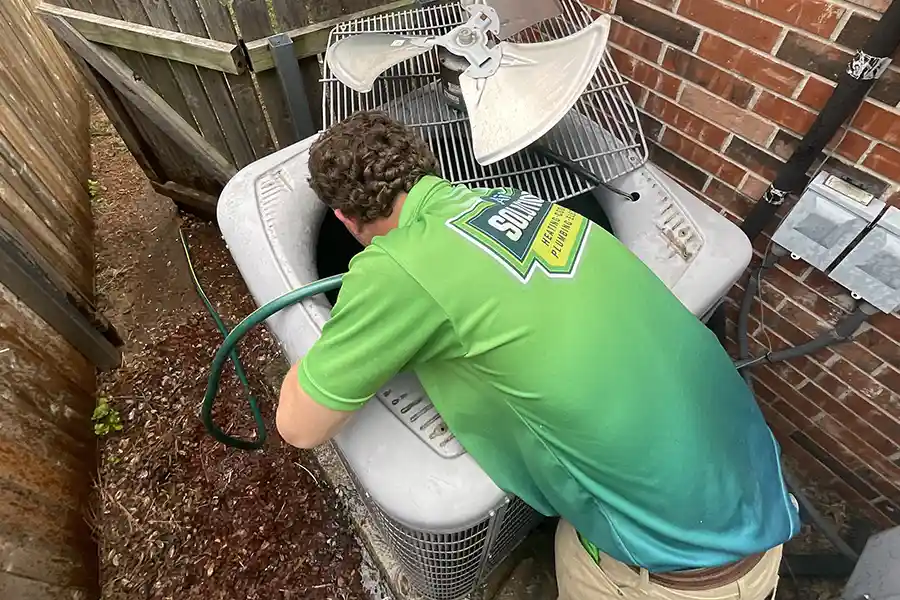
Go outside to the condenser. Confirm the disconnect is fully inserted, then cut power off if you need to clear debris. Grass clippings and leaves packed against the condenser coil reduce heat rejection and can cause high head pressure. Gently rinse from the top and outside surfaces with a garden hose while the power remains off. Do not remove panels or spray into electrical compartments. When finished, restore power and listen: a click from the contactor followed by the condenser fan and compressor starting is a good sign; a steady hum or repeated clicking without the fan turning suggests a failed capacitor or another component that requires a technician.
-
What Not to Do With a Frozen Coil, Tripping Breaker, or Water Leak
Running a system while the evaporator coil is iced over is a common mistake. Ice blocks airflow, risks liquid refrigerant slugging the compressor, and often turns a minor airflow issue into a major repair. If you see frost on the large insulated suction line or feel weak airflow, turn cooling off and set the fan to On for 2 to 3 hours to thaw. Another mistake is repeatedly resetting a tripped breaker. Breakers trip for a reason: a shorted capacitor, seized condenser fan motor, or failing compressor draws high amperage. Reset it once; if it trips again, leave it off to protect the wiring and call for service.
A third error is pouring harsh drain cleaners into a condensate line. Those chemicals can damage the drain pan and fittings. Instead, vacuum the exterior drain termination and flush the cleanout with a small amount of distilled vinegar or a diluted bleach solution if your manufacturer allows it. If water is dripping from a secondary ceiling drain or you see moisture around an air handler, shut the system down, place a pan or towels to protect finishes, and prioritize clearing the drain before restarting. Avoid bending condenser fins with improvised tools; flattening fins reduces airflow and can worsen overheating.
-
Choosing Between Overnight Service and a Morning Appointment
Not every breakdown requires a 2 a.m. visit. Consider the tradeoff between immediate service and temporary stabilization. Use a simple thermometer to check the temperature split: measure air at the return grille and a nearby supply register. If you have at least a 15 to 20 degree difference, the system is cooling, and you may be able to run it until morning. If indoor humidity is high or the coil is thawing, use fan only, set up portable fans, and close blinds to reduce solar gain.
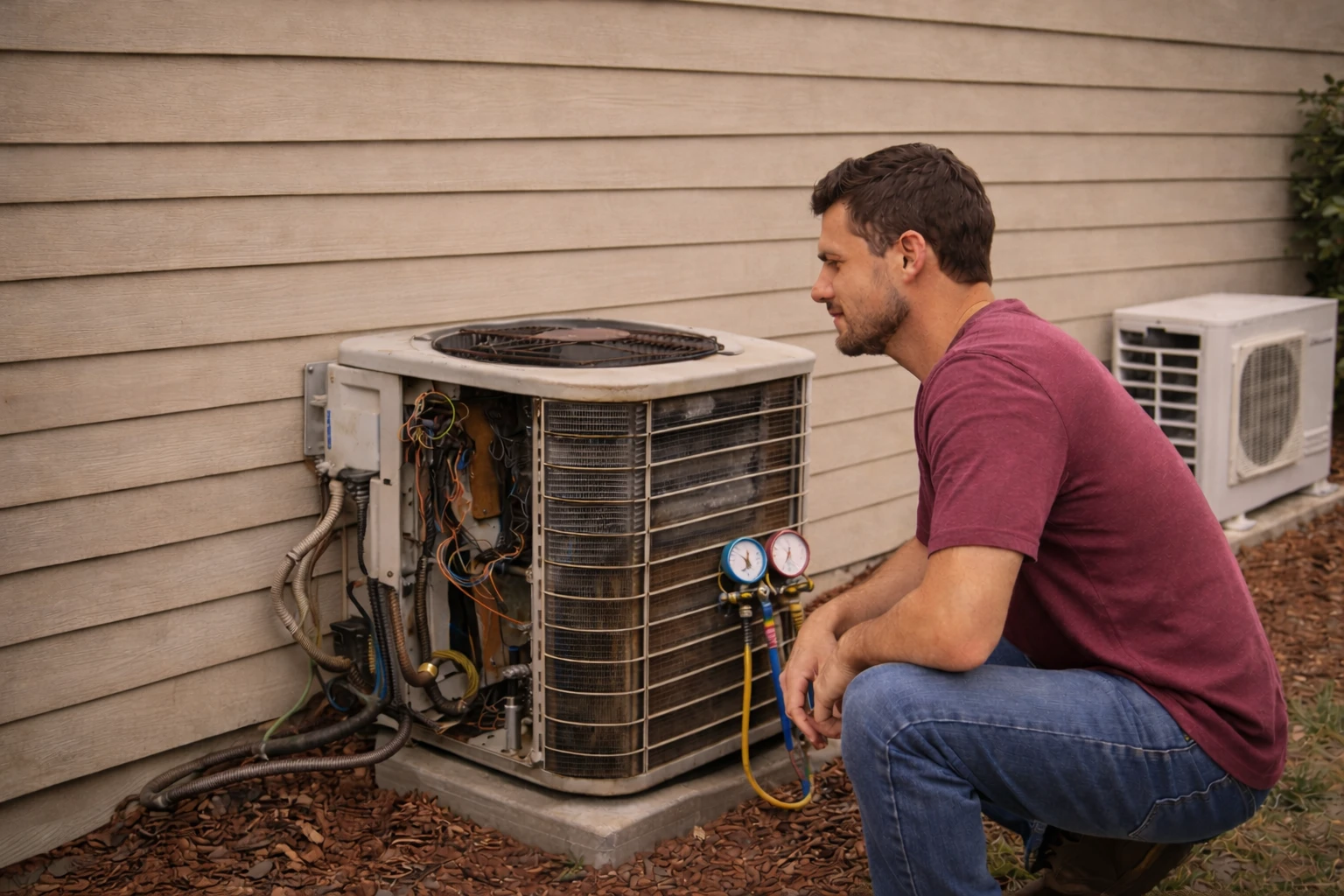
Think through realistic scenarios. After a thunderstorm, the outdoor fan may hum but not spin, a telltale sign of a failed dual run capacitor from a power surge. Shut off the condenser immediately to prevent motor damage, then schedule prompt repair. By contrast, if a severely clogged filter triggered icing on a 78-degree evening, a new filter plus fan-only thawing may restore airflow long enough for a daytime evaluation of refrigerant charge and blower performance. Prioritize rapid service if outdoor temperatures are forecast to spike, if a breaker will not hold, or if there is active water damage around the air handler.
Reduce Repeat Emergencies After the Immediate Fix
Preventive habits lower the risk of urgent failures. Replace or clean filters every 30 to 60 days during peak pollen, and more often if pets shed. Maintain at least 2 feet of clearance around the condenser, trim shrubs, and keep cottonwood fluff off the coil. Have a technician inspect and clean the evaporator coil and blower wheel when dust buildup is visible, and verify that the contactor isn’t pitted and the capacitors are within spec. If summer storms are common at your home, consider adding surge protection for the condenser and the air handler to protect electronic boards and capacitors from spikes.
Moisture control matters too. Keep the condensate line pitched properly and accessible at a cleanout, and ask about a secondary float switch if your air handler sits over living space. Replace cracked insulation on the suction line to reduce sweating, and seal duct leaks so return dust does not overwhelm filters. A spring maintenance visit that checks refrigerant levels, confirms the temperature split, and tests the blower motor can catch early signs of trouble before the next heat wave. Acting early is cheaper and safer than waiting for an afternoon with no cooling to expose weak parts.
When your AC stops during an Owasso heat spell, a calm triage plan protects people and equipment. Verify thermostat settings, check filters and breakers, clear a clogged drain if you can do it safely, and shut the system down if you see ice, water damage, or breakers tripping again. Use the fan only to thaw a frozen coil, and do simple temperature checks to decide whether to wait until morning. Quick, specific steps keep you comfortable enough to make a smart call and help the technician solve the root cause faster on arrival.














Leave a Reply