
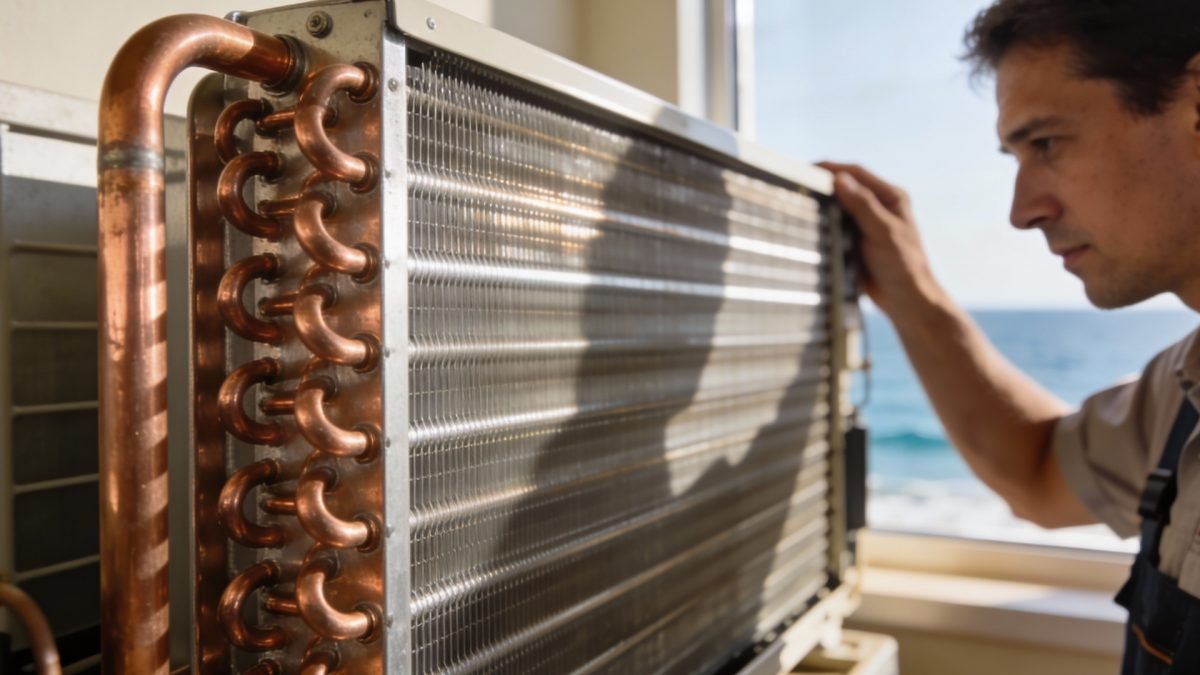
Coil selection sets the tone for how an HVAC system performs over years of real world use. The choice touches everything from compressor workload to how often a unit needs cleaning. Many designers and facility teams default to what came with the last rooftop unit or air handler, but the right coil is not automatic. It depends on refrigerant pressures, air quality, ambient contaminants, service practices, and space constraints. This article offers a practical framework for deciding when a copper AC coil earns its keep, when another construction might be smarter, and how details like fin density, coatings, and circuiting translate into fewer headaches after startup.
Heat Transfer and Refrigerant Side Realities
On the refrigerant side, tube geometry and wall thickness drive both heat transfer and pressure containment. Copper tubing can be internally rifled to boost turbulence and improve evaporator and condenser performance, but that gain arrives with higher pressure drop if distributor nozzles and expansion devices are not matched. For high pressure refrigerants, wall thickness and quality brazed joints matter more than the base material alone. Deeper coils with more rows can increase surface area, yet they also add refrigerant volume and raise the chance of maldistribution if circuit counts or header design are off.
In retrofit or custom builds, choosing a copper coil for AC may simplify field brazing and later repairs compared with some aluminum constructions. Copper pairs well with common valves like TXVs and EEVs, and technicians can fine tune superheat and subcooling without wrestling with leaks that are difficult to repair. The tradeoff is weight and material cost. Designers should confirm that the selected coil’s internal volume and distributor sizing fit the metering strategy. A mismatch can show up as starving on one circuit and flooding on another long before sensors flag poor performance.
Where Corrosion Wins or Loses: Environment and Coatings
Material choice changes in corrosive environments. Coastal salt spray, industrial pollutants, and even offgassing from certain building materials can attack bare copper and aluminum differently. Copper is susceptible to formicary corrosion in the right chemical environment, which can create pinhole leaks in evaporators inside occupied spaces. Aluminum fin fields can oxidize rapidly if contaminants sit wet on the surface. Protective options exist for both materials, including epoxy or phenolic coatings on fins and tubes, hydrophilic treatments to shed condensate, and plated copper to slow chemical attack. Dissimilar metals in a wet, conductive film can drive galvanic corrosion if they are not properly isolated, so fin collars, tube sheets, and hardware should be selected as a system rather than piecemeal.
Consider a hotel of several stories a block from the ocean. Uncoated condenser coils may look dull within months, but the real risk is gradual fin loss that forces the condenser to run hotter every summer. A factory applied coating on a copper tube, aluminum fin coil or a fully coated alternative can provide years of additional service. The owner still needs a rinse routine to remove salt, and chemical cleaners must be compatible with the coating. In contrast, a downtown office with high indoor air quality and protected mechanical rooms can run bare copper tube coils for a long time with little corrosion, putting more weight on serviceability and airflow concerns than coatings.
Air Side Fouling, Fin Design, and Airflow Management
Most coil complaints begin on the air side. Fin density, face velocity, and filter strategy determine how fast the coil clogs. Higher fins per inch increases heat transfer on a clean coil, but it loads with lint and dust more quickly, raising static pressure and cutting airflow. Deeper coils catch more dirt through the face and between rows unless filters and maintenance keep up. Very high face velocity can also cause condensate carryover in cooling mode, which wets downstream duct liners and ruins their insulation value. This is a design and operations decision, not just a material one.
In a bakery, flour dust will plug a tight fin pitch far faster than in an office with minimal dust. Moving to a slightly more open fin pack and stepping up filter efficiency can keep pressure drop manageable between cleanings. Maintenance teams should use coil cleaners without acid that do not pit aluminum fins or attack copper. Gentle rinsing from the clean side out helps push debris in the direction it came from. Fin combs or straighteners can recover bent fin fields near hail guards or where ladders have snagged the face. A properly designed coil guard reduces damage without starving airflow at the edges.
Serviceability, Downtime, and Field Repairs
When equipment sits on a roof above production or in a data room where downtime is expensive, ease of repair tilts the decision. Copper coils can usually be isolated and brazed in place if a U bend or return bend develops a leak. Technicians should always purge with nitrogen while brazing to avoid internal scale that later migrates to the TXV or EEV. Many aluminum microchannel coils perform well when clean, but field repairs can be harder and may require replacement rather than a quick patch. Stocking common copper fittings and having clear access to headers and distributors turns an outage lasting two days into a recovery completed the same day.
Retrofitting Constraints and Commissioning Checks
Replacing a failed coil is not a simple swap, even when the new coil matches width and height. Circuit count, tube diameter, header location, and distributor nozzle sizing all influence how evenly refrigerant evaporates or condenses across the face. If the replacement coil reduces or increases the number of circuits without adjusting the expansion device, expect uneven frost patterns, hunting valves, and short cycling. Piping stubs should meet the existing layout without sharp kinks, and the tube sheet must seal properly in the coil rack to prevent bypass air around the edges.
Commissioning locks in performance. After installation, leak testing, proper evacuation, and a charge free of moisture are nonnegotiable. Verify superheat and subcooling under realistic load, not just at idle conditions. On evaporator coils, a quick check of return dry bulb and wet bulb temperatures confirms that latent and sensible capacity are tracking the design. Watch the filter differential pressure after the first week of operation; an unexpected rise usually signals a fin pack that is too tight for the application or a missed gap where unfiltered air is slipping past the filter rack and loading the coil.
Two real situations illustrate the framework. A grocery store added cases and saw humidity climb. The designer kept the copper evaporator but opened the fin pitch and reduced face velocity to curb carryover. Superheat stability improved because the distributor circuits stopped flooding the lower rows. In a warehouse, a forklift clipped a condenser’s return bends. Because the coil was copper, the technician isolated one circuit, brazed in two U bends with a nitrogen purge, tested the system for pressure leaks, and had it running by late afternoon. Either site would have paid more in downtime with a coil that was less serviceable for its environment.
Selecting the right coil is not about loyalty to a single material. It is about aligning refrigerant pressures, airflow realities, contaminants, and service practices. Copper remains a strong choice when field repairability, familiar brazing, and flexible circuiting matter, especially where indoor air is clean and coatings are unnecessary. In harsh or environments with heavy debris, coatings, fin design, and maintenance plans can be more decisive than the base metal. Decide with the life of the system in mind, and document the coil’s design assumptions so future teams maintain cleaning schedules, verify superheat and subcooling, and keep the equipment delivering steady capacity year after year.














Leave a Reply