
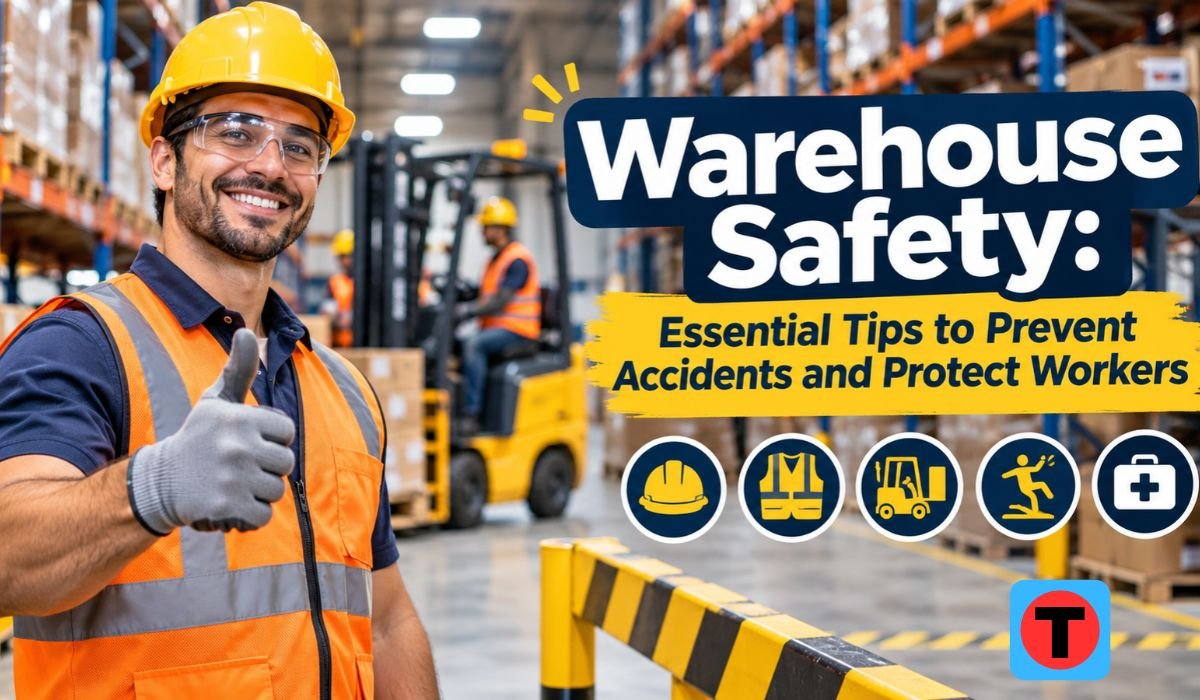
Warehouse safety is more than following rules or wearing protective equipment. It’s about creating a workplace where employees can perform their jobs without facing unnecessary risks. From busy loading docks to towering storage racks, warehouses present hazards that require careful planning and attention.
Every day, warehouse workers handle heavy products, operate machinery, and move through areas filled with vehicles and equipment. Without appropriate precautions, routine activities can result in serious injuries, damaged goods, and costly interruptions.
The good news is that many warehouse accidents can be prevented. Proper training, equipment inspections, organized storage, and clear communication make a significant difference.
In this guide, we’ll explore essential warehouse safety tips, common workplace hazards, OSHA requirements, and practical ways to protect workers in 2026.
What Is Warehouse Safety?
Warehouse safety refers to the procedures, equipment, and workplace practices used to protect employees from accidents, injuries, and harmful working conditions. It includes everything from safe material handling to emergency preparedness.
An effective safety program identifies potential dangers before they cause harm. Managers must provide suitable equipment, establish clear procedures, and ensure employees understand their responsibilities.
Warehouse safety also supports business performance. When workers feel protected, they can concentrate on their tasks without unnecessary distractions. Fewer accidents can mean less downtime, reduced equipment damage, and smoother daily operations.
Most importantly, safety should be part of everyday work rather than something discussed only after an incident.
Why Warehouse Safety Matters in 2026
Modern warehouses are becoming faster, larger, and increasingly automated. Online shopping, advanced inventory systems, and demanding delivery schedules have changed how distribution centers operate.
Although technology improves efficiency, it can introduce additional safety challenges. Employees may work alongside automated vehicles, robotic equipment, and complex conveyor systems.
According to the Occupational Safety and Health Administration (OSHA), warehouse hazards include forklifts, material handling, ergonomics, hazardous chemicals, and slips or falls.
Businesses must therefore assess risks regularly and update their safety procedures as equipment and workflows change.
A strong warehouse safety program helps protect employees while supporting reliable operations and long-term business growth.
Quick Warehouse Safety Information
| Safety Information | Important Details |
|---|---|
| Main Focus | Preventing Workplace Accidents |
| Primary Goal | Protecting Workers and Visitors |
| Common Hazard | Forklift Collisions |
| Physical Injury Risk | Muscle Strains and Sprains |
| Storage Safety | Stable Loads and Secure Racks |
| Essential PPE | Hazard-Appropriate Protective Gear |
| Equipment Safety | Pre-Use Inspections |
| Fire Protection | Clear Exits and Suitable Equipment |
| Traffic Management | Separate Vehicle and Walking Routes |
| Loading Dock Safety | Secure Trailers and Safe Dock Equipment |
| Electrical Protection | Safe Wiring and Qualified Repairs |
| Machine Maintenance | Hazardous Energy Control |
| Heat Protection | Water, Rest, and Heat Controls |
| Employee Training | Task-Specific Safety Instruction |
| Emergency Planning | Evacuation and Response Procedures |
| Safety Reporting | Hazards, Injuries, and Near Misses |
| Main U.S. Regulator | OSHA |
| Long-Term Improvement | Regular Risk Assessment |
Common Warehouse Safety Hazards
Warehouses contain several hazards that can lead to injuries if they aren’t properly controlled.
Forklifts are particularly dangerous when operators travel too quickly, carry unstable loads, or work near pedestrians. Poorly stacked products can also fall from shelving and strike employees.
Wet floors, loose packaging, and cluttered walkways increase the risk of slips and falls. Meanwhile, repetitive lifting and awkward movements can cause back injuries and other musculoskeletal problems.
Fire hazards, damaged electrical systems, chemical exposure, and extreme temperatures create additional concerns.
Recognizing these dangers is the first step toward warehouse accident prevention. Regular workplace inspections help managers identify developing problems before someone gets hurt.
Essential Warehouse Safety Rules for Employees
Clear warehouse safety rules help employees understand how to work responsibly.
Workers should follow designated walking routes, respect warning signs, and avoid entering restricted equipment areas. Emergency exits must remain accessible, and spills or obstacles should be reported immediately.
Employees should never operate machinery without the required training and authorization. They must also use protective equipment appropriate to their tasks.
Another important practice is avoiding shortcuts. Rushing to complete orders may save a few minutes, but unsafe behavior can result in serious injuries.
Supervisors can strengthen these rules by explaining expectations clearly and encouraging workers to report hazards without fear of retaliation.
Forklift Safety and Traffic Management
Forklift safety deserves special attention because powered industrial trucks operate around people, equipment, and valuable inventory.
Under OSHA standard 29 CFR 1910.178, forklift operators must receive appropriate training and evaluation. Forklifts must also be examined before use, with unsafe vehicles removed from service.
Operators should maintain safe speeds, respect load capacities, and pay attention to corners and intersections.
Warehouses can further reduce collision risks by separating pedestrian walkways from vehicle routes. Physical barriers, marked crossings, and good lighting are particularly useful.
At busy intersections, employees should never assume an operator has seen them. Clear communication and properly designed traffic routes are essential.
Proper Material Handling and Safe Lifting
Moving heavy products is a routine warehouse activity, but poor handling methods can place excessive stress on the body.
Before lifting, workers should assess a load’s weight, shape, and stability. They should also check whether the destination and travel route are clear.
Mechanical equipment, including pallet jacks, hoists, conveyors, and lift tables, can reduce physical demands.
When manual lifting is necessary, employees should avoid twisting under load and unnecessary reaching. However, lifting technique alone cannot eliminate the risks associated with heavy or repetitive handling.
Managers should redesign demanding tasks, position frequently used products at convenient heights, and provide suitable mechanical assistance.
These improvements help reduce warehouse injuries while making work more efficient.
Personal Protective Equipment for Warehouse Workers
Personal protective equipment, commonly called PPE, protects workers from specific hazards that cannot be adequately controlled through other measures.
Depending on the task, warehouse PPE may include protective footwear, safety glasses, gloves, hard hats, hearing protection, and high-visibility clothing.
OSHA standard 29 CFR 1910.132 requires employers to assess applicable workplace hazards and select suitable protective equipment.
Employees must understand when PPE is necessary, how to wear it correctly, and how to recognize damaged equipment.
However, PPE should never replace safer working conditions. Removing hazards, installing barriers, and improving equipment design generally provide more dependable protection than relying on protective clothing alone.
Safe Storage and Warehouse Racking Systems
Proper storage protects workers and prevents damage to valuable inventory.
Unstable pallets, overloaded racks, and poorly arranged products can cause falling-object accidents. Warehouse managers should ensure that storage systems are suitable for the loads they support.
Heavy products should be positioned to maintain stability, while damaged pallets and shelving should be removed from use or repaired appropriately.
Rack inspections are especially important in areas where forklifts operate. Even minor vehicle impacts can weaken storage structures.
Aisles should remain clear, and products must never block emergency exits or required access to safety equipment.
Organized storage also improves inventory access and reduces unnecessary material handling.
Fire Prevention and Electrical Safety
Warehouses often contain cardboard, packaging materials, electrical equipment, and other potential fire hazards.
Good housekeeping helps reduce combustible waste, while appropriate fire protection systems support emergency response.
Fire extinguishers, alarms, and sprinkler systems must be provided and maintained where required by applicable standards. Emergency exits should remain clearly identified and unobstructed.
Electrical safety is equally important. Damaged cords, exposed wiring, and overloaded circuits can create dangerous conditions.
Only qualified personnel should carry out electrical work requiring specialized knowledge.
During certain maintenance activities, lockout/tagout procedures protect employees against unexpected machine startup or the release of stored energy.
A well-maintained facility is generally safer and more reliable.
Loading Dock Safety and Accident Prevention
Loading docks are among the busiest warehouse areas, bringing together trucks, forklifts, goods, and employees.
One major danger occurs when trailers move unexpectedly during loading or unloading. Appropriate vehicle restraints or other suitable securing methods can reduce this risk.
Dock plates and levelers should be inspected and used within their rated capacities. Workers must also remain aware of open dock edges.
Clear communication between drivers, warehouse employees, and supervisors is essential.
A reliable loading procedure should confirm that the vehicle is properly positioned, the dock equipment is safe, and loading activities have finished before departure.
These simple controls can help prevent serious falls and vehicle-related accidents.
Warehouse Ergonomics and Injury Prevention
Warehouse ergonomics focuses on designing jobs, tools, and workstations to reduce unnecessary physical strain.
Repetitive picking, packing, scanning, pushing, and lifting can contribute to musculoskeletal disorders over time.
Adjustable workstations, mechanical lifting aids, and improved product placement can make tasks easier and safer.
Employees should also have opportunities to report discomfort before symptoms become more serious.
Task rotation may help when it genuinely changes physical demands, but rotating workers between equally demanding tasks offers limited protection.
The most effective approach is to improve how work is performed rather than expecting employees to tolerate excessive physical stress.
Warehouse Safety Training and Employee Awareness
Effective warehouse safety training gives employees the knowledge needed to recognize hazards and respond appropriately.
New employees should receive orientation covering workplace rules, emergency procedures, traffic routes, and relevant equipment hazards.
Additional training may be required for forklifts, hazardous chemicals, machinery maintenance, and specialized tasks.
Supervisors should also review procedures when equipment, layouts, or working conditions change.
Short safety discussions can reinforce important lessons and encourage employees to share concerns.
Training should be understandable, practical, and relevant to actual working conditions.
A successful program doesn’t simply record attendance. It checks whether workers can perform their duties safely.
Emergency Preparedness and Workplace Response
Even well-managed warehouses must prepare for emergencies.
An effective emergency plan explains how employees should respond to fires, medical incidents, hazardous material releases, and other foreseeable dangers.
It should identify appropriate evacuation routes, communication methods, and assigned responsibilities.
First-aid resources and emergency contact information must be available according to workplace needs and applicable requirements.
Employees should know how to report an emergency and when to seek professional assistance.
Practice drills can reveal problems with evacuation routes, communication, and emergency coordination.
Following an incident, managers should investigate contributing causes and implement corrective actions rather than focusing only on who made a mistake.
OSHA Warehouse Safety Standards and Compliance
OSHA establishes workplace safety requirements for covered employers in the United States.
Important standards include 29 CFR 1910.178 for powered industrial trucks, 1910.132 for personal protective equipment, and 1910.147 for hazardous energy control.
Emergency action plans are addressed under 29 CFR 1910.38 when applicable. Other requirements cover exit routes, electrical safety, and material handling.
Not every rule applies to every warehouse. Requirements depend on the equipment, activities, hazards, and jurisdiction involved.
Businesses outside the United States should follow their own applicable national and local regulations.
For reliable compliance guidance, employers should consult official regulatory information and seek qualified safety advice when necessary.
Daily Warehouse Safety Checklist and Inspections
A daily warehouse safety checklist helps employees identify problems before normal operations begin.
Supervisors should examine floors, walkways, loading areas, storage racks, and emergency access routes. Workers should inspect relevant equipment according to established procedures.
Forklifts require inspections before being placed into service, while other equipment should be checked at intervals appropriate to its hazards and applicable requirements.
Inspection findings should be recorded when necessary, with unsafe conditions corrected promptly.
A checklist is most useful when it leads to action. Simply marking equipment as inspected does little good if damaged machinery continues operating.
Regular reviews help businesses identify recurring problems and improve maintenance planning.
Building a Strong Warehouse Safety Culture
A lasting warehouse safety culture develops when managers and employees treat accident prevention as a shared responsibility.
Managers should provide resources, listen to worker concerns, and address hazards promptly. Employees should follow established procedures and communicate unsafe conditions.
Near-miss reporting is particularly valuable because it identifies situations that could have caused injuries.
Modern monitoring systems can also help organizations identify recurring equipment problems or unsafe traffic patterns. However, technology should support risk prevention rather than replace worker judgment or necessary safety controls.
Safety performance should be measured through meaningful improvements, including hazards corrected and preventive actions completed.
When employees see that concerns lead to real changes, trust grows and safer working habits become easier to maintain.
Frequently Asked Questions About Warehouse Safety
What Are the Most Important Warehouse Safety Rules?
The most important rules include using equipment correctly, following traffic routes, keeping exits clear, wearing appropriate PPE, and reporting unsafe conditions. Employees should also follow established material handling and emergency procedures.
What Are the Most Common Warehouse Hazards?
Common hazards include forklift collisions, falling products, slips and falls, repetitive lifting injuries, electrical dangers, and unsafe loading docks. Specific risks depend on warehouse activities and equipment.
How Can Warehouse Accidents Be Prevented?
Accidents can be reduced through hazard assessments, equipment maintenance, effective training, traffic separation, safe storage, and regular inspections. Employers should prioritize eliminating hazards wherever reasonably possible.
What PPE Is Required in a Warehouse?
PPE depends on the hazards employees face. Safety footwear, gloves, protective eyewear, hearing protection, and high-visibility clothing may be appropriate for certain tasks. Employers must determine requirements through applicable hazard assessments.
How Often Should Warehouse Safety Training Take Place?
Training should occur before employees perform tasks requiring instruction and whenever applicable regulations require it. Changes in equipment, procedures, or employee performance may also create a need for additional training.
Who Is Responsible for Warehouse Safety?
Employers are responsible for meeting applicable workplace safety obligations and providing safe working conditions. Employees also play an important role by following procedures, using equipment appropriately, and reporting hazards.
What Should a Warehouse Safety Checklist Include?
A useful checklist covers equipment condition, storage stability, walkways, loading docks, emergency exits, fire protection, electrical hazards, and required protective equipment. It should also identify who will correct discovered problems.
Final Thoughts
Warehouse safety depends on preparation, communication, and consistent action. From forklift operations and material handling to fire prevention and emergency planning, every safety measure contributes to a healthier workplace.
The strongest safety programs don’t rely on reminders alone. They identify hazards early, improve working conditions, and give employees the training and equipment they need.
As warehouses continue adopting new technologies in 2026, businesses must regularly review their procedures and address emerging risks.
Ultimately, investing in warehouse safety means investing in people. A workplace that protects its employees is better positioned to operate efficiently, maintain trust, and achieve lasting success.
Learn more and explore exciting content on: Clear Stickers: Everything You Need to Know About Uses, Benefits, and Printing





Leave a Reply