
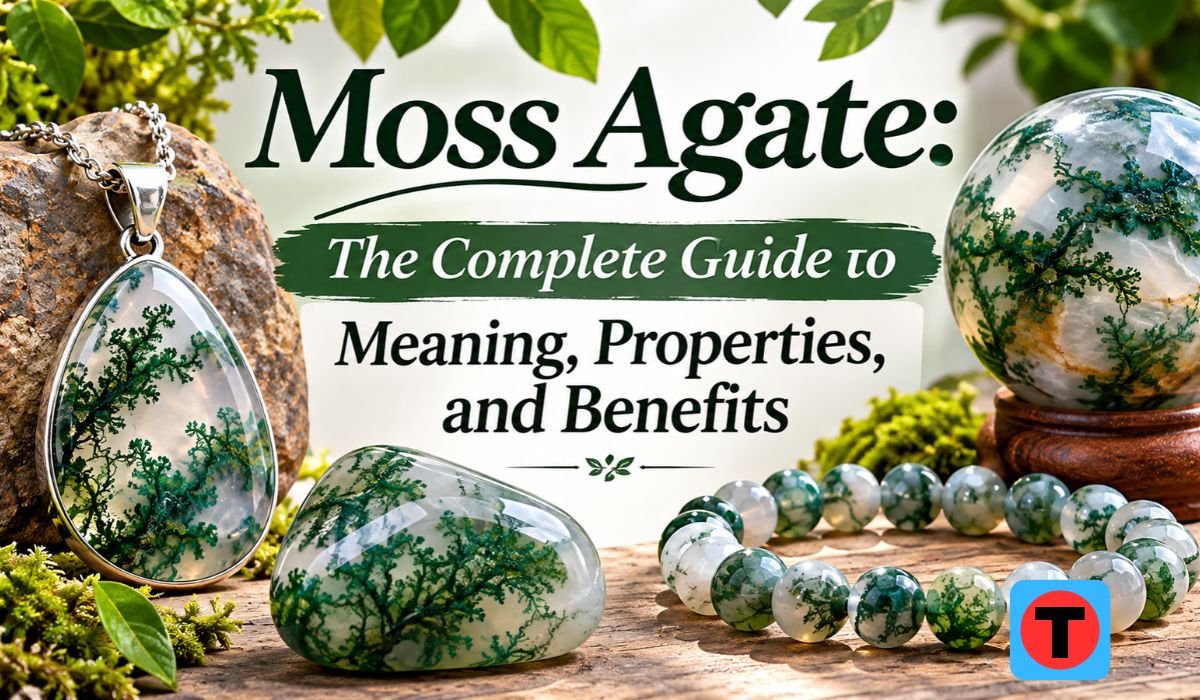
Moss Agate is a fascinating natural gemstone known for its beautiful green patterns that look like tiny forests, leaves, or moss trapped inside a stone. Its unusual appearance has made it popular among jewelry lovers, gemstone collectors, and people who appreciate nature-inspired designs. Unlike many colorful gemstones, Moss Agate gets much of its beauty from natural mineral inclusions rather than a single bright color.
This gemstone belongs to the Chalcedony family and consists mainly of Silicon Dioxide. Although its name suggests otherwise, it contains no actual moss or plant material. Its delicate, branching patterns develop through natural geological processes. Beyond its appearance, Moss Agate is traditionally associated with growth, balance, renewal, and prosperity. Understanding its physical properties, cultural meaning, and everyday uses helps explain why this distinctive gemstone continues to attract attention in 2026.
Quick Bio Information About Moss Agate
| Feature | Information |
|---|---|
| Gemstone Name | Moss Agate |
| Mineral Family | Chalcedony |
| Chemical Formula | SiO₂ |
| Mineral Type | Microcrystalline Quartz |
| Gemstone Category | Semi-Precious Gemstone |
| Common Colors | Green, White, Brown, Red, Black |
| Typical Appearance | Moss-Like Mineral Patterns |
| Mohs Hardness | Approximately 6.5–7 |
| Crystal System | Trigonal Quartz Structure |
| Transparency | Translucent To Opaque |
| Surface Luster | Waxy To Vitreous |
| Specific Gravity | Approximately 2.6 |
| Common Inclusions | Iron And Manganese-Bearing Minerals |
| Main Sources | India, Brazil, Uruguay, Europe, United States |
| Famous Variety | Montana Moss Agate |
| Historical Name | Mocha Stone |
| Traditional Meaning | Growth, Renewal, Balance |
| Popular Uses | Rings, Necklaces, Bracelets, Decorative Stones |
| Natural Formation | Silica Deposition And Mineral Inclusions |
| Gemstone Care | Mild Soap, Water, And Gentle Cleaning |
What Is Moss Agate?
Moss Agate is a variety of Chalcedony, a fine-grained form of Quartz composed primarily of Silicon Dioxide. Its most recognizable feature is the presence of green, brown, or dark mineral inclusions that resemble moss, branches, or miniature landscapes. These patterns develop naturally within the gemstone and can appear especially striking against a translucent or milky-white background.
Despite its name, Moss Agate generally lacks the curved or concentric banding associated with traditional Agate. However, the name remains widely accepted in gemstone trading and jewelry making. Every specimen has its own arrangement of mineral inclusions, meaning two Moss Agate stones rarely look exactly alike. This natural individuality is one reason collectors and jewelry designers appreciate the gemstone.
The History And Origin Of Moss Agate
Moss Agate has a long history as a decorative gemstone, although some popular stories about its ancient uses are difficult to verify. Historically, it has also been called Mocha Stone, a name associated with Mokha, the famous trading port in Yemen. This connection reflects the historical movement of gemstones through international trade routes.
Over time, Moss Agate became valued for its unusual patterns and suitability for ornamental objects. Jewelry makers used it in decorative settings, while collectors appreciated specimens resembling natural landscapes. Today, its appeal extends beyond traditional gemstone collections. Modern designers frequently incorporate Moss Agate into nature-inspired jewelry, particularly pieces that celebrate organic shapes and individual craftsmanship.
How Is Moss Agate Formed Naturally?
Moss Agate forms when silica-rich fluids deposit microscopic Quartz material in suitable geological environments. These deposits may develop within fractures, cavities, or spaces in rocks. As Chalcedony forms, other mineral substances can become incorporated into the developing stone, producing branching or cloud-like patterns.
The green and dark inclusions are commonly associated with minerals containing Iron, Manganese, or other elements. Their precise composition varies between specimens. These inclusions create shapes resembling plants, even though no biological moss is involved. Volcanic rocks are important geological hosts for some deposits, but Moss Agate can occur in different environments. Its formation illustrates how natural mineral growth can produce remarkably detailed designs without human involvement.
Moss Agate Colors And Natural Patterns
Green Moss Agate is especially recognizable because its inclusions resemble small plants or woodland scenery. However, the gemstone also occurs with white, gray, brown, reddish, and black features. Some specimens are nearly transparent, allowing their internal patterns to appear suspended within the stone. Others have a cloudy background that creates a softer appearance.
Color differences depend on the minerals present and the conditions under which the stone formed. Iron-bearing minerals may contribute reddish or brown tones, while Manganese Oxides can produce dark branching patterns. The visual appeal of Moss Agate often depends on the contrast between these inclusions and the surrounding Chalcedony. Stones with clearly defined, attractive patterns are particularly desirable for decorative cutting and jewelry.
Moss Agate Mineral Composition And Physical Properties
Moss Agate consists mainly of Silicon Dioxide and shares many physical characteristics with other Chalcedony gemstones. Its hardness is approximately 6.5 to 7 on the Mohs Scale, making it suitable for several types of jewelry. However, it can still develop scratches or chips when exposed to harder materials or strong impacts.
Its surface typically displays a waxy to glass-like luster after polishing. The gemstone may be translucent, nearly transparent, or opaque, depending on its structure and inclusions. Like other Chalcedony varieties, it has no prominent cleavage and commonly breaks with a curved, conchoidal fracture. These properties make Moss Agate useful for cabochons, beads, carvings, and polished decorative objects.
Where Is Moss Agate Found Around The World?
Moss Agate occurs in several countries, including India, Brazil, Uruguay, the United States, and parts of Europe. Its appearance can vary significantly depending on local geological conditions and the minerals associated with each deposit.
Montana Moss Agate is particularly famous among American gemstone collectors. It occurs in gravel deposits along the Yellowstone River and its tributaries, especially in eastern Montana. These stones are often associated with reddish, brown, and dark mineral patterns. The region’s geological history includes volcanic activity and the transportation of mineral material through river systems. Although different locations produce distinctive specimens, geographic origin alone does not determine a gemstone’s quality or value.
Moss Agate Meaning And Symbolism
Moss Agate Meaning is strongly connected with nature, growth, renewal, and emotional stability in modern gemstone traditions. Its plant-like patterns encourage associations with forests, fertile landscapes, and the changing seasons. For this reason, some people choose Moss Agate as a personal symbol of fresh beginnings or gradual progress.
The gemstone is also traditionally linked with prosperity and abundance. These meanings belong to cultural and spiritual belief systems rather than established scientific properties. Nevertheless, symbolic objects can hold personal importance. Someone beginning a new career, developing a creative project, or celebrating a meaningful change may appreciate Moss Agate because its appearance represents patience and natural growth.
Moss Agate Healing Properties And Traditional Benefits
Moss Agate Healing Properties are frequently discussed in crystal traditions, where the gemstone is associated with calmness, confidence, and emotional balance. Some enthusiasts believe it encourages positive thinking or helps people feel more connected with their surroundings. These interpretations explain much of its popularity in contemporary crystal collections.
However, scientific research has not demonstrated that Moss Agate can heal diseases, improve circulation, regulate emotions, or produce specific medical benefits. Its physical mineral properties should not be confused with therapeutic effectiveness. People may still find personal comfort in holding a meaningful stone or using it during quiet reflection. Such experiences are subjective and should never replace appropriate medical or mental health care.
Moss Agate Spiritual Meaning And Meditation Uses
In contemporary spiritual practices, Moss Agate is often associated with grounding, mindfulness, and a stronger connection to nature. Its green patterns are sometimes linked with the Heart Chakra, which certain traditions associate with compassion, relationships, and emotional openness.
People interested in meditation may hold a polished Moss Agate stone while practicing slow breathing or focused attention. Others keep it nearby as a visual reminder to remain patient and present. The gemstone itself has no scientifically established supernatural influence, but its appearance can provide a meaningful focus for personal reflection. Its natural patterns also make it appealing to people who enjoy combining meditation with an appreciation of the outdoors.
Moss Agate Jewelry And Popular Designs
Moss Agate Jewelry has become especially attractive to people seeking distinctive, nature-inspired accessories. Its unusual inclusions make it suitable for rings, pendants, earrings, bracelets, and custom gemstone designs. Jewelers often polish the stone into smooth cabochons that highlight its internal patterns.
Moss Agate Engagement Rings are particularly appealing because each center stone offers a different appearance. Silver, yellow gold, and rose gold settings can complement its green and white colors. However, Moss Agate is less resistant to scratching and impact than Diamond or Sapphire. Protective settings and careful wear are therefore important, especially for rings worn frequently. Pendants and earrings generally experience fewer impacts and can be practical choices for showcasing larger stones.
How To Identify Real Moss Agate
Natural Moss Agate usually displays irregular mineral inclusions that resemble branches, moss, or landscapes. These patterns may appear at different depths within translucent Chalcedony. Natural specimens often show subtle color changes, cloudy areas, and unevenly distributed inclusions.
However, appearance alone cannot guarantee authenticity. Glass, dyed stones, and other decorative materials may imitate natural Moss Agate. Buyers should examine seller descriptions, ask whether a gemstone has been treated, and look for clear photographs showing its internal patterns. Professional gemological testing may be necessary for valuable purchases. A trustworthy seller should accurately describe the material rather than relying on exaggerated claims about rarity or special powers.
Moss Agate Vs. Other Similar Gemstones
Moss Agate is sometimes confused with Tree Agate, Dendritic Agate, and Green Aventurine. Although these gemstones may share similar colors, their visual characteristics differ. Tree Agate commonly features green branching patterns against a more opaque white background, while Moss Agate often has greater translucency.
Dendritic Agate typically contains branching inclusions that resemble trees or ferns, frequently appearing in black or brown. Commercial naming can overlap because these stones belong to closely related Chalcedony varieties. Green Aventurine, meanwhile, is a Quartz-based material often recognized by its relatively uniform green color and subtle sparkling effect. Understanding these differences helps buyers choose gemstones based on appearance rather than confusing trade names.
Moss Agate Price And Factors Affecting Value
Moss Agate Price depends on several characteristics, including color, pattern quality, size, transparency, cutting, and overall condition. Stones featuring attractive landscape-like inclusions or strong visual contrast may command greater interest than ordinary specimens.
A well-polished gemstone with balanced proportions can also be more desirable than a poorly finished stone. Finished jewelry generally costs more than loose Moss Agate because its price includes metal, craftsmanship, design, and retail expenses. Although Moss Agate is usually more affordable than many precious gemstones, exceptional specimens and custom jewelry can be considerably more expensive. Buyers should compare similar pieces and avoid assuming that every unusual pattern indicates rarity.
How To Clean And Care For Moss Agate
Proper Moss Agate Care helps preserve its polished surface and natural beauty. For most untreated stones, gentle cleaning with lukewarm water, mild soap, and a soft cloth is sufficient. A soft brush may help remove dirt from suitable jewelry settings, provided the gemstone and surrounding materials can tolerate cleaning.
Avoid harsh chemicals, abrasive cleaners, sudden temperature changes, and unnecessary exposure to strong impacts. Ultrasonic and steam cleaning are best avoided unless a qualified jeweler confirms that the specific piece can tolerate them. Store Moss Agate separately from harder gemstones to reduce scratching. Removing rings during heavy work, exercise, or household cleaning can also help protect the stone and its setting.
Moss Agate In Everyday Life And Decorative Uses
Beyond jewelry, Moss Agate is used in polished stones, carvings, decorative objects, and personal gemstone collections. Its miniature landscape-like patterns make it especially interesting for people who appreciate natural art.
Some collectors display polished specimens where light can reveal their translucent areas and internal inclusions. Others choose Moss Agate as a meaningful gift representing growth, friendship, or a new beginning. These uses reflect both its physical beauty and its cultural symbolism. The gemstone’s greatest practical appeal lies in its individuality: each specimen preserves a naturally formed pattern that cannot be reproduced exactly.
Interesting Facts About Moss Agate
One of the most surprising Moss Agate Facts is that its moss-like appearance comes entirely from minerals rather than fossilized plants. Another interesting detail is that it is commonly classified and sold as Agate even though it generally lacks traditional banding.
The historical name Mocha Stone connects the gemstone with an important Arabian trading port, while Montana specimens reveal the influence of regional geology and river transportation. Moss Agate also demonstrates how small variations in mineral growth can create dramatically different designs. These characteristics explain why the gemstone remains popular among collectors who value natural patterns over perfectly uniform colors.
FAQs About Moss Agate
What Is Moss Agate Good For?
Moss Agate is primarily valued for jewelry, decorative objects, gemstone collections, and its natural appearance. In crystal traditions, it symbolizes growth, balance, and renewal. These symbolic associations may be personally meaningful, but scientifically proven healing benefits have not been established.
Is Moss Agate Rare Or Common?
Moss Agate is generally considered relatively accessible compared with many rare gemstones. However, specimens displaying unusually attractive patterns, strong color contrast, or exceptional cutting quality may be more desirable and difficult to find.
Is Moss Agate Expensive?
Moss Agate is often reasonably priced, although costs vary considerably. Gemstone size, pattern quality, transparency, craftsmanship, and jewelry settings influence the final price. Custom engagement rings usually cost more than simple polished stones.
Can You Wear Moss Agate Every Day?
Moss Agate can be worn regularly with appropriate care. Its hardness makes it suitable for jewelry, but rings may develop scratches or chips through repeated impacts. Protective settings and careful handling are recommended.
Does Moss Agate Contain Real Moss?
No. Moss Agate contains mineral inclusions that resemble moss, branches, or plants. These patterns develop through geological processes and do not contain living vegetation or actual moss.
What Does Green Moss Agate Symbolize?
Green Moss Agate traditionally represents nature, renewal, personal growth, and prosperity. These meanings come from cultural and spiritual interpretations inspired by the gemstone’s natural appearance.
Is Moss Agate Suitable For Engagement Rings?
Yes, Moss Agate can be used in engagement rings, particularly for people who appreciate unique natural patterns. However, it requires more careful handling than harder gemstones such as Diamond or Sapphire.
How Can You Tell If Moss Agate Is Real?
Natural Moss Agate often has irregular mineral inclusions, varying translucency, and distinctive internal patterns. Because imitations exist, purchasing from reputable sellers and seeking professional gemstone identification can provide greater confidence.
Final Thoughts On Moss Agate
Moss Agate stands out because it combines fascinating geology with beautiful natural patterns. Its branching mineral inclusions create miniature landscapes that make every stone visually distinctive. From Montana river deposits to carefully crafted jewelry, the gemstone offers an interesting connection between Earth’s geological processes and human creativity.
Its traditional meanings of growth, renewal, and balance add another layer of appeal, although these beliefs should remain separate from scientific facts. Whether chosen for a Moss Agate Engagement Ring, a personal collection, or a meaningful gift, the gemstone offers lasting visual charm.
Ultimately, Moss Agate reminds us that some of nature’s most beautiful designs develop slowly, through ordinary geological processes that produce extraordinary results.
Learn more and explore exciting content on: Viper Play: Your Complete Guide to Live Football Streaming and Features














Leave a Reply