
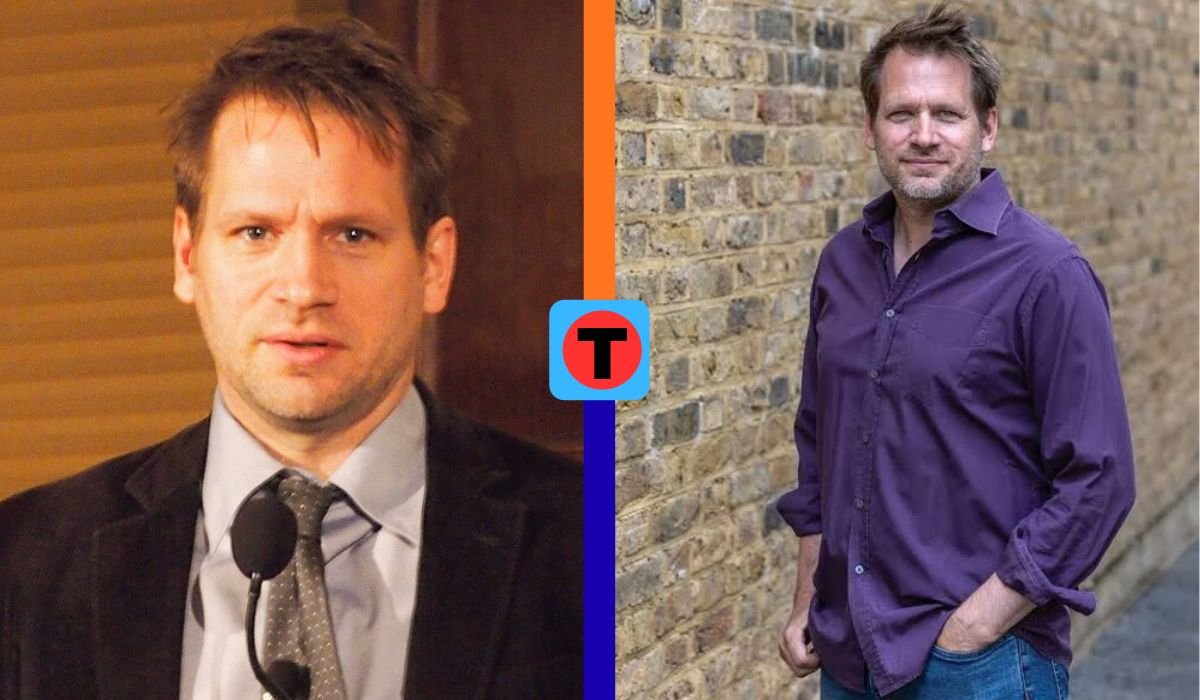
John Freeman is an American author, poet, literary critic, and editor who has spent much of his career bringing important stories to readers around the world. Known for his thoughtful writing and strong editorial vision, he has worked with respected literary magazines, major publishing houses, and some of the most influential writers of modern times.
From editing the prestigious literary magazine Granta to publishing his own poetry and nonfiction books, Freeman has developed a career that reaches across several areas of literature. His work explores communication, identity, social inequality, and the power of storytelling.
What makes John Freeman particularly interesting is his ability to work on both sides of the publishing world. He writes books of his own while helping other authors share their ideas. His literary projects have introduced emerging voices and encouraged conversations about important cultural issues.
This article explores John Freeman’s biography, early life, education, books, writing career, editorial achievements, and lasting contribution to contemporary literature.
John Freeman Quick Bio Information
| Personal Detail | Information |
|---|---|
| Full Name | John Freeman |
| Birth Year | 1974 |
| Age in 2026 | 51–52 Years |
| Birthplace | Cleveland, Ohio |
| Birth Country | United States |
| Nationality | American |
| Profession | Author, Poet, Editor |
| Additional Profession | Literary Critic |
| College | Swarthmore College |
| Graduation Year | 1996 |
| First Book | The Tyranny of E-mail |
| First Book Publication | 2009 |
| Famous Literary Magazine | Granta |
| Granta Editorship | 2009–2013 |
| Literary Series | Freeman’s |
| First Poetry Collection | Maps |
| Second Poetry Collection | The Park |
| Major Publishing Appointment | Knopf Executive Editor |
| Knopf Appointment Year | 2021 |
| Notable Literary Organization | National Book Critics Circle |
John Freeman’s Early Life and Childhood
John Freeman was born in Cleveland, Ohio, in 1974. Although Cleveland was his birthplace, his childhood took him to several different parts of the United States. He grew up in New York, Pennsylvania, and California, experiencing different communities and regional environments.
These locations form an important part of his background, especially because questions of place, belonging, and human relationships later appeared in his literary interests.
However, Freeman has kept much of his early family history outside the public spotlight. Reliable biographical accounts provide limited information about his parents, siblings, and childhood household.
Rather than focusing on private details, his public biography is best understood through his education, literary development, and professional achievements.
Education and Academic Background
John Freeman attended Swarthmore College in Pennsylvania, graduating in 1996. The institution is known for its liberal arts education, which emphasizes critical thinking, discussion, and intellectual exploration.
Although detailed information about his academic specialization is not widely established, his later career demonstrates a sustained interest in literature, journalism, and cultural criticism.
A literary critic must do more than understand the plot of a book. The profession requires careful reading, an appreciation of language, and the ability to explain complicated ideas clearly.
These skills became central to Freeman’s professional identity as he moved into reviewing books, interviewing authors, and editing literary publications.
How John Freeman Started His Writing Career
Freeman established himself as a literary journalist and book critic, contributing reviews and essays to major English-language publications.
His work appeared in The New York Times Book Review, Los Angeles Times, The Guardian, and The Wall Street Journal. His writing eventually reached a wide international audience through numerous publications.
Literary journalism allowed him to examine books from different perspectives while introducing readers to unfamiliar writers and ideas.
Unlike simple book summaries, thoughtful criticism considers how stories are constructed, what they communicate, and why they matter.
Freeman’s growing experience in this field helped prepare him for leadership positions within literary organizations and publishing companies.
His Leadership at the National Book Critics Circle
John Freeman became an important figure within the National Book Critics Circle, an American organization dedicated to supporting literary criticism and recognizing outstanding books.
He served on its board for six years and held the position of president.
During this period, Freeman spoke publicly about the decline of book review coverage in newspapers. As traditional media organizations reduced literary sections, he advocated for maintaining serious discussions about books.
His campaign highlighted a broader concern within publishing: without professional reviewers, readers may have fewer opportunities to discover challenging or unfamiliar literature.
This work established Freeman as someone interested not only in writing about books but also in protecting the cultural institutions that support literature.
John Freeman’s Career at Granta Magazine
One of Freeman’s most significant career achievements was becoming editor of Granta, the internationally respected literary magazine.
He joined the publication in December 2008, became acting editor in May 2009, and was appointed editor in October 2009.
During his leadership, Granta published work by major international authors, including Salman Rushdie, Chimamanda Ngozi Adichie, George Saunders, Mohsin Hamid, and Yiyun Li.
Freeman also helped provide publishing opportunities for emerging writers, including Phil Klay, Chinelo Okparanta, and Claire Vaye Watkins.
His editorial approach brought established literary figures together with newer voices, helping the magazine maintain its international character.
Freeman left Granta in 2013, but his years there remain a defining chapter of his career.
The Tyranny of E-mail and His First Book
Freeman published his first book, The Tyranny of E-mail: The Four-Thousand Year Journey to Your Inbox, in 2009.
The book examines how communication developed over thousands of years and how email transformed everyday life.
Rather than treating digital communication as a purely technical subject, Freeman considers its effects on attention, relationships, working habits, and personal boundaries.
He explores the pressure people experience when they feel constantly available to respond to messages.
The subject remains relevant in 2026, when email, workplace messaging, and digital notifications continue to shape modern communication.
In Australia, the book appeared under the alternative title Shrinking the World. Its central questions about technology and human connection remain useful for readers interested in digital culture.
How to Read a Novelist and His Literary Interviews
Freeman’s next major nonfiction work, How to Read a Novelist, appeared in Australia in 2012 and in the United States in 2013.
The book brings together interviews and profiles of notable contemporary novelists, offering readers an opportunity to understand how accomplished writers approach their work.
Featured authors include Margaret Atwood, Toni Morrison, Haruki Murakami, John Updike, and Geoff Dyer.
Freeman explores the personalities, creative methods, and experiences behind their published stories.
The collection is especially valuable because it approaches literature through conversations with the people who create it.
For aspiring writers, the book offers insight into literary careers. For general readers, it adds another dimension to familiar novels by revealing the thinking behind them.
Freeman’s Literary Anthology Series
In 2015, Freeman launched Freeman’s, a literary anthology series published by Grove/Atlantic.
The project brought together fiction, nonfiction, and poetry from writers representing different countries, backgrounds, and literary traditions.
Freeman wanted the publication to offer a welcoming space for substantial writing while encouraging established authors to experiment with shorter forms.
The series also created opportunities for emerging writers to reach international readers.
Its importance lies in the relationship between editorial selection and literary discovery. A carefully assembled anthology can introduce readers to authors they might never encounter through ordinary bookstore browsing.
The publication’s international circulation and translations further demonstrate Freeman’s interest in connecting literary communities across languages and borders.
John Freeman’s Poetry Career
Alongside his work as an editor and critic, Freeman has developed his own voice as a poet.
His first poetry collection, Maps, was published in 2017. The collection explores themes connected to geography, memory, movement, and human experience.
His second collection, The Park, appeared in 2020 and turns attention toward shared public spaces and the relationships between individuals and their surroundings.
Poetry allows Freeman to explore subjects differently from his journalism. Rather than explaining an argument through extended prose, poems can communicate meaning through images, rhythm, and carefully chosen language.
His poetry also reveals a recurring interest in how people experience places and how ordinary environments can carry emotional significance.
These collections show that Freeman’s literary career extends well beyond reviewing and editing other people’s writing.
Books Exploring Inequality and Society
Freeman has also edited literary anthologies focused on social and economic inequality.
His projects include Tales of Two Cities, Tales of Two Americas, and Tales of Two Planets, published between 2014 and 2020.
These collections bring together different writers to examine divisions within communities and across the world.
Tales of Two Cities explores contrasting experiences of urban life, while Tales of Two Americas considers inequality within American society.
Tales of Two Planets broadens the discussion to environmental challenges and the unequal effects of climate change.
Through these projects, Freeman demonstrates how literature can make complicated social problems more understandable.
Personal stories can reveal the human consequences of issues that are often discussed only through statistics, political debates, or economic reports.
The Penguin Book of the Modern American Short Story
In 2021, Freeman edited The Penguin Book of the Modern American Short Story, an anthology celebrating the richness and diversity of American short fiction.
The collection brings together important literary voices and demonstrates how the short story has developed through different generations.
Short fiction occupies a distinctive place in literature because it can explore complicated experiences within a relatively limited space.
Selecting stories for a major anthology requires careful consideration of literary quality, historical importance, and the range of voices represented.
Freeman’s editorial involvement reflects his continuing commitment to literary discovery and the preservation of significant writing.
The book also offers readers an accessible introduction to different approaches to modern American storytelling.
John Freeman’s Career at Knopf Publishing
In 2021, Freeman joined Knopf as an executive editor, marking another important development in his publishing career.
Knopf is a respected American publishing imprint known for publishing influential fiction and nonfiction.
Executive editors generally work closely with authors, evaluate manuscripts, and help develop books for publication.
Freeman’s background in literary criticism, interviews, and magazine editing provided valuable experience for this kind of work.
His appointment represented a move into a major publishing role after years of involvement with literary magazines and independent editorial projects.
His exact professional responsibilities and employment status in 2026 should be confirmed through current publishing information rather than assumed from his original appointment.
Literary Community, Recognition, and Influence
Freeman’s contributions extend beyond his own books and major editorial positions.
He has been associated with New York University and literary publications including ZYZZYVA, Astra Magazine, and Orion Magazine. He also served in a leadership role at Literary Hub.
During the COVID-19 pandemic, he helped establish the California Book Club with Alta magazine, bringing authors and readers together through virtual discussions.
Guests included Walter Mosley, Maxine Hong Kingston, Natalie Diaz, and Héctor Tobar.
Freeman also served on the jury for the 2018 National Book Award for Nonfiction and participated in judging the Scotiabank Giller Prize.
These responsibilities reflect his standing within literary circles.
His broader influence comes from connecting writers with readers, supporting literary criticism, and helping important stories find an audience.
Final Thoughts
John Freeman has built a literary career defined by curiosity, thoughtful criticism, and a commitment to storytelling.
His journey from literary journalism to editing Granta, creating anthologies, publishing poetry, and working in book publishing illustrates the many ways an author can contribute to literature.
What distinguishes his career is the balance between creating his own work and supporting the work of others.
Through his books and editorial projects, Freeman has encouraged readers to think more carefully about communication, identity, inequality, and the stories that shape society.
His achievements demonstrate that literature is not simply about publishing books. It is also about discovering voices, encouraging meaningful conversations, and helping readers understand the world from different perspectives.
For anyone interested in contemporary writing, John Freeman remains a notable figure whose work offers insight into the changing landscape of modern literature.
Learn more and explore exciting content on: Laura Dimon: Inside Her Life, Family, Career, and Personal Journey






Leave a Reply