
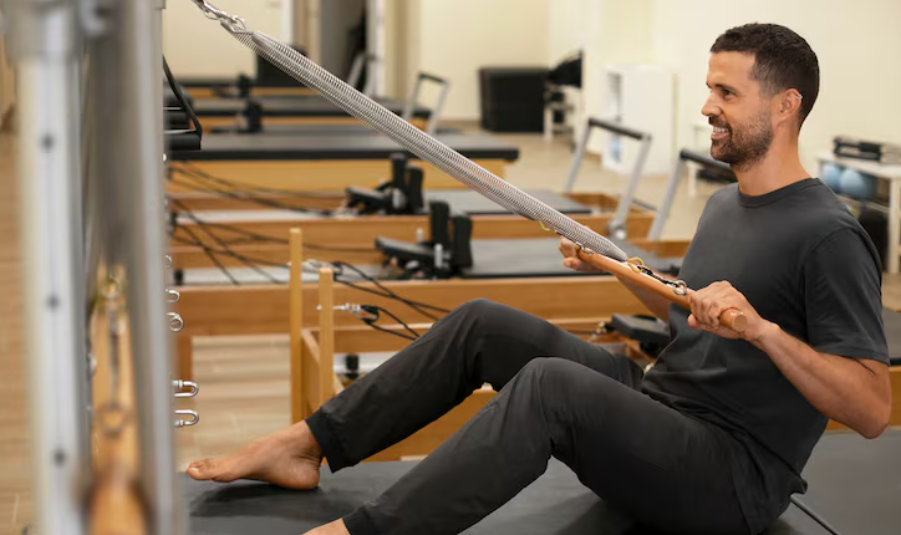
A reformer resembles a bed with springs. It functions much like a gym – and even teaches one how to move! Springs offer your muscles something to push against. The sliding seat gives your body something to steady. Combine them and you’ll build both your strength and control simultaneously. That is why Reformer Pilates classes suit so many people, from gym fans to grandparents. Every component of the machine has its purpose. This manual demonstrates just how the reformer enhances your muscular strength, equilibrium, and proprioception – all with actual data from reputable health organizations and some very real information on springs itself. None of that typical gym jargon here!
What does each part of the reformer do?
Every part trains a different skill. Here is the quick map:
| Part | What it does | Skill it trains |
|---|---|---|
| Springs | Pull back harder as they stretch | Strength |
| Sliding carriage | Moves under your body | Balance |
| Footbar | Gives your feet something to push | Leg power |
| Straps | Hold your hands or feet | Arm strength and stretch |
Why does a moving seat teach balance?
Your carriage is never stationary, so your body constantly adjusts itself. Your feet, hips, and core muscles all contract to hold you stable. This also trains your body’s inner map. Scientists call it proprioception. It means knowing where your parts are with your eyes shut.
Balance matters more with age. The CDC reports that roughly one out of every four adults over 65 falls annually. World Health Organisation rankings place falls as the second major cause of unintentional injury-related deaths globally. Analyses of research on older people link Pilates exercises with improved balance control.
Where does body control come from?
Body control comes from slow reps. Let the carriage glide back slowly and the muscle works while it gets longer. Trainers call that an eccentric contraction. It is hard. It is also where control gets built. Fast reps hide weak spots. Slow ones show them. Count four seconds out and four seconds back, and the same move feels brand new.
Who gets the most from a reformer class?
- Beginners. Light springs and a lying position make first moves gentler.
- Runners and gym fans. Slow moves find weak hips and shoulders fast.
- Older adults. Steady balance work with a teacher close by.
- People coming back after time off. A teacher can change the load move by move. Ask a doctor first if an injury is still healing.
What should you expect in a first class?
Expect grip socks, a small group – and lots of explanation! Your first classes really focus on setting up: how to hold the straps, where to place your feet, and learning how to bring the carriage to a stop. Very few people are going to get it right immediately. Don’t be afraid to ask questions. Teachers love this sort of thing – and your continued safety in all future classes depends on getting the answers!




Leave a Reply