
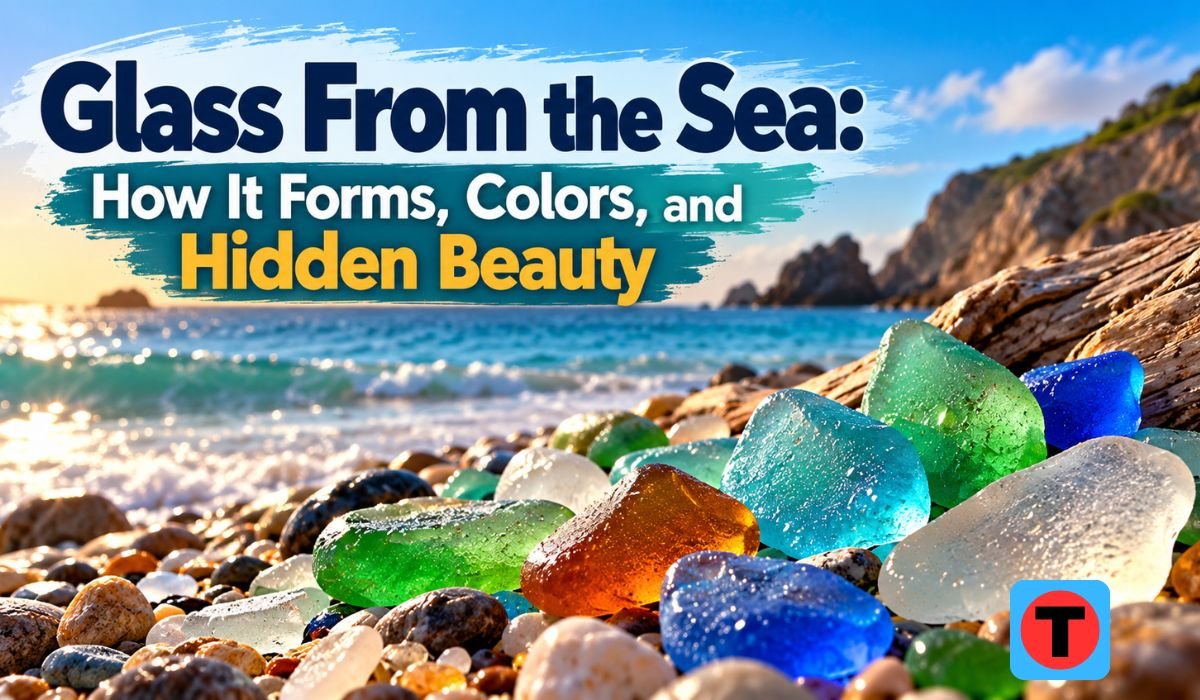
Imagine walking along a quiet beach and noticing a small, colorful piece of glass shining among the pebbles. Unlike ordinary broken glass, its edges are smooth, its surface looks frosted, and its shape resembles a tiny gemstone. This beautiful discovery is known as Glass From the Sea, or Sea Glass, one of the most interesting treasures found along coastlines.
What makes Sea Glass special is its remarkable transformation. Something that began as a discarded bottle, drinking glass, or household object can spend decades moving through ocean waves before becoming a smooth, attractive fragment. Nature gradually changes its appearance through water, sand, and constant movement.
Today, Glass From the Sea attracts collectors, jewelry makers, artists, and beach lovers around the world. Its beautiful colors, unusual shapes, and connection to coastal history make every discovery interesting. Understanding how it forms, where it comes from, and what makes certain pieces rare reveals a fascinating story behind these small ocean treasures.
What Is Glass From the Sea?
Glass From the Sea refers to pieces of manufactured glass that have been naturally weathered by ocean water, waves, sand, and stones. These fragments usually begin as broken bottles, containers, tableware, or other glass objects that enter coastal environments.
Over time, repeated movement gradually removes sharp edges and creates a rounded shape. The surface also develops a cloudy or frosted texture, giving Sea Glass its recognizable appearance.
Although Sea Glass sometimes resembles a gemstone, it is not a naturally formed mineral. Its original material was manufactured by people, while its final shape and texture developed through environmental processes.
The term Beach Glass is also commonly used, particularly for glass found along freshwater shorelines. Both materials are valued for their beauty, interesting history, and decorative possibilities.
Quick Bio Information About Glass From the Sea
| Information | Details |
|---|---|
| Common Name | Sea Glass |
| Popular Description | Glass From the Sea |
| Alternative Names | Beach Glass, Drift Glass |
| Original Material | Manufactured Glass |
| Natural Formation | Physical Abrasion and Chemical Weathering |
| Main Environment | Saltwater Coastlines |
| Freshwater Equivalent | Beach Glass |
| Common Sources | Bottles, Containers, and Tableware |
| Typical Texture | Smooth and Frosted |
| Common Shapes | Rounded and Irregular |
| Common Colors | Green, Brown, Clear, and White |
| Less Common Colors | Blue, Red, Orange, and Yellow |
| Formation Period | Often Several Decades |
| Main Collectors | Beachcombers and Craft Enthusiasts |
| Popular Uses | Jewelry, Artwork, and Decoration |
| Main Attraction | Unique Colors and Natural Weathering |
| Collectible Value | Depends on Color, Condition, and Demand |
| Environmental Origin | Discarded or Lost Human-Made Glass |
The Fascinating History and Origins of Sea Glass
The history of Sea Glass is closely connected to the history of glass manufacturing and human activity near waterways. For centuries, people used glass bottles, jars, drinking vessels, and decorative containers. Some eventually broke or were discarded near rivers, harbors, and coastlines.
Before modern waste-management systems became widespread, glass and other household materials were sometimes dumped in coastal areas. Maritime accidents, shipwrecks, and ordinary human activities also contributed glass fragments to aquatic environments.
As these objects broke apart, waves gradually transformed their fragments into the smooth pieces discovered today.
Older Sea Glass can sometimes reveal clues about historical products and manufacturing methods. Bottle markings, unusual thickness, decorative patterns, and distinctive colors may help identify an original object. However, determining the exact age of a fragment usually requires more evidence than its appearance alone.
How Is Glass From the Sea Formed Naturally?
The formation of Glass From the Sea begins when broken glass enters a coastal environment. Waves and currents repeatedly move the fragments across sand, gravel, and rocks. This movement causes physical abrasion, gradually wearing down sharp corners and rough edges.
At the same time, prolonged exposure to water can cause chemical changes at the glass surface. Together, these processes create the familiar rounded shape and frosted finish.
Wave strength, shoreline materials, and glass composition all influence the final result. A fragment exposed to energetic waves and coarse sediment may develop differently from one resting in a sheltered bay.
Not every piece becomes perfectly smooth. Some fragments remain angular, while others break into smaller pieces before reaching a mature, rounded appearance.
How Long Does Sea Glass Take to Form?
Sea Glass formation is a slow process that can take many years. Estimates commonly suggest that recognizable pieces may develop over approximately twenty to forty years, although some fragments can remain in coastal environments for much longer.
These timelines are not fixed. Glass thickness, wave energy, sediment conditions, and the amount of movement all affect weathering.
A thin fragment may lose its sharp edges relatively quickly in an active environment, while thicker glass may require much longer.
Some pieces may spend extended periods buried beneath sediment, where abrasion is limited. Others are repeatedly exposed to waves, creating more noticeable surface changes.
This unpredictable process explains why Sea Glass pieces found on the same beach can have remarkably different appearances.
Exploring the Beautiful Colors of Sea Glass
One of the most attractive features of Glass From the Sea is its wide variety of colors. Green, brown, and clear or white pieces are frequently encountered because these colors have been widely used in everyday glass containers.
Green fragments often originate from beverage bottles, while brown pieces commonly come from amber-colored containers. Clear glass can develop a white or cloudy appearance after prolonged surface weathering.
Other colors, including cobalt blue, turquoise, purple, yellow, orange, and red, may be less common in many collecting locations.
The color usually comes from the original glass composition rather than being created by ocean water. Different coloring ingredients and manufacturing methods produced the shades seen in historical glass products.
Color rarity varies by region. A shade considered unusual on one beach may be more familiar near an area where similar glass products were once widely used.
What Makes Glass From the Sea So Beautiful and Unique?
The beauty of Sea Glass comes from its natural imperfections. Unlike factory-made decorative stones, naturally weathered pieces rarely have identical shapes, surfaces, or patterns.
Some fragments are nearly circular, while others are elongated, triangular, or irregular. Their frosted surfaces scatter light, creating a soft appearance that contrasts with ordinary shiny glass.
The transformation also gives each piece a sense of history. A small green fragment might once have belonged to a beverage bottle, while a thick blue piece could have originated from an older decorative container.
For many collectors, this mystery is part of the attraction. Finding Sea Glass combines curiosity, patience, and appreciation for the natural environment.
Its appeal is not limited to monetary value. Even common colors can become meaningful souvenirs connected to memorable coastal experiences.
Sea Glass vs. Beach Glass: What Is the Difference?
Sea Glass and Beach Glass are closely related materials, but their environments are slightly different. Sea Glass generally refers to glass weathered along saltwater coastlines, while Beach Glass often describes similar fragments found beside freshwater lakes and rivers.
Both develop smooth edges through repeated movement against sediment and other materials. Chemical weathering may also contribute to their surface appearance.
Sea Glass is often associated with a heavily frosted texture, while freshwater Beach Glass may sometimes retain a slightly smoother or shinier surface. However, these differences are not universal.
Wave energy, sediment composition, exposure time, and glass type can influence both materials.
In everyday conversation, people frequently use the terms interchangeably. The most important shared characteristic is that both have been naturally transformed from manufactured glass into weathered fragments.
Where Can You Find Glass From the Sea?
Glass From the Sea can appear on beaches where glass fragments have entered the water and experienced suitable weathering conditions.
Rocky beaches, pebble shorelines, and coastal areas with a history of human activity can be promising locations. Waves may deposit fragments among shells, gravel, and other materials.
Searching around low tide can expose areas that were previously underwater. Changes in wave conditions may also reveal new pieces, although storms can make beaches dangerous.
Successful beachcombing often requires patience and careful observation. Small fragments may blend into surrounding stones, especially when their colors are pale or muted.
Collectors should avoid unstable cliffs, strong surf, and restricted coastal areas. Local regulations should always be checked before removing materials from beaches.
How to Identify Genuine Sea Glass
Genuine Sea Glass typically has rounded edges, an irregular shape, and a naturally weathered surface. Many pieces display a soft frosted finish rather than the glossy appearance of freshly broken glass.
However, identifying natural Sea Glass is not always straightforward. Artificially tumbled glass can develop similar characteristics through mechanical abrasion.
Natural pieces may show uneven wear, distinctive surface patterns, or traces of their original manufactured form. These details can provide useful clues, but none guarantees authenticity by itself.
Collectors should also remember that not every smooth fragment is old. Different coastal conditions can produce different degrees of weathering.
For valuable purchases, trustworthy provenance and careful examination are more reliable than dramatic claims about age or rarity.
Rare Sea Glass and Its Collectible Value
Rare Sea Glass attracts attention because some colors and shapes are difficult to find. Red, orange, yellow, and certain blue shades are often considered desirable, although their actual scarcity depends on local glass history.
Value is influenced by several characteristics, including color, size, thickness, condition, shape, authenticity, and collector demand.
A large, beautifully weathered fragment may be more desirable than a smaller piece of the same color. Unusual markings or recognizable historical features can also increase interest.
However, rarity does not automatically guarantee a high selling price. Market demand varies, and there is no universal pricing system for Sea Glass.
For beginners, collecting pieces that are personally appealing is often more rewarding than concentrating entirely on potential resale value.
Creative Uses of Sea Glass in Jewelry and Home Décor
Sea Glass has become a popular material for handmade jewelry and decorative artwork. Its smooth texture and natural colors make it suitable for necklaces, earrings, bracelets, and pendants.
Artists often use wire wrapping to secure pieces without drilling holes. Others incorporate fragments into mosaics, picture frames, ornaments, and coastal-inspired displays.
Clear containers filled with different Sea Glass colors can also create attractive home decorations.
Some craftspeople prefer preserving the original frosted surface, while others choose designs that highlight the glass’s color and shape.
Using collected Sea Glass in creative projects can give existing fragments a new purpose. However, pieces with unusual historical markings or collectible characteristics may be better preserved without permanent alteration.
How to Clean, Store, and Preserve Sea Glass
Proper care helps maintain the natural appearance of Glass From the Sea. Most pieces can be cleaned gently using fresh water and mild soap to remove sand, salt, and surface dirt.
A soft brush may help clean small grooves, but harsh abrasives should be avoided because they can change the surface texture.
After washing, allow the pieces to dry completely before storing them.
Collectors who appreciate the original frosted appearance generally avoid polishing compounds or oils. These substances can temporarily make the glass look shinier and reduce the visible matte effect.
Organizing pieces by color, size, or collection location makes them easier to display and study. Keeping especially delicate or unusual fragments separately can help prevent scratches and accidental damage.
The Environmental Story Behind Glass From the Sea
Although Sea Glass is beautiful, its origins are connected to human-made waste. Broken glass does not become environmentally harmless simply because waves have smoothed its edges.
Glass fragments can remain in coastal environments for long periods, and sharp pieces may create hazards for people and wildlife.
Collecting existing fragments for art or personal enjoyment can encourage awareness of coastal litter, but deliberately throwing glass into the ocean is never an acceptable way to create Sea Glass.
Responsible beachcombing also means respecting wildlife habitats, protected areas, and local collecting restrictions.
The environmental story of Sea Glass offers an important reminder: nature can transform discarded materials, but preventing pollution remains far better than relying on natural weathering.
Interesting Facts About Glass From the Sea
Sea Glass has several characteristics that make it more interesting than its simple appearance might suggest. Its colors usually originate from the original manufactured object, while its frosted texture develops through environmental weathering.
Some fragments retain embossed letters, decorative patterns, or unusual thickness that can offer clues about their history.
Glass weathered in freshwater can resemble glass from saltwater environments, and artificial tumbling can reproduce some of the same visual effects.
Another interesting detail is that Sea Glass formation does not follow a predictable schedule. Pieces exposed to different conditions can develop very different textures, even when they originate from similar objects.
These characteristics make collecting Sea Glass an activity that combines art, observation, environmental awareness, and historical curiosity.
Final Thoughts on the Hidden Beauty of Glass From the Sea
Glass From the Sea shows how ordinary manufactured materials can develop unexpected beauty through years of natural weathering. What begins as a broken bottle or discarded container may eventually become a smooth, colorful fragment with a fascinating appearance.
Its variety of colors, unusual shapes, and connection to coastal history explain why Sea Glass continues to attract collectors and artists.
Beyond its decorative appeal, it also tells a larger story about human activity and the environment. Appreciating Sea Glass responsibly means enjoying its beauty while recognizing the importance of protecting coastlines from pollution.
Every naturally weathered piece is a reminder that even the smallest objects can carry an interesting history.
Frequently Asked Questions About Glass From the Sea
What Is Glass From the Sea Called?
Glass From the Sea is commonly called Sea Glass. The term describes manufactured glass fragments naturally smoothed and weathered by coastal conditions. Beach Glass and Drift Glass are related terms, although Beach Glass is often associated with freshwater environments.
How Long Does Sea Glass Take to Form?
Sea Glass often takes decades to develop its characteristic smooth edges and frosted surface. Estimates of twenty to forty years are commonly mentioned, but actual formation times vary depending on wave activity, sediment, glass thickness, and environmental exposure.
What Is the Rarest Color of Sea Glass?
Red and orange are often considered among the rarer Sea Glass colors. However, there is no universal rarity ranking because local glass history and collecting conditions influence which colors are available.
Is Sea Glass Worth Money?
Some Sea Glass has collectible or decorative value, particularly when pieces have unusual colors, attractive shapes, or identifiable historical features. Prices depend on condition, authenticity, demand, and the preferences of individual buyers.
Can You Find Sea Glass on Any Beach?
Not every beach contains Sea Glass. It is more likely to appear where glass fragments have historically entered the water and where waves and sediment provide suitable conditions for weathering and deposition.
How Can You Tell Whether Sea Glass Is Real?
Naturally weathered Sea Glass often has rounded edges, an irregular shape, and a frosted surface. However, artificially tumbled glass can look similar, so appearance alone cannot always establish authenticity.
Can You Make Sea Glass at Home?
Glass can be mechanically tumbled to create a smooth, frosted appearance resembling natural Sea Glass. However, this material is artificially weathered and does not have the same natural coastal formation history.
Is It Legal to Collect Sea Glass From Beaches?
Collecting Sea Glass is permitted in some locations but restricted in others, especially protected coastal areas. Visitors should check local rules before removing glass or other materials and always respect the surrounding environment.
Learn more and explore exciting content on: x2VOL Naviance Explained: How It Works, Features, and Benefits








Leave a Reply