
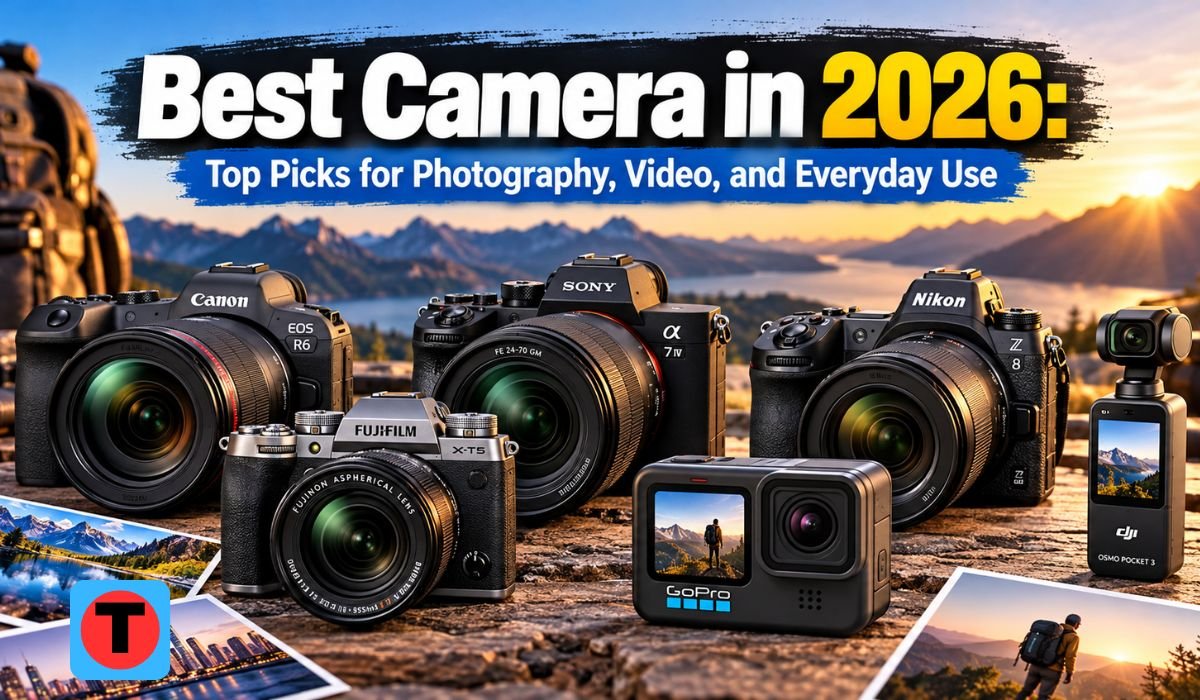
Choosing the Best Camera in 2026 can feel overwhelming, especially when every brand promises sharper photos, faster autofocus, and impressive video quality. Whether you’re a beginner capturing family memories, a traveler exploring new places, or a content creator producing professional videos, finding the right camera makes a real difference.
Today’s cameras are smarter, lighter, and more versatile than ever. Modern mirrorless models offer advanced subject tracking, excellent image quality, and powerful video features in surprisingly compact bodies. However, the most expensive camera isn’t always the best choice. Your ideal camera depends on what you photograph, how often you shoot, and how much you’re comfortable spending.
This guide explores the Best Cameras for Photography, Video, Travel, Beginners, and Everyday Use. We’ll compare popular models, explain important features, and help you understand which camera delivers the strongest value for your needs.
Best Camera in 2026: Top Picks at a Glance
The camera market offers excellent options across different price ranges. The Canon EOS R6 Mark II remains a capable all-round choice, offering reliable autofocus, strong image stabilization, and excellent photo and video performance. Its 24.2-megapixel full-frame sensor produces detailed images without creating unnecessarily large files.
The Sony a7 IV is another versatile option. Its 33-megapixel sensor gives photographers more flexibility when cropping, while its autofocus and 4K video capabilities suit hybrid creators. For travelers, the smaller Sony a7C II provides similar resolution in a lighter body.
Beginners should consider the Canon EOS R50, which combines approachable controls with dependable autofocus. Video-focused creators may prefer the Panasonic Lumix S5II or the compact Panasonic Lumix S9. Meanwhile, the Fujifilm X-S20 offers a useful balance of photography features, video tools, and portability.
These are strong cameras to compare in 2026, although the best purchase depends on current pricing, availability, and the lenses you plan to use.
Quick Bio Information: Essential Camera Facts
| Camera Information | Details |
|---|---|
| Main Category | Digital Cameras |
| Popular Camera Type | Mirrorless |
| Main Uses | Photography and Video |
| Common Sensor Formats | Full-Frame, APS-C, Micro Four Thirds |
| Typical Resolution | Approximately 20–45 MP for many mainstream models |
| Popular Video Resolution | 4K |
| Higher Video Options | 6K, 8K on selected models |
| Autofocus Technology | Phase Detection, Contrast Detection, Hybrid AF |
| Subject Recognition | People, Animals, Vehicles on supported models |
| Image Stabilization | Optical, In-Body, Electronic |
| Lens Options | Fixed or Interchangeable |
| Common Lens Mounts | Canon RF, Sony E, Nikon Z, Fujifilm X, L-Mount |
| Viewfinder Options | Electronic, Optical, or None |
| Common Storage | SD, CFexpress on selected models |
| Connectivity | USB, Wi-Fi, Bluetooth on supported models |
| Battery Type | Rechargeable Lithium-Ion |
| Common Shooting Formats | JPEG, RAW, HEIF on selected cameras |
| Suitable Users | Beginners, Enthusiasts, Professionals |
| Buying Consideration | Camera Body, Lenses, Accessories, Warranty |
What Makes a Camera the Best Choice in 2026?
A great camera combines dependable image quality with features that make photography easier. Sensor size is important because it affects light gathering, lens choices, and control over background blur. Full-frame sensors can offer advantages in low light, while APS-C cameras often provide excellent quality with smaller, more affordable equipment.
Autofocus is equally important. Modern cameras can recognize faces, eyes, animals, and moving vehicles, helping photographers capture sharp images without constantly adjusting focus manually. Video recording, stabilization, battery life, and comfortable handling also deserve attention. A camera with impressive specifications may still disappoint if its menus are confusing or its lenses are too expensive. The best choice balances technical performance with everyday usability.
Best Overall Camera in 2026: Performance Meets Value

Canon EOS R6 Mark II
A versatile camera for portraits, events, family photography, and professional-looking video.
The Canon EOS R6 Mark II is a compelling all-round camera, particularly when available at a competitive price. Its full-frame sensor delivers strong image quality, while its subject-detection autofocus makes photographing people, animals, and moving subjects easier. In-body image stabilization helps reduce camera shake, and uncropped 4K recording at up to 60 fps makes it useful for video production.
Its comfortable grip, electronic viewfinder, and dual memory card slots also make it practical for serious photography. However, buyers should compare its price with newer alternatives before deciding. For someone who values reliability, handling, and a balanced feature set, it remains a worthwhile option.
Best Camera for Photography: Capture Sharp and Detailed Images
The Best Camera for Photography depends heavily on the subjects you enjoy capturing. Portrait photographers often benefit from reliable eye autofocus, flattering lenses, and attractive background blur. Landscape photographers may prioritize resolution, dynamic range, weather protection, and tripod-friendly controls. Wildlife photographers need fast subject tracking, responsive burst shooting, and suitable telephoto lenses.
The Nikon Z7 II offers a 45.7-megapixel sensor suited to detailed landscape and studio work, while the Sony a7 IV provides a balanced combination of resolution and autofocus. Remember that lens quality, lighting, and technique influence photographs as much as the camera body. A modest camera paired with an excellent lens can produce better results than an expensive body with unsuitable optics.
Best Camera for Video in 2026: Professional Features Made Accessible
Video creators need more than high resolution. Smooth autofocus, dependable stabilization, good audio connectivity, and flexible recording formats can be just as important as 4K or 6K capture.
The Panasonic Lumix S5II is a strong hybrid option, offering phase-detection autofocus, in-body stabilization, and advanced video recording tools. The Lumix S9 appeals to creators who prefer a smaller camera and want open-gate recording, which captures a taller sensor area useful for producing horizontal and vertical videos.
The Sony a7 IV also delivers detailed 4K video, although its 4K 60p mode uses an APS-C crop. Before purchasing, check recording limits, heat performance, microphone inputs, and whether the camera supports your preferred editing workflow. These practical details often matter more than resolution alone.
Best Camera for Beginners: Easy Controls and Reliable Results
The Canon EOS R50 is an appealing beginner camera because it combines a lightweight design with straightforward controls and effective subject detection. Its 24.2-megapixel APS-C sensor offers enough resolution for family photographs, portraits, and social media content. The fully articulating touchscreen also makes it convenient for self-recording.
Beginners should prioritize a camera they can comfortably learn rather than one filled with expensive professional features. Automatic modes help at first, but manual exposure controls allow photographers to develop their skills. Affordable lenses and clear menus are equally valuable. A beginner-friendly mirrorless camera can remain useful for years as your confidence grows.
Best Budget Camera in 2026: Quality Without a High Price
Finding the Best Budget Camera means looking beyond the cheapest body. The Canon EOS R50 and Nikon Z50 are worth comparing, particularly when retailers offer discounted kits. Used or refurbished cameras can also deliver excellent value, provided their condition, shutter operation, and warranty are carefully checked.
Buyers spending under $500 may find older mirrorless models or quality compact cameras more realistic than brand-new full-frame equipment. Around $1,000, options expand to modern APS-C cameras with dependable autofocus and 4K recording. Under $1,500, discounted full-frame bodies may become attractive. Always reserve part of your budget for lenses, batteries, and memory cards rather than spending everything on the camera itself.
Best Full-Frame Camera in 2026: Is the Upgrade Worth It?
Full-frame cameras are popular because their larger sensors can provide excellent low-light performance, flexible depth-of-field control, and strong dynamic range. The Sony a7C II is particularly attractive to photographers who want a compact body without sacrificing its 33-megapixel resolution.
The Nikon Z5II is another worthwhile option, featuring a 24.5-megapixel sensor, advanced subject detection, in-body stabilization, and internal N-RAW video recording. Unlike some screen-only compact cameras, it also includes an electronic viewfinder.
Full-frame equipment isn’t essential for everyone. APS-C cameras can deliver outstanding results while keeping lens costs and carrying weight lower. For many buyers, investing in better lenses or lighting will make a greater difference than moving to a larger sensor.
Best Camera for Travel and Everyday Photography
The Best Camera for Travel should be portable, comfortable, and ready to capture unexpected moments. A heavy camera with several large lenses can become inconvenient during long walks, making compact models particularly attractive.
The Sony a7C II offers full-frame image quality in a relatively small body, while the Fujifilm X-S20 combines an APS-C sensor with in-body stabilization and useful video capabilities. The Panasonic Lumix S9 is another compact alternative, although its lack of an electronic viewfinder may frustrate photographers working in bright sunlight.
Travelers should consider the combined weight of the camera and lens, not simply the camera body. A compact zoom or lightweight prime lens often creates a more enjoyable everyday photography setup.
Best Camera for Vlogging and Social Media Content
Vlogging cameras need reliable face tracking, clear audio, effective stabilization, and screens that allow creators to monitor themselves while filming. The Sony ZV-E10 II is designed around these needs, offering interchangeable lenses, 4K recording, and a creator-focused interface.
The Panasonic Lumix S9 is particularly interesting for social media production because its open-gate video options provide flexibility when editing footage for different screen formats. However, its electronic-only shutter can create banding or distortion in certain still-photography situations.
For most vloggers, a good microphone, suitable wide-angle lens, and reliable autofocus matter more than extremely high video resolution. Clear sound and stable footage can improve a video more noticeably than upgrading from 4K to 6K.
Mirrorless vs. DSLR vs. Compact Camera: Understanding the Differences
Mirrorless cameras dominate many modern buying discussions because they combine interchangeable lenses with advanced autofocus and strong video capabilities. Their electronic viewfinders can preview exposure and color before a photograph is taken.
DSLR cameras remain useful, especially for photographers who already own compatible lenses. Their optical viewfinders provide a direct view through the lens, and used DSLR equipment can offer excellent value. However, many manufacturers now concentrate their latest development on mirrorless systems.
Compact cameras prioritize convenience. Their fixed lenses eliminate the need to carry additional equipment, making them suitable for casual photography and travel. The right category depends on whether you value flexibility, affordability, or portability most.
Best Camera Brands in 2026: Canon, Sony, Nikon, Fujifilm, and Panasonic
Every major camera brand has strengths worth considering. Canon is known for approachable controls and dependable autofocus, while Sony offers an extensive E-mount lens ecosystem and many compact full-frame choices. Nikon combines comfortable handling with capable imaging technology and an expanding Z-mount system.
Fujifilm attracts photographers who enjoy distinctive color profiles, physical controls, and compact APS-C equipment. Panasonic Lumix cameras appeal to video creators through features such as advanced recording formats and stabilization.
Brand loyalty matters less than choosing the right system. Before committing, explore the lenses available for your preferred photography style. A camera system with affordable lenses that meet your needs can provide better long-term value than a technically superior body with expensive accessories.
Camera Features You Should Never Ignore Before Buying
Some of the most important camera features receive surprisingly little attention. Shutter design is one example. Mechanical shutters can help reduce certain types of distortion and artificial-light banding, while electronic shutters offer silent operation but may introduce rolling-shutter problems.
Image stabilization is another consideration. In-body stabilization helps compensate for camera movement, particularly when photographing stationary subjects at slower shutter speeds. However, it cannot freeze a moving person or animal.
Memory card slots also matter. Dual-card recording provides useful redundancy for important events, while a single slot may be sufficient for everyday photography. Battery life, weather protection, viewfinder quality, and lens compatibility should all influence your decision. Canon’s EOS R6 Mark II, for example, provides dual UHS-II SD slots and in-body stabilization.
Camera Accessories and Common Buying Mistakes
A camera body is only one part of a complete photography setup. A versatile lens, reliable memory card, spare battery, and comfortable carrying bag can improve the shooting experience considerably. Video creators may also benefit from an external microphone, tripod, and portable lighting.
One common mistake is focusing entirely on megapixels. Higher resolution helps with cropping and large prints, but it doesn’t automatically improve color, autofocus, or low-light performance. Another mistake is buying a large camera without considering whether it will be comfortable to carry.
Before purchasing, compare the total system cost, examine sample photographs, and read independent reviews. If possible, hold the camera with your preferred lens attached. Comfort and ease of use are difficult to judge from specifications alone.
How to Choose the Best Camera for Your Needs and Budget
Choosing the Best Camera becomes easier when you start with your actual photography habits. Someone photographing family gatherings may prioritize face detection, compact size, and simple controls. A wildlife photographer needs responsive tracking and access to long telephoto lenses. A filmmaker may care more about recording formats, cooling performance, and audio connections.
Set a realistic budget that includes lenses and accessories. Next, compare the features you’ll use regularly rather than paying extra for specifications that sound impressive but offer little practical benefit.
Think about future upgrades as well. Choosing a camera system with suitable lenses can save money when your interests change. A thoughtfully selected midrange camera often provides a better experience than an expensive model purchased without a clear purpose.
Final Thoughts: Which Camera Is Worth Your Money in 2026?
The Best Camera in 2026 isn’t necessarily the newest, smallest, or most expensive model. It’s the one that makes capturing photographs and videos enjoyable while providing the features you genuinely need.
The Canon EOS R6 Mark II remains a capable all-round option, the Sony a7C II is attractive for compact full-frame photography, and the Panasonic Lumix S5II deserves consideration for video-focused work. Beginners can find excellent value in the Canon EOS R50, while travelers and everyday creators have strong alternatives from Sony, Fujifilm, and Panasonic.
Rather than chasing specifications, focus on usability, lens quality, and long-term value. A camera that fits your lifestyle will help you capture more meaningful moments and develop your skills over time.
FAQs About the Best Camera in 2026
What Is the Best Camera to Buy in 2026?
The best choice depends on your priorities. The Canon EOS R6 Mark II is a capable hybrid camera, while the Sony a7C II suits photographers seeking compact full-frame performance. Compare these with newer alternatives and current prices before purchasing.
Which Camera Is Best for Beginners?
The Canon EOS R50 is a strong beginner-friendly option thanks to its straightforward controls, autofocus system, and interchangeable lenses. It offers room to develop photography skills without requiring an expensive professional setup.
Is Canon Better Than Sony or Nikon?
No single brand is universally better. Canon offers approachable controls, Sony provides extensive lens choices, and Nikon delivers capable autofocus and comfortable handling. The right system depends on your preferred lenses, budget, and shooting style.
What Is the Best Camera for Photography and Video?
The Canon EOS R6 Mark II, Sony a7 IV, and Panasonic Lumix S5II are worth comparing for hybrid use. Each balances photography and video differently, so consider recording requirements alongside still-image performance.
Is a Full-Frame Camera Worth the Extra Money?
Full-frame cameras can offer advantages in low light and depth-of-field control, but they often require more expensive lenses. APS-C cameras remain excellent choices for travel, portraits, and everyday photography.
Are Mirrorless Cameras Better Than DSLRs?
Modern mirrorless cameras generally offer more advanced autofocus and video features. DSLRs can still produce excellent photographs and may be particularly affordable on the used market.
How Many Megapixels Do I Really Need?
For most everyday photography, approximately 20–26 megapixels is sufficient. Higher resolutions are useful for extensive cropping and large prints, but lens quality, lighting, and technique remain essential.
Which Camera Is Best for Travel Photography?
The Sony a7C II and Fujifilm X-S20 are attractive travel options because they combine capable imaging systems with relatively portable bodies. Choose a lightweight lens to keep the complete setup comfortable.
Learn more and explore exciting content on: DreamMeaniing.com Contact: Easy Ways to Reach the Team and Get Help













Leave a Reply