
Few flowers have a personality quite like the Spider Lily. Its unusual shape, vivid colors, and sudden appearance give it an almost otherworldly quality. But its appeal goes beyond appearance. Across cultures and in modern art and storytelling, the flower has come to represent ideas such as farewell, remembrance, separation, transformation, and renewal.
For anyone searching for the Spider Lily Meaning, though, there isn’t one simple answer. The symbolism depends on the plant being discussed, its color, the cultural setting, and the personal meaning attached to it.
The Red Spider Lily is the variety most often associated with these questions. Scientifically known as Lycoris radiata, it is a bulbous perennial in the Amaryllidaceae family. Kew Science lists its native range as China, Japan, Korea, and Nepal.
Its cultural history is particularly strong in Japan, where the Red Spider Lily is known as higanbana and is closely associated with the equinox season and remembrance of ancestors. That history helps explain why the flower can evoke both sadness and beauty at the same time.
There’s also an important botanical detail that often gets overlooked: “Spider Lily” isn’t necessarily the name of one species. Several different plants share the common name, while Lycoris radiata is specifically the Red Spider Lily.
With that distinction in mind, let’s look at what this fascinating flower can mean and why its symbolism has endured for so long.
What Is a Spider Lily?
When people talk about the Red Spider Lily, they’re usually referring to Lycoris radiata. It’s a bulb-forming perennial belonging to the Amaryllidaceae family and is native to parts of East Asia, including China, Japan, Korea, and Nepal.
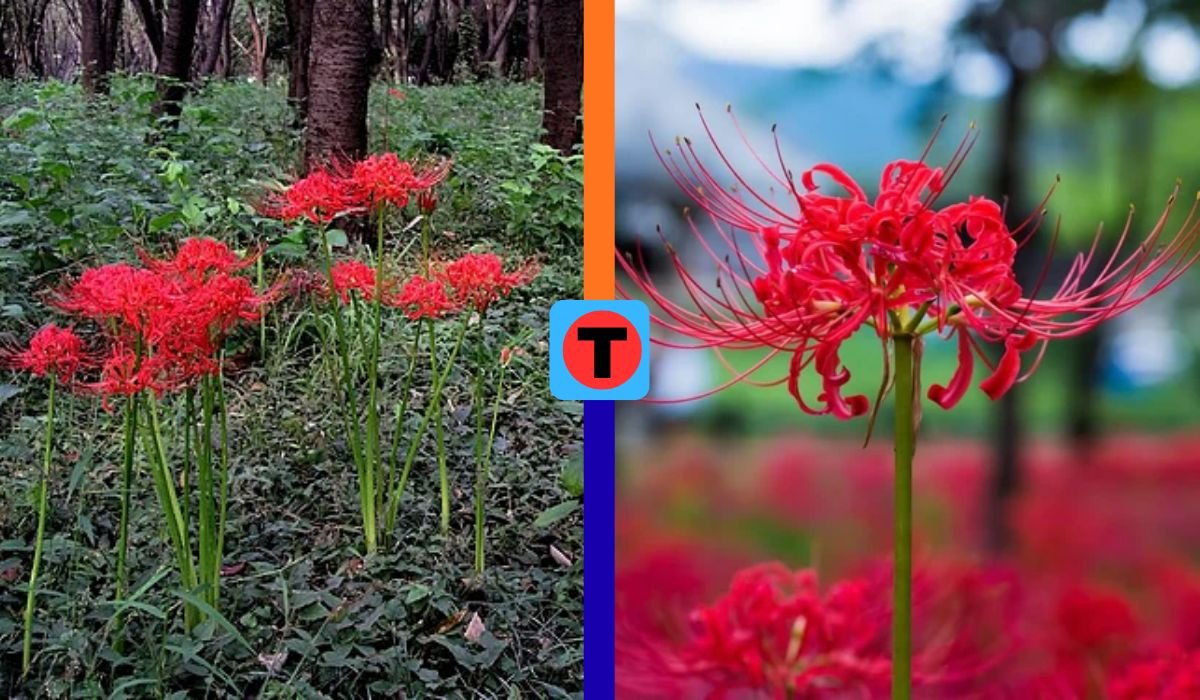
The plant is remarkably easy to recognize. Its flowers emerge on bare stems, without leaves surrounding the blooms. The red flowers have strongly curved, wavy segments and long stamens that extend outward like spider legs. North Carolina State University describes the flowers as appearing in late summer to early fall, which is why the plant is also known as the Equinox Flower.
Its unusual growth pattern adds another layer to its appeal. The leaves and flowers don’t appear together in the usual way people expect from a flowering plant. The leaves remain through winter and die back in spring, while the flowers emerge later in the year on their own stems.
That seasonal separation has naturally lent itself to symbolic interpretations involving absence, change, and transition.
Spider Lily vs. Red Spider Lily
Before discussing symbolism, it’s worth clearing up one common source of confusion.
Spider Lily is a common name used for more than one type of plant. North Carolina State University lists Crinum, Hymenocallis, and even some other plants among those that may be called Spider Lily.
The flower most closely tied to Japanese symbolism, however, is Lycoris radiata, the Red Spider Lily.
The distinction matters because the statement that “Spider Lilies symbolize death” is too broad. The strongest association with death, farewell, and remembrance comes from the Red Spider Lily and its cultural history. The broader Lycoris genus includes many species and cultivated forms, with flowers appearing in several colors. Kew currently recognizes 25 accepted species in the genus.
So when discussing the Spider Lily Meaning, it’s better to consider the particular species and cultural context rather than treating every plant called a Spider Lily as symbolically identical.
What Does a Spider Lily Symbolize?
The most familiar Spider Lily Symbolism centers on farewell, remembrance, separation, grief, death, transition, and renewal.
The Red Spider Lily has particularly strong associations with remembrance in Japan. Its blooming period coincides with the autumn equinox season, known as higan. During higan, visiting and tending ancestral graves is a longstanding Japanese practice.
That connection between the flower and the remembrance of the dead has helped shape its symbolism. The flower can therefore suggest a final goodbye or the memory of someone who has passed away.
Yet “death” isn’t the only interpretation. The flower can also suggest acceptance, transition, and moving into a new stage of life. That broader interpretation is especially common in modern art, tattoos, and personal symbolism.
In other words, the Spider Lily can represent an ending without necessarily representing hopelessness.
Quick Bio: Spider Lily Information
| Fact | Information |
|---|---|
| Scientific Name | Lycoris radiata |
| Common Name | Red Spider Lily |
| Family | Amaryllidaceae |
| Genus | Lycoris |
| Plant Type | Bulbous Perennial |
| Native Range | China, Japan, Korea, and Nepal |
| Best-Known Flower Color | Red |
| Blooming Season | Late Summer to Early Fall |
| Japanese Common Name | Higanbana |
| Another Common Name | Equinox Flower |
| Flower Feature | Long Stamens Resembling Spider Legs |
| Growth Habit | Flowers Emerge on Bare Stems |
| Cultural Association | Remembrance and Farewell |
| Japanese Connection | Higan and the Equinox Season |
| Symbolic Themes | Loss, Transition, Renewal, and Remembrance |
| Common Modern Uses | Gardens, Art, Tattoos, Literature, and Anime |
| Safety | Toxic if Ingested |
| Toxic Compound | Lycorine |
| Botanical Family | Amaryllidaceae |
Red Spider Lily Meaning
The Red Spider Lily Meaning is especially powerful because of the flower’s place in Japanese culture.
Known in Japan as higanbana, the Red Spider Lily blooms around the equinox period. Higan is traditionally a time for remembering and honoring ancestors, including visits to family graves. The flower’s seasonal appearance around this period has strengthened its association with remembrance and the dead.
Japan’s official tourism organization notes the flower’s connection with death while also highlighting the beauty and peaceful atmosphere created by large displays of Red Spider Lilies.
That combination is important. The Red Spider Lily isn’t simply a symbol of something frightening or tragic. It can represent the emotional act of saying goodbye while continuing to remember someone.
This is one reason the flower carries such emotional weight. Its beauty and its association with loss exist side by side.
Red Spider Lily Spiritual Meaning
The Red Spider Lily Spiritual Meaning is often interpreted through the ideas of transition, renewal, and rebirth.
In spiritual and artistic contexts, death can be viewed as a passage rather than an absolute ending. From that perspective, the Red Spider Lily can symbolize the movement from one state of existence to another.
It’s important, however, to distinguish cultural symbolism from scientific evidence. There is no scientific evidence that Spider Lilies guide souls, cause reincarnation, or possess supernatural abilities. Those ideas belong to spiritual beliefs, folklore, and symbolic interpretation.
The plant itself provides plenty of inspiration for those interpretations. Its flowers appear separately from its leaves, and its seasonal cycle is noticeably different from that of many familiar garden flowers. That unusual behavior can easily become a metaphor for absence, change, and renewal.
For someone going through a major life transition, the flower may therefore represent the idea that one chapter can end while another begins.
Spider Lily Meaning in Japanese Culture
To understand the Spider Lily Meaning in Japan, it’s necessary to look at the flower’s connection with the equinox season.
The Red Spider Lily is called higanbana, a name associated with higan. Higan occurs around the spring and autumn equinoxes, and Japanese government information describes the period as a time when people traditionally visit ancestral graves and pay their respects.
The timing of the Red Spider Lily’s bloom has helped cement its cultural identity. In places where large numbers of the flowers appear during the season, their bright red color creates an unmistakable autumn landscape.
Kinchakuda in Saitama is one well-known example. Japan’s official tourism organization highlights the area for its enormous seasonal display of Red Spider Lilies.
This context also helps explain why the flower can have a solemn meaning without being viewed simply as a symbol of darkness. It is part of a season associated with reflection, family, ancestors, and the changing year.
Spider Lily Meaning by Color
Color adds another layer to Spider Lily symbolism, but this is one area where readers should be careful with overly definitive claims.
There isn’t a universal scientific system assigning a fixed symbolic meaning to every Spider Lily color. Different species and cultivated forms of Lycoris can produce flowers in red, yellow, pink, white, and other shades. North Carolina State University, for example, lists several colors across the Lycoris genus.
The Red Spider Lily has the strongest established cultural symbolism, particularly around farewell, remembrance, and death.
White Spider Lilies are often interpreted in modern flower symbolism as representing purity, peace, innocence, mourning, or a new beginning. Pink varieties are commonly connected with affection, beauty, passion, and romantic feelings.
Yellow or golden Spider Lilies can be given softer associations, including friendship, appreciation, courage, wisdom, and prosperity. Blue Spider Lily imagery, meanwhile, is especially prominent in fiction and modern artwork, where it may suggest mystery, transformation, calmness, or rarity.
Black Spider Lily imagery tends to carry darker modern associations, including mourning, mystery, strength, elegance, and resilience.
These interpretations are best understood as symbolic associations, not universal rules. If you’re choosing a flower as a gift, the recipient’s culture and personal preferences matter more than any online list of flower meanings.
Spider Lily Meaning in Love and Relationships
The Spider Lily Meaning in Love isn’t as straightforward as the symbolism attached to traditional romantic flowers.
A Red Spider Lily can represent love that remains meaningful after separation. In a memorial context, it may express the idea that a person’s emotional bond with someone continues even after death.
That doesn’t necessarily mean a Red Spider Lily is the right romantic gift for everyone. Because of its associations with death and farewell, someone familiar with Japanese flower symbolism could interpret the gesture very differently from someone who simply sees an attractive red flower.
Pink Spider Lilies generally offer a softer interpretation. They can be associated with affection, beauty, passion, and romantic feeling. Yellow varieties may work better when the intended message is friendship, appreciation, or warmth.
Ultimately, the meaning comes down to context. The same flower can communicate very different emotions depending on why it’s being given.
Spider Lily Meaning in Anime and Popular Culture
The Spider Lily has become a recognizable visual motif in Japanese anime and manga.
Its existing associations with death, farewell, and separation make it particularly useful for visual storytelling. A Red Spider Lily appearing in a dramatic scene can immediately create a sense that something tragic, final, or emotionally significant is about to happen.
Sometimes the flower serves as a visual warning. In other scenes, it can symbolize a character’s death, grief, an irreversible separation, or a major transformation.
Anime and manga, however, shouldn’t be treated as historical evidence of Japanese cultural beliefs. Creators often borrow familiar cultural symbols and give them new meanings for a particular story.
Works such as Demon Slayer have helped introduce Spider Lily imagery to international audiences, but fictional symbolism and traditional symbolism aren’t always the same thing.
Spider Lily Tattoo Meaning
A Spider Lily Tattoo Meaning is usually much more personal than a dictionary definition can capture.
Someone may choose a Red Spider Lily tattoo to honor a person they’ve lost or to mark a painful goodbye. Another person might choose the same flower because it represents surviving a difficult period and becoming a different version of themselves.
That makes the Spider Lily particularly well suited to tattoos. Its symbolism can hold both loss and growth at the same time.
Color and surrounding imagery can further shape the message. A Red Spider Lily paired with a name or date may emphasize remembrance. A design featuring the flower alongside butterflies or other symbols of change may instead focus on transformation and personal growth.
There isn’t one correct Spider Lily Tattoo Meaning. The most meaningful interpretation is often the one connected to the person’s own experience.
Does a Spider Lily Symbolize Death?
Yes, the Red Spider Lily can symbolize death, particularly in Japanese cultural contexts.
Its connection with higan, ancestral remembrance, and places associated with the dead helps explain this symbolism. The flower’s appearance around the equinox season has further strengthened that association.
Still, saying that a Spider Lily simply means death leaves out much of the story.
The flower can also represent remembrance, farewell, transition, and renewal. For someone who has experienced loss, it may symbolize not only the person who is gone but also the process of learning to live with that absence.
That’s what gives the flower its emotional complexity. It acknowledges an ending without necessarily suggesting that everything ends there.
Does a Spider Lily Symbolize Rebirth?
A Spider Lily can symbolize rebirth and transformation in spiritual, artistic, and personal interpretations.
The plant’s unusual growth cycle makes that metaphor especially compelling. Its flowers emerge on bare stems, while its leaves follow a different seasonal pattern. North Carolina State University notes that the leaves remain through winter and die back in spring, while the flowers appear later in the year.
For someone using the flower as a personal symbol, that cycle can suggest starting again after a difficult ending.
It might represent recovery after grief, leaving behind an old chapter, or finding a sense of direction after a major change.
Rebirth, however, should be described as a symbolic or spiritual interpretation, not as a scientific property of the plant.
Are Spider Lilies Poisonous?
Yes. Lycoris radiata contains toxic alkaloids, including lycorine. North Carolina State University classifies the plant as having low-severity poison characteristics and reports that eating the bulb can cause symptoms including abdominal pain, salivation, shivering, nausea, vomiting, and diarrhea.
This is especially important around children and pets, who may be tempted to chew bulbs or other plant material.
There’s also an important correction to a common misconception: ordinary contact with Lycoris radiata isn’t considered a contact-dermatitis risk by N.C. State Extension. Its plant profile specifically says it does not cause contact dermatitis.
The practical lesson is straightforward. Don’t eat the plant, don’t allow children or pets to chew it, and seek appropriate medical or poison-control guidance if ingestion occurs.
Can You Touch a Red Spider Lily?
Yes. The idea that simply touching a Red Spider Lily is inherently dangerous isn’t supported by the N.C. State Extension plant profile, which reports that Lycoris radiata does not cause contact dermatitis.
As with any ornamental plant, sensible handling is still a good habit. Wash your hands after gardening, avoid putting plant material near your mouth, and keep the plant away from children and animals that might eat it.
The main concern with this flower is ingestion, particularly of the bulb, rather than ordinary contact.
When Should You Give Someone a Spider Lily?
A Spider Lily can be a thoughtful gift when its symbolism fits the situation.
A Red Spider Lily may be appropriate for a memorial, tribute, or occasion centered on remembrance. Its meaning can express the idea of saying goodbye while continuing to hold someone’s memory close.
For everyday romance, though, a Red Spider Lily can be a risky choice if the recipient is familiar with its traditional associations. In that situation, pink or yellow varieties may communicate affection or appreciation more gently.
The safest approach is to think about the person first. Cultural background, personal taste, and the reason for giving the flower all matter.
Spider Lily Hidden Messages
The hidden message behind a Spider Lily depends on the setting in which it’s used.
A Red Spider Lily might say, “I remember you,” “goodbye,” or “our bond remains despite separation.” In a different context, it can represent resilience, transformation, or the courage to move into a new chapter.
That’s what makes this flower so interesting. It doesn’t fit neatly into a single emotional category.
Its beauty exists alongside its darker symbolism. Its association with endings can exist alongside ideas of renewal. And its connection with loss can coexist with the idea that love and memory continue long after a physical separation.
Rather than asking for one fixed definition, it’s more useful to think of the Spider Lily as a symbol shaped by culture, color, context, and personal experience.
Final Thoughts
The Spider Lily Meaning is much more nuanced than simply calling it a flower of death.
The Red Spider Lily, Lycoris radiata, has a particularly strong cultural identity in Japan. Its seasonal blooming around the equinox period, connection with higan, and association with ancestral remembrance have given it powerful meanings involving farewell, separation, and memory.
Yet those aren’t the only messages the flower can convey.
In modern symbolism, the Spider Lily can represent transformation, resilience, renewal, and the courage to begin again. For someone choosing a Spider Lily tattoo, giving the flower as a memorial, or simply admiring it in a garden, its meaning may be deeply personal.
Perhaps that’s the reason the Spider Lily continues to fascinate people. It holds two ideas together that might seem contradictory at first: the beauty of an ending and the possibility of a new beginning.
And sometimes, that tension is exactly what makes a flower worth remembering.
FAQs About Spider Lily Meaning
What Is The Main Spider Lily Meaning?
The most recognized meaning of the Red Spider Lily involves farewell, remembrance, separation, and death, particularly in Japanese cultural contexts. The flower can also represent transition, renewal, and personal transformation.
What Does A Red Spider Lily Symbolize?
A Red Spider Lily commonly symbolizes farewell, remembrance, grief, and death in Japanese cultural contexts. In modern art and personal symbolism, it can also represent transformation, enduring emotional bonds, and moving forward after loss.
What Does A Spider Lily Mean Spiritually?
Spiritually, a Spider Lily can represent transition, renewal, transformation, and rebirth. These are cultural and symbolic interpretations rather than scientifically established properties of the flower.
What Does A Spider Lily Mean In Love?
A Red Spider Lily can represent love that continues despite separation or remembrance of someone who has died. Pink and yellow varieties are more commonly associated with softer interpretations involving affection, friendship, appreciation, or romantic feeling.
Does A Spider Lily Mean Death?
The Red Spider Lily has a strong association with death and remembrance in Japan, but Spider Lily symbolism isn’t universally limited to death. Depending on the species, color, and context, it can also represent farewell, renewal, transformation, and memory.
What Does A Spider Lily Tattoo Mean?
A Spider Lily Tattoo can represent remembrance, loss, farewell, resilience, transformation, or personal growth. Its exact meaning depends on the person’s experience, the flower’s color, and the other elements included in the design.
Are Spider Lilies Poisonous?
Yes. Lycoris radiata contains toxic alkaloids such as lycorine, and eating the bulb can cause illness. Children and pets should be kept away from the plant, and suspected ingestion should receive prompt professional advice.
Why Is The Red Spider Lily Associated With Japan?
The Red Spider Lily blooms around the equinox season, which coincides with higan, a period traditionally associated with visiting and honoring ancestral graves. That seasonal and cultural connection has helped establish the flower’s strong association with remembrance and the dead.
Learn more and explore exciting content on: Who Is Xen Martin? Everything to Know About Tisha Campbell’s Son















Leave a Reply